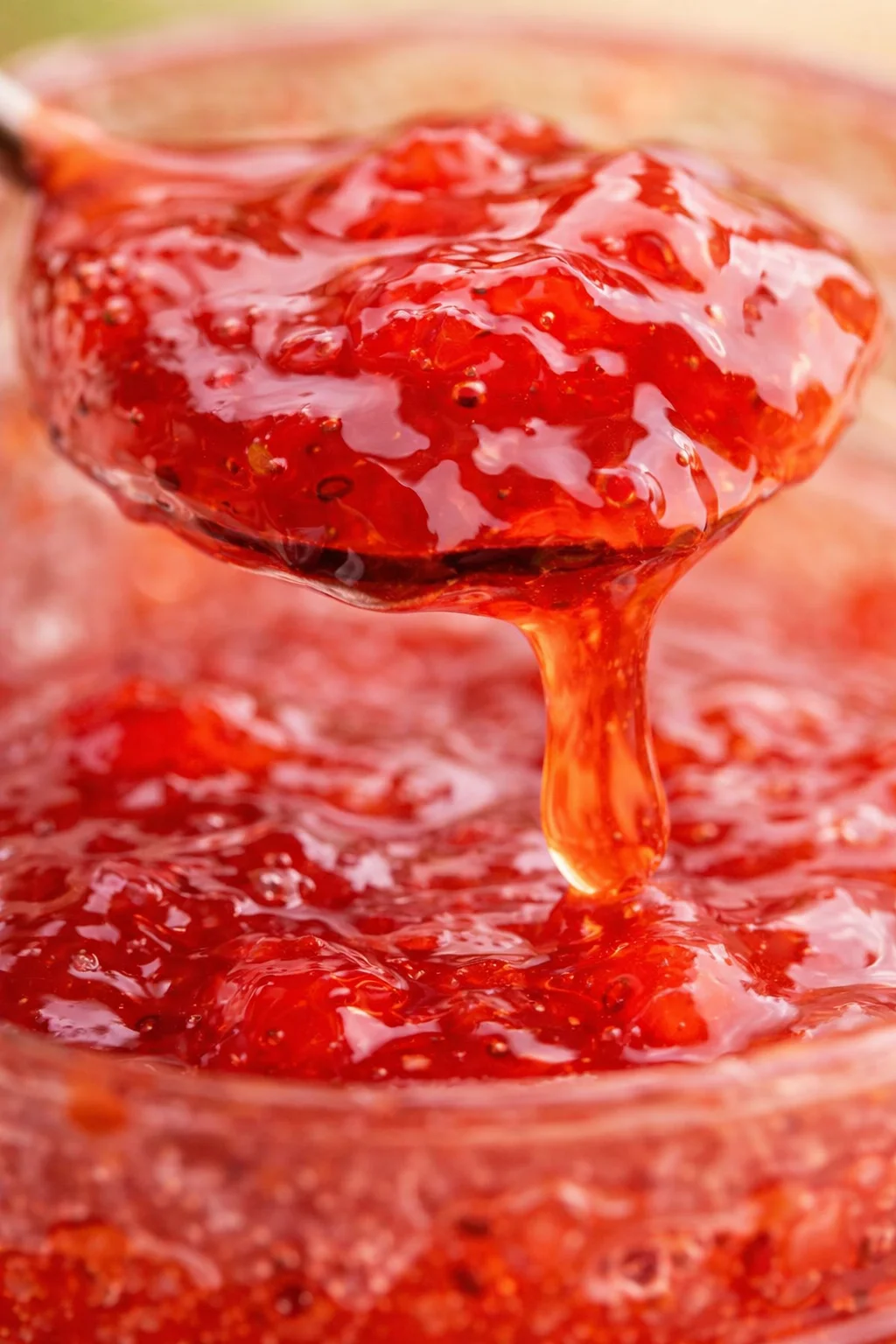
Homemade Strawberry Rhubarb Jam


Here’s a super simple Strawberry Rhubarb Jam recipe that celebrates that perfect springtime duo of juicy, sweet strawberries and tart, tangy rhubarb.
There’s just something magical about spring produce after a long winter’s grip. While I get excited for those early goodies like wild ramps and white asparagus, cooking with rhubarb is truly one of spring’s simple joys.
This stunning ruby-red jam is brimming with fresh, ripe strawberries and gently cooked sour rhubarb. While rhubarb can get along with lots of fruits, the strawberry and rhubarb combo is simply unbeatable.
These two flavors play off each other beautifully, creating a delightful burst of flavor with every bite. No wonder I have a whole bunch of strawberry rhubarb recipes here on the blog!
Besides slathering it on toast or freshly baked scones, there are so many tasty ways to enjoy this jam. Try a spoonful stirred into plain yogurt, drizzled over your morning oatmeal, or paired with a scoop of creamy vanilla ice cream.
My jam-making journey actually started about forty years ago with this very Strawberry Rhubarb Jam. Back then, I was the eager helper by my grandmother’s side, mashing strawberries and stirring the jam as it cooled.
Fast forward twenty years and as a young mom, I wanted to share this classic love with my little family. This jam was one of my first homemade preserves, right alongside my popular Pickled Carrots.
Now, I’m so happy to say that this batch featured here has found a special place with family and friends. Our oldest son dove right in, spreading it thick on freshly baked strawberry rhubarb muffins. There’s nothing like passing down food traditions through the generations!
There’s something truly festive about the first bright berries of spring, and this Strawberry Rhubarb Jam captures that feeling perfectly. It blends sun-kissed strawberries with tart rhubarb, creating a shiny, jewel-toned jam that feels both nostalgic and lively. I first learned how to make this from my grandmother and have been whipping up small batches for my family ever since. Whether you’re new to jam-making or have done it for years, this recipe keeps things simple and fun.
You’ll find a straightforward small-batch recipe here using just a handful of pantry staples—pectin included—to get a nice, reliable set every time. The post walks you through each step with photos, tips for working with fresh or frozen fruit, how to sterilize jars, and the option to water-bath can your jam. Plus, there are notes on troubleshooting and creative flavor variations so you can make it your own.
This jam turns out chunky and wonderfully spoonable—perfect on toast and biscuits, and just as delicious dolloped on yogurt, oatmeal, or vanilla ice cream. Keep reading for the full ingredient list, clear step-by-step instructions, and some pro tips to make sure your first or next batch is a hit.
What Makes This Jam Special
This strawberry rhubarb jam nails that ideal sweet and tart balance, showcasing the best of spring’s fresh fruits in a hassle-free, small batch preserve. Using just a few ingredients from your pantry and packaged pectin means you get a jam that sets well without fuss. The chunky texture is just right for spreading on everything from toast to oatmeal or ice cream.
Here’s why you’ll want to make this jam:
- Bright, classic strawberry–rhubarb flavor: ripe strawberries soften rhubarb’s tang, giving you a rich, nostalgic taste.
- Simple and straightforward: perfect for first-timers and seasoned jam makers alike.
- Flexible: works with fresh or frozen fruit; can be water-bath canned for long storage or refrigerated for quick use.
- Makes a thoughtful homemade gift and freezes beautifully if you want to stock up.
Essential Ingredients

- 5 cups ripe strawberries; mashed down to 2 1/2 cups total
- 2 cups rhubarb; chopped
- 2 tbsp lemon juice
- 1 package Pectin
- 4 1/2 cups granulated sugar
Prep, Cook, and Set the Jam
- Inspect, wash, and sterilize jars by placing them upside down in a water-filled tray in a 225°F (107°C) oven for 10–15 minutes; boil lids, rings, tongs, and measuring tools to disinfect.
- If water-bath canning, begin heating the water bath canner with hot water to bring it to a full boil while you cook the jam.
- Place a small plate in the freezer to use for the set/plate test.
-
If using frozen fruit, thaw rhubarb 30–60 minutes and thaw strawberries completely before using.

- Wash, hull/core, and chop strawberries; slice thick rhubarb lengthwise if needed and cut into 1/2-inch pieces.
- Measure out sugar (4 1/2 cups) and have the pectin and 2 tablespoons lemon juice ready; keep equipment hot.
- Smash strawberries in layers in a large pot, then add the chopped rhubarb.
-
Add the pectin and lemon juice to the fruit and stir well to combine.

- Heat the fruit mixture over medium, stirring constantly, until it reaches a full rolling boil.
- Add the sugar all at once, stir as the mixture returns to a full rolling boil, and boil hard for 1 minute.
- Turn off the heat, continue stirring for 5 minutes while skimming off any foam from the surface.
-
Perform the plate test: spoon about 1/2 teaspoon of hot jam onto the chilled plate, let cool a few minutes, then drag a finger or spoon through it; if it wrinkles and holds form, it’s set—if runny, boil longer and re-test.

- Carefully remove hot sterilized jars with tongs and ladle the hot jam into jars, leaving about 1/4 inch headspace; wipe rims, place lids on, and screw rings until snug but not overly tight.
- If water-bath canning, lower the filled jars into the boiling water so they are covered by at least 1 inch of water and process for 10 minutes (adjust for altitude).
- Allow jars to cool undisturbed overnight, then check seals by pressing the center of each lid; refrigerate any jars that did not seal.
-
If jam remains too loose after a couple of days, pour it back into a pot; for every 4 cups of jam add 1/2 cup sugar and 1 tablespoon powdered pectin, bring to a boil, cook 5–10 minutes, and re-test with the plate.

Expert Tips for Jam Success
Even the best cooks run into this sometimes—the amount of liquid in fruit can change from batch to batch, which might keep your jam from setting properly. If after a couple of days the jam still feels too loose, you can use it as a sweet syrup—great drizzled over High-Protein Strawberry Chia Seed Pudding—or remake the batch.
This means you’ll need to clean and sterilize everything again. Pour the jam back into your pot. For every 4 cups of runny jam, add 1/2 cup sugar and 1 tablespoon powdered pectin. If you prefer to skip added pectin, try this Rhubarb Jam – No Pectin approach.
Bring it back to a boil, this time cooking for 5–10 minutes so it thickens up. Check the set with that trusty ‘plate test’ we talked about earlier.
Flavor Twists and Mix-Ins
Want to mix things up a bit? Here are some easy swaps and extras to tweak flavor and texture while keeping the same base recipe:
- Fruit swaps: replace some or all strawberries with raspberries, blueberries, or even apricots. Adjust the rhubarb amount to taste.
- Spice it up: add a split vanilla bean, a teaspoon of vanilla extract, a little fresh grated ginger (half to one teaspoon), or a pinch of warming cinnamon or cardamom as the jam cools.
- Citrus kick: swap or add 1-2 teaspoons orange juice plus a teaspoon of orange zest for a bright, fresh twist. If you love the lemon–rhubarb combo, try Lemon Rhubarb Loaf for more citrus pairing inspiration.
- Texture options: mash the strawberries more for a smooth jam or keep bigger chunks if you like it chunky—chunky jam is especially nice swirled into Rhubarb Overnight Oats.
- Lower sugar: use low- or no-sugar pectin and adjust sugar according to the package instructions.
- Sweetener swaps: experiment with part cane sugar, part honey, or part maple syrup for a flavor twist, but follow pectin guidelines on liquid vs sugar ratios.
How to Store and Preserve Jam
How you store this jam and how long it lasts depends mostly on whether you water-bath can it or not.
- If properly water-bathed and sealed, your jars will keep well in a cool, dark spot for about a year—similar to other preserves like rhubarb relish.
- If you skip the water bath and some lids don’t seal, pop those jars in the fridge and plan to eat within 3–4 weeks. If you prefer a fast, no-pectin option, make a quick chia seed jam in minutes.
- After opening, keep jam in the fridge and consume within about 3 months for best flavor. Always use a clean spoon to avoid contamination.
- Freezing works beautifully, too. Store jam in freezer-safe containers leaving a little room at the top, label it, and freeze up to 12 months. Thaw in the fridge before use.
- To reheat: warm gently in the microwave in short bursts stirring in between, or heat on the stove over low heat until nice and loose. Avoid overheating or repeated boiling, which can hurt the texture and flavor.
- Always double check your sealed jars before using. Toss any that smell off, show mold, leak, or failed to seal.
Pectin, Setting, and Common Questions
Pectin is the magic ingredient that helps jam thicken and set. It’s a natural soluble fiber found mostly in fruits and veggies like apples and citrus peel.
All jam has pectin—even if it’s “pectin free” as some labels misleadingly claim. How it thickens comes down to its chemical makeup and how it interacts with liquids.
Since rhubarb is naturally low in pectin (yep, it’s a vegetable!), I always add some packaged pectin to my strawberry rhubarb jam for the best results.
Is Added Pectin in Jam Healthy?
Now, jam isn’t exactly health food. It’s pretty sugary, and the main benefits come from the fruit. But pectin itself is a soluble fiber that can actually be good for your digestion.
While it’s not a source of vitamins or minerals, pectin has some potential health perks as fiber:
- Pectin may help regulate blood sugar and blood lipid (fat) levels.
- Some early research suggests pectin might interact with certain cancer cells in a helpful way.
- Fiber helps with weight management by making you feel full, so you’re less likely to snack unnecessarily.
- It can relieve constipation by adding bulk and softness to stool.
- Pectin promotes healthy gut bacteria, which can reduce inflammation and ease tummy troubles.