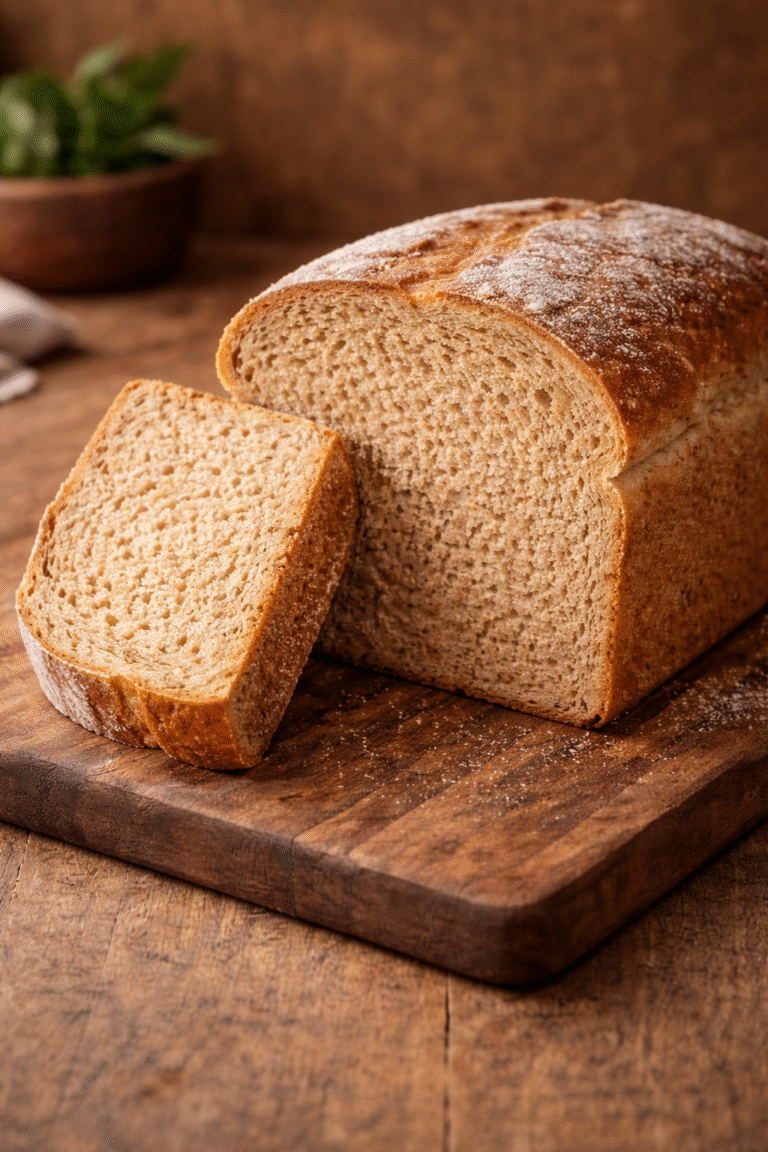
Ingredients
3 cups whole-wheat flour
¼ cup honey
2 tablespoons olive oil
1 tablespoon yeast
1 teaspoon salt
Instructions
In a large bowl, combine the yeast with warm water and a small spoonful of the honey. Stir gently and let it sit for 5–10 minutes until foamy. This step ensures the yeast is active and ready to leaven the bread.
Add the remaining honey, olive oil, and salt to the yeast mixture. Stir to combine.
Gradually add the whole-wheat flour, mixing until a rough dough forms. Whole-wheat flour absorbs more liquid than refined flour, so add water slowly as needed until the dough comes together.
Turn the dough out onto a clean surface and knead for 10–12 minutes. Whole-wheat dough requires longer kneading to develop gluten properly.
The dough should become smooth, elastic, and slightly tacky. Proper kneading is essential for preventing a dense loaf.
Shape the dough into a ball and place it in a lightly oiled bowl. Cover with a clean towel or plastic wrap.
Let it rise in a warm place for 1½ to 2 hours, or until doubled in size. Whole-wheat dough rises more slowly than white dough—patience is key.
Once risen, gently punch down the dough to release excess air. Shape it into a log, tucking the seams underneath.
Place the dough into a greased loaf pan.
Cover the pan and let the dough rise again for 30–45 minutes, until it crowns just above the rim of the pan. This second rise ensures a lighter texture and better oven spring.
Preheat your oven to 350°F (175°C).
Bake the bread for 35–40 minutes, until the top is deep golden brown and the loaf sounds hollow when tapped. If the top browns too quickly, loosely cover it with foil during the last 10 minutes.
Remove the bread from the pan and let it cool completely on a wire rack before slicing. Cutting too soon can cause the crumb to become gummy.