Yeast Bread recipe – Artisan, NO KNEAD crusty bread

Let me tell you about this amazing bread recipe. It’s seriously the easiest yeast bread you’ll ever put together. Beginners find it wonderfully simple, yet even bread lovers will admire it for its Artisan qualities—the thick, crunchy crust and chewy inside with those big, beautiful holes that make sourdough so special!
No kneading required, just a quick 3 minutes of active work, and it’s super forgiving. Why not try making this one today, and then whip up the Cheese Bread version tomorrow? Trust me, you’ll thank me later!
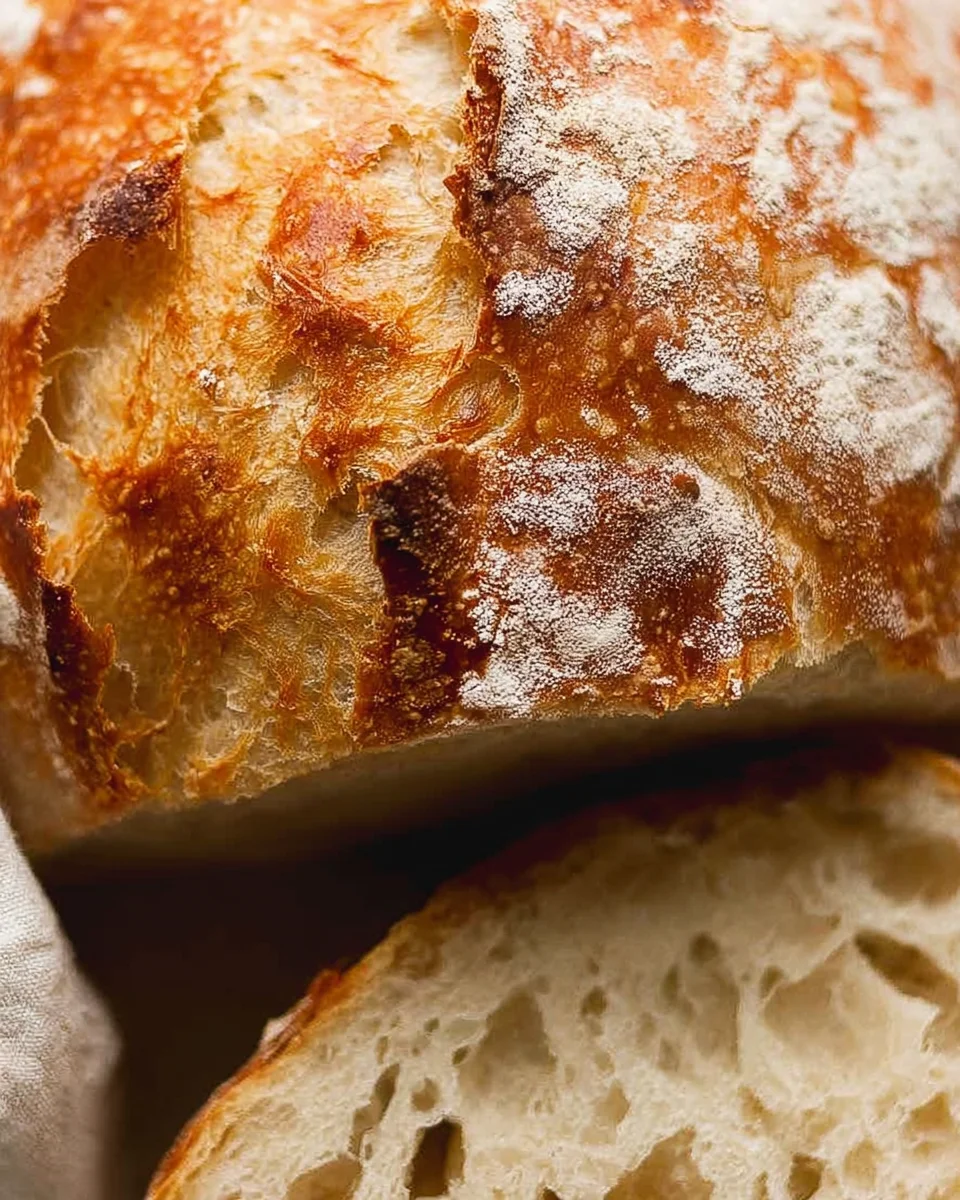
Phenomenal EASY yeast bread recipe
This white bread recipe really is something special. It’s super forgiving and simple, making it perfect for beginners. But even if you’ve baked a ton of bread, you’ll appreciate that Artisan bread feel — those large, beautiful holes in the crumb just like your favorite sourdough, plus that satisfyingly chewy texture, topped off with a thick, crunchy crust.
This recipe is a real keeper — after you try it, you might never want to buy bread from the store again!
Here’s what makes it so easy:
- No kneading needed and no fancy stand mixer
- Just 3 minutes of hands-on work — no mess or fuss!
- A Dutch oven or heavy cast iron pot helps, but don’t stress if you don’t have one
- The dough is forgiving and flexible — you can let it rise anywhere from 2 hours to up to 3 days in the fridge. You pick what fits your schedule.
- Simple doesn’t mean sacrificing quality — this bread tastes fantastic.
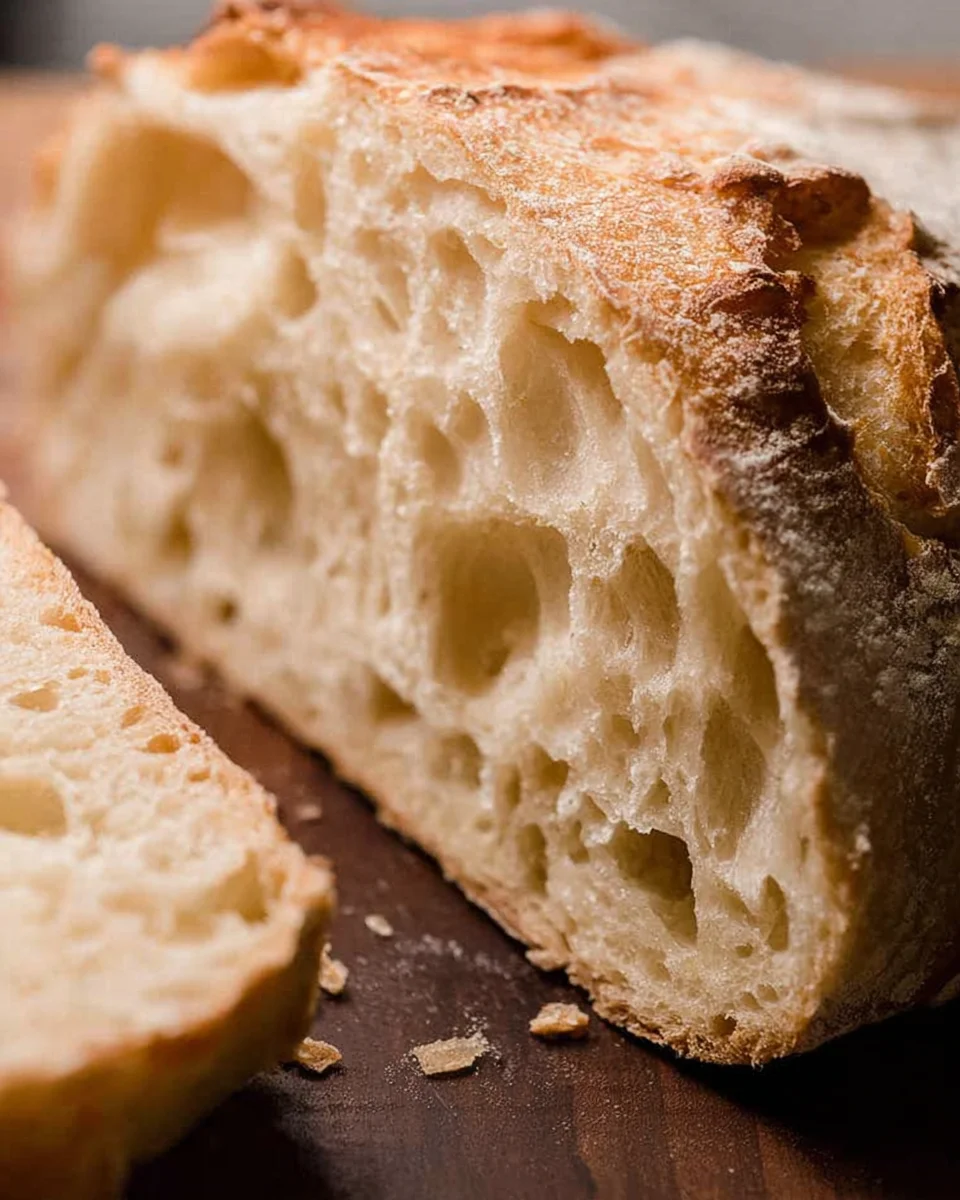
What you need to make this homemade bread recipe
Believe it or not, all you need to bake this from scratch is yeast, flour, salt, and water. Yep, that’s it—simple staples you probably already have!
No yeast?
No worries! Try my popular Irish Soda Bread recipe instead, or the amazing No Yeast Sandwich Bread inspired by traditional Australian Damper bread.
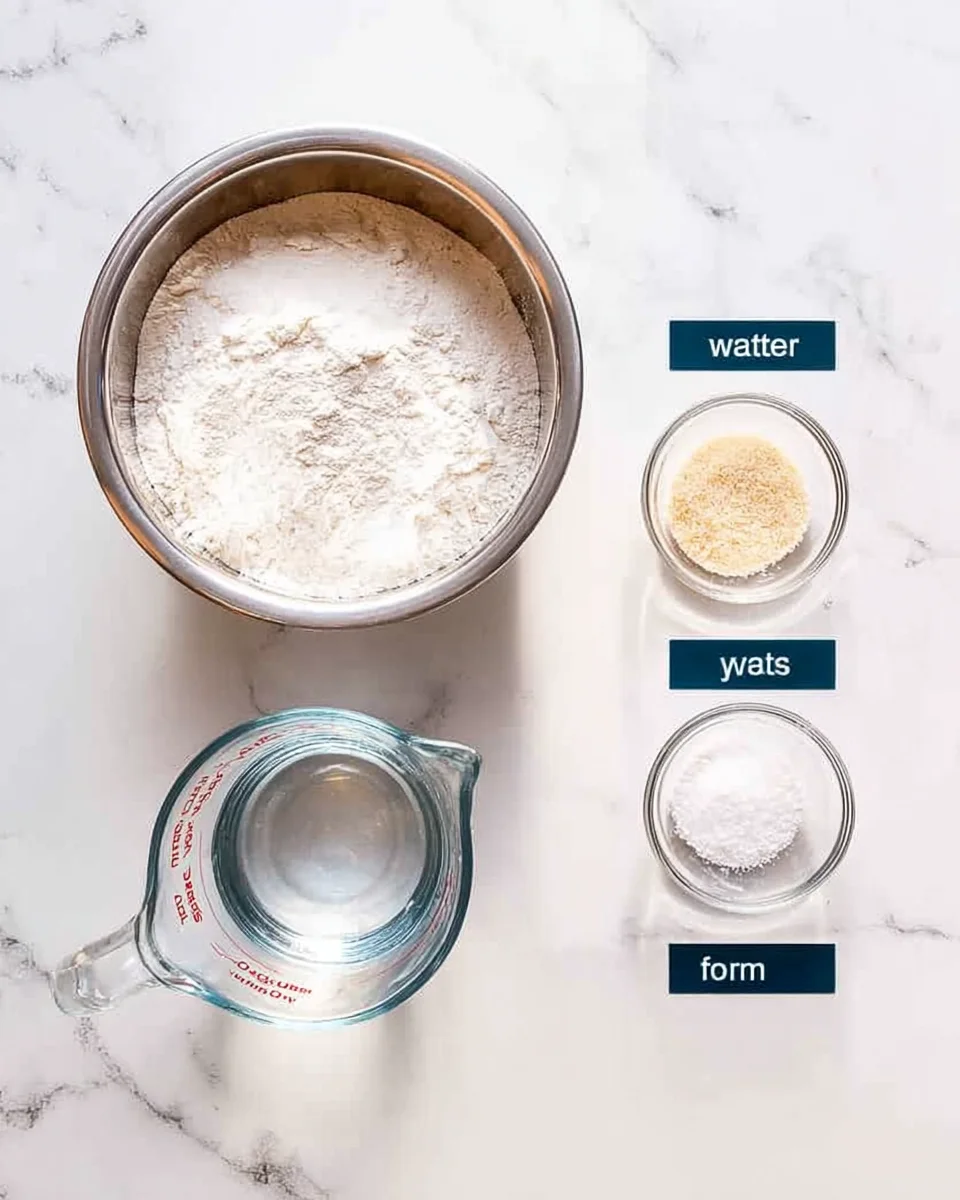
- Yeast – I usually use Rapid Rise or Instant Yeast — the kind that you don’t have to activate in water first. But if you only have regular “Active Dry Yeast,” no worries! You just dissolve it in water before mixing, and the bread will turn out just as fantastic!
- Flour – bread flour is ideal because it has a higher protein content, meaning more gluten. This gives you the dough’s wonderful elasticity, and helps create that fluffy yet chewy inside texture with big airy holes like sourdough. If you only have all-purpose flour, you’re still going to get great bread — just a slightly different texture.
How to make the world’s easiest homemade bread – Artisan style!
I’m breaking down the steps for you with helpful tips as we go—but you’ll also want to check the video below. Seeing the dough texture and shaping in action really helps, especially for first-timers.
1. Mix up a wet, sticky dough
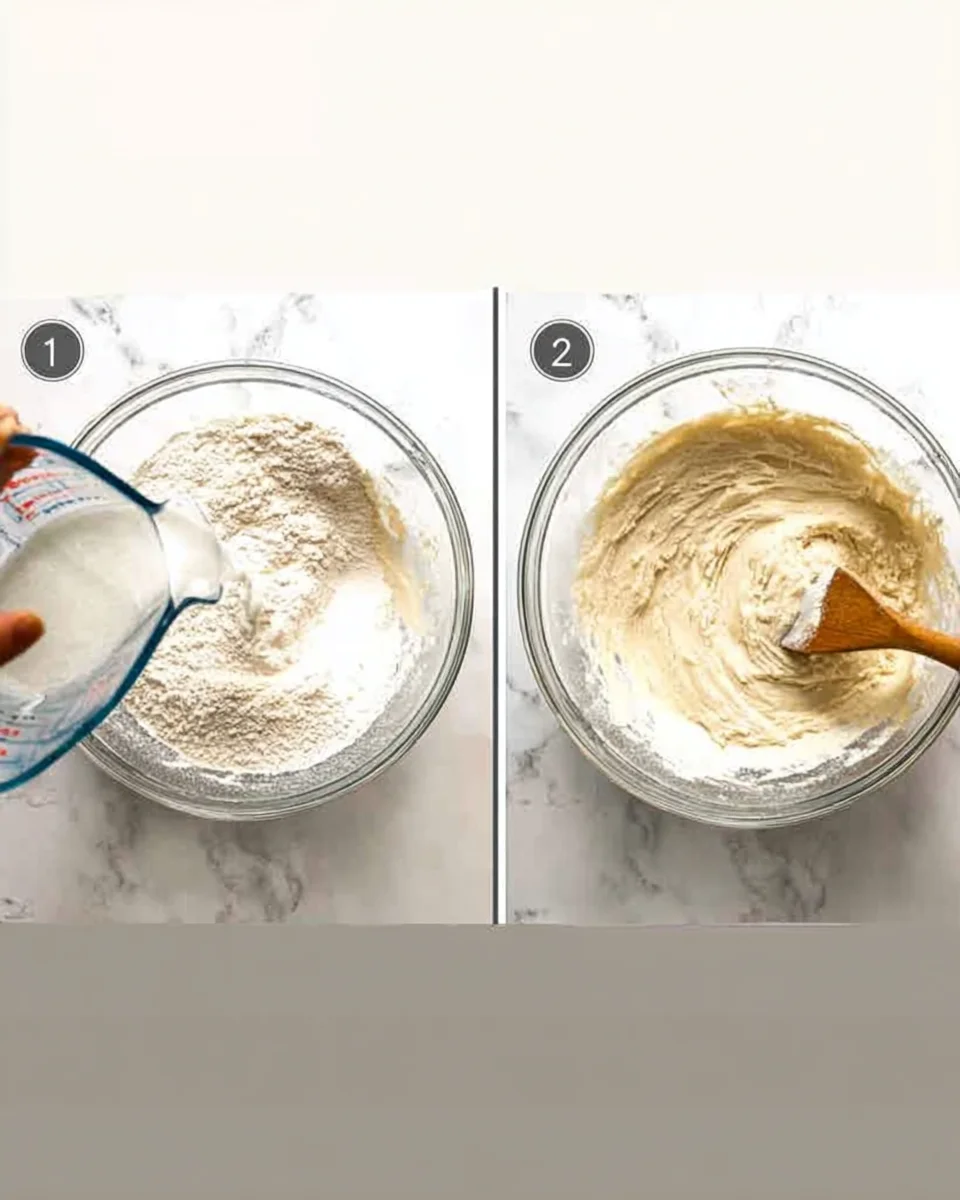
Combine your flour, salt, and yeast in a bowl. Then pour in warm water and stir using the handle of a wooden spoon until all the flour is mixed in. The dough will be wet and messy, definitely not something you can knead—but that’s exactly how it should be! Check out the video around 17 seconds to see that perfect sticky consistency.
2. Let it rise!
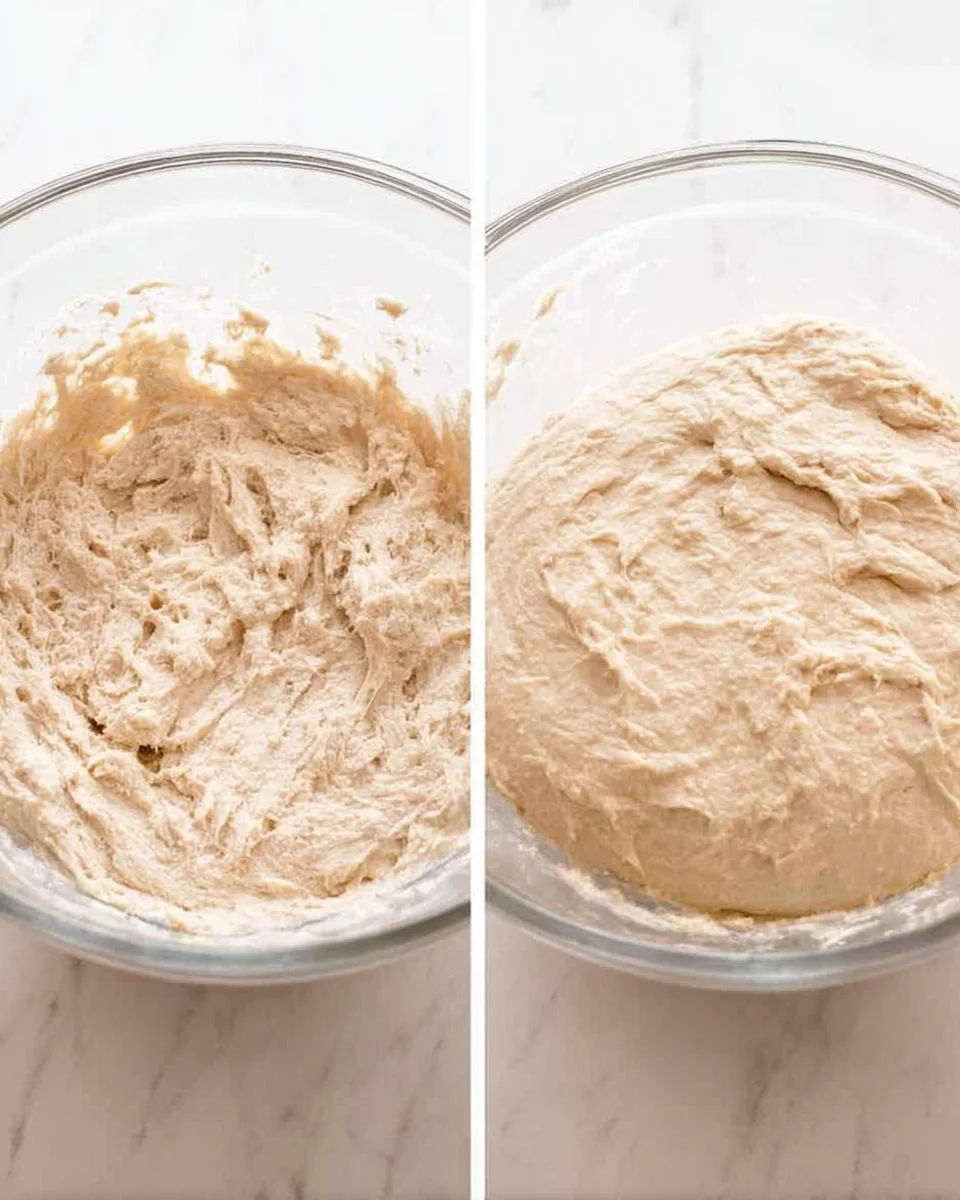
Cover the bowl with cling wrap and set it somewhere warm (between 25 to 30°C, or 77 to 86°F) for about 2 hours. You’ll see it double or more in size, with bubbles forming on the surface, and the dough will wobble like jelly when you move the bowl. Watch the video at 24 seconds to catch this stage.
OPTIONAL – boost flavor: You can bake straight after it rises. But if you want even better flavor, pop the dough into the fridge for at least 8 hours or up to 3 days. Spending more time means more flavor!
I usually make the dough in the morning, refrigerate it all day, then bake it in the evening—or do the opposite and bake fresh in the morning after making the dough the night before. The beauty of this recipe is that it fits your schedule!
No Dutch oven? No worries! You can bake it on a regular tray — see my notes below.
3. Preheat oven and pot
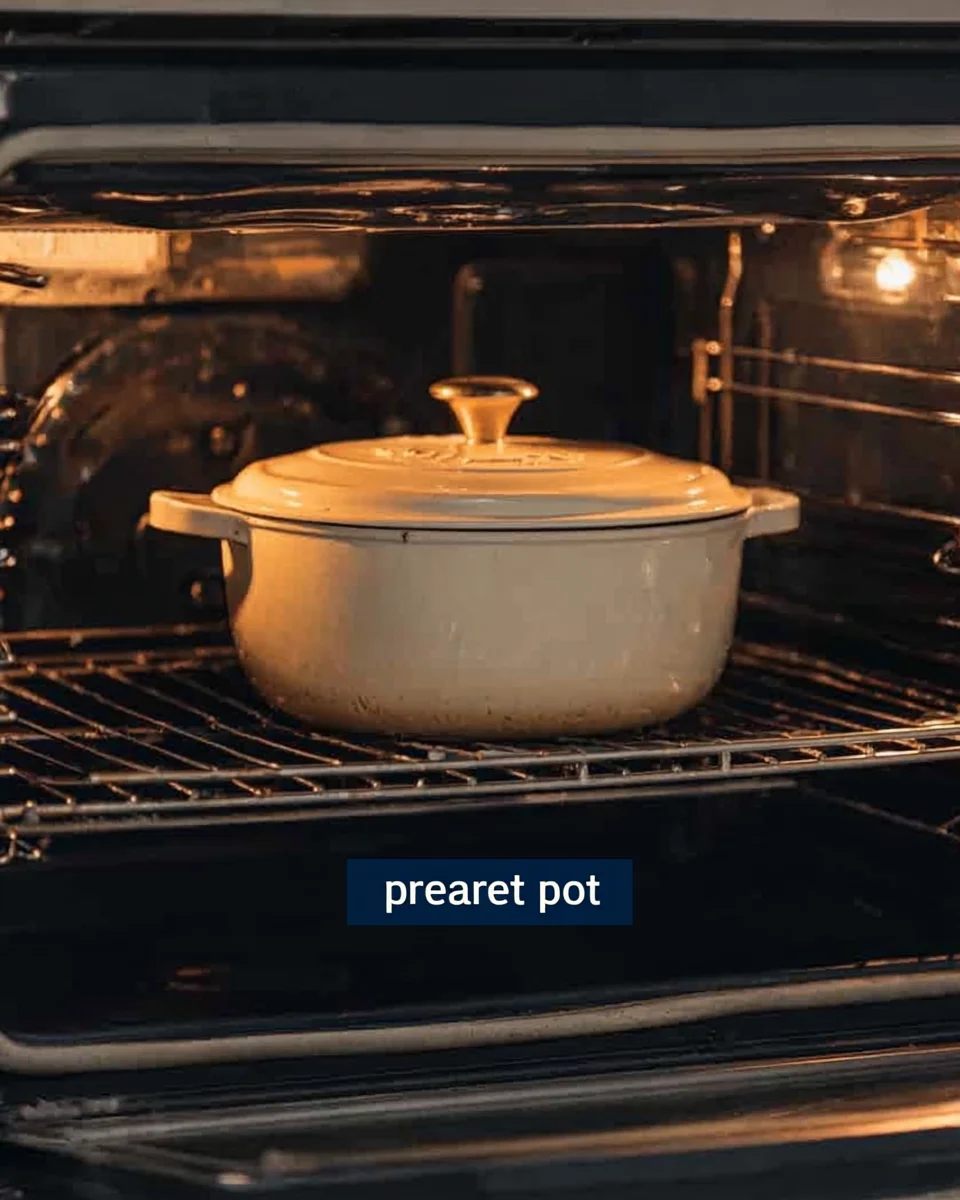
About 30 minutes before your dough has finished rising—or while the refrigerated dough is coming back to room temp—pop your Dutch oven or heavy cast iron pot (about 26cm/10” or bigger) into your oven and preheat it to 230°C/450°F.
The hot oven plus the hot pot really helps give the bread a great rise in the oven!
4. Scrape the dough out
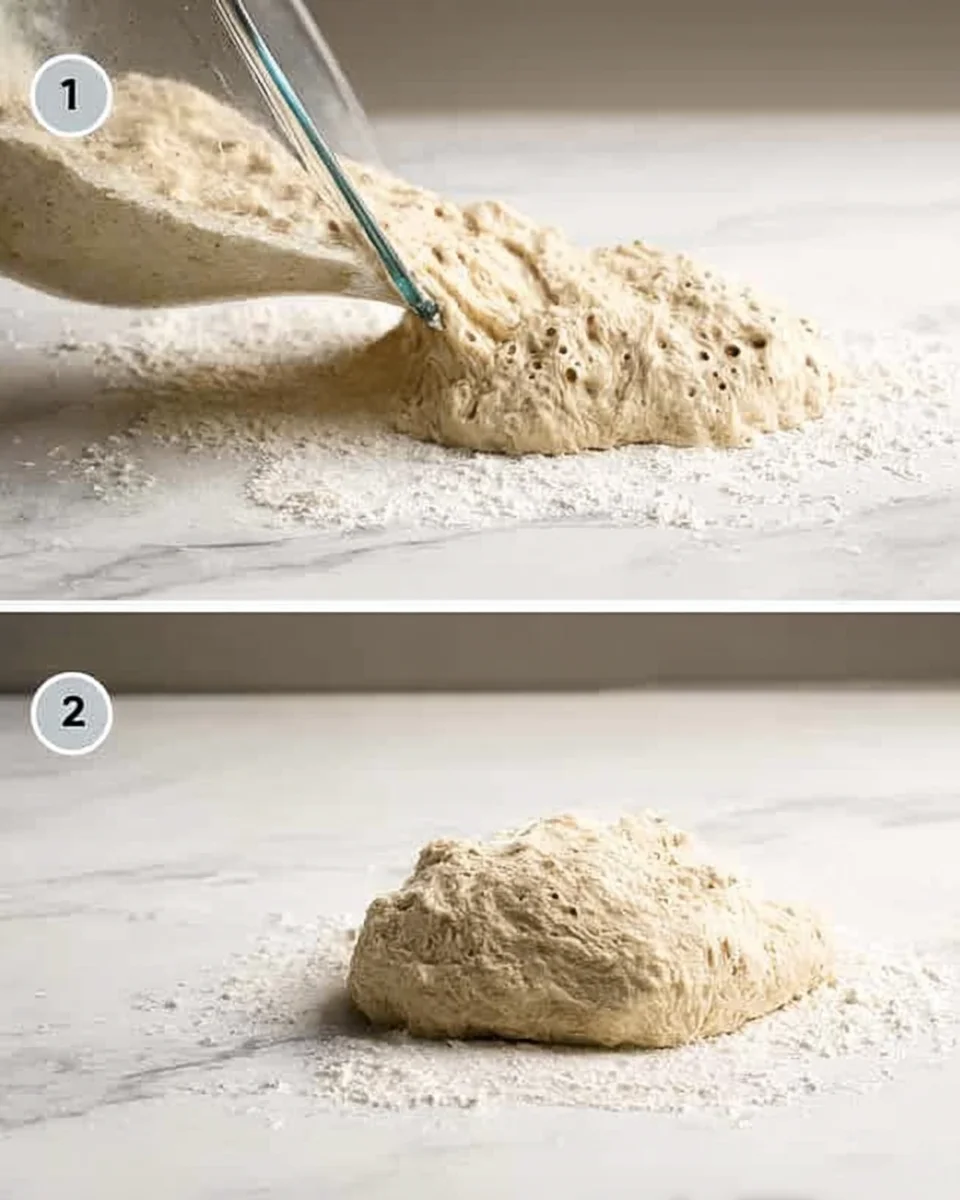
Use a dough scraper to get the dough out of the bowl onto a floured surface. It’ll be sticky and wet, and that’s exactly what we want because we’re not going to knead it. In fact, you won’t even have to touch it!
PRO TIP: This shaping method keeps added flour to a minimum. The less extra flour you use, the wetter the dough stays, which means bigger air pockets, more fluffiness, and a moister loaf.
5. Shape the dough roughly
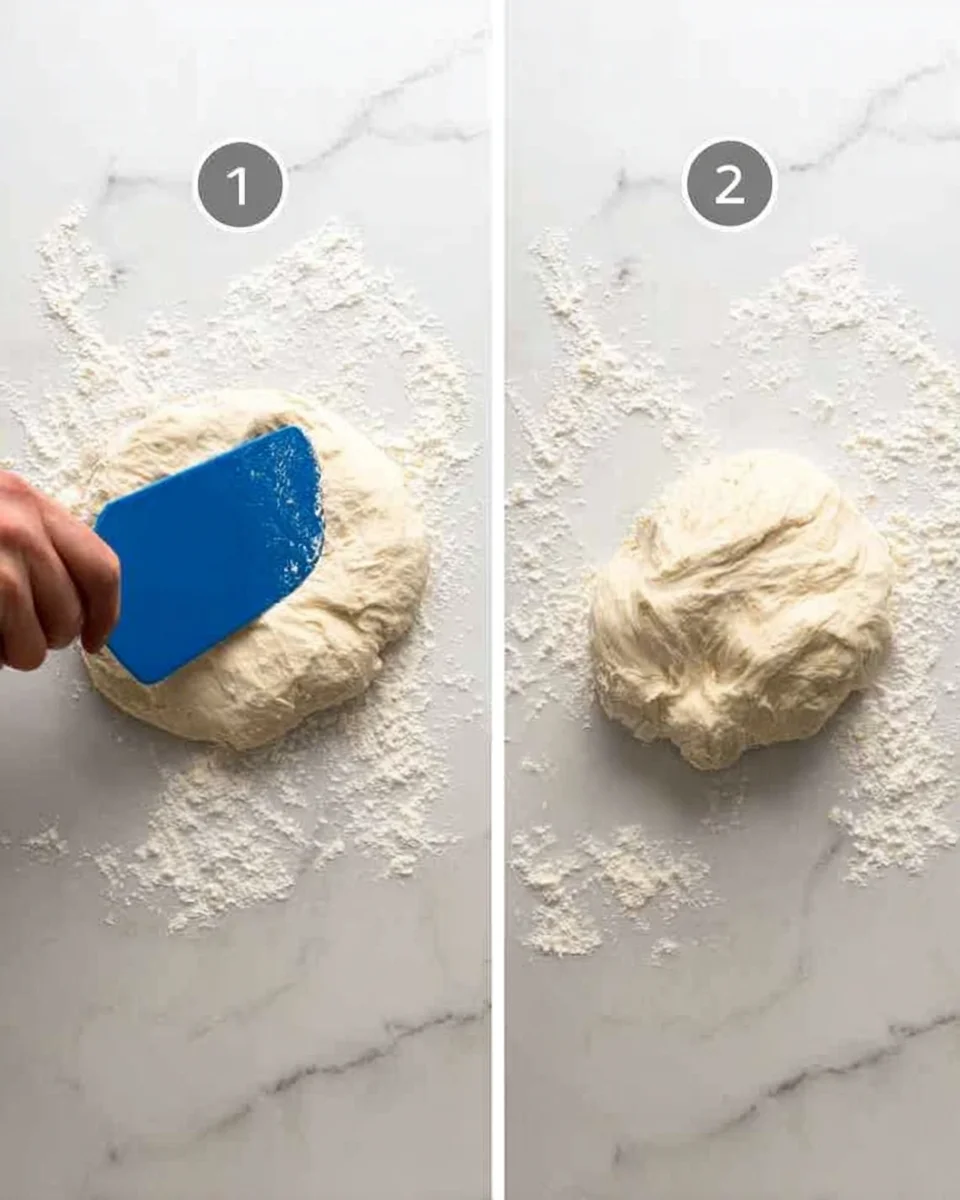
Using your scraper or something similar like a spatula, cake server, or large knife, fold the edges of the dough inward about six times to create a loose round shape.
Don’t stress about making it perfect. This step just helps deflate the dough a bit, and you’ll be shaping it more shortly.
6. Flip the dough upside down onto parchment paper
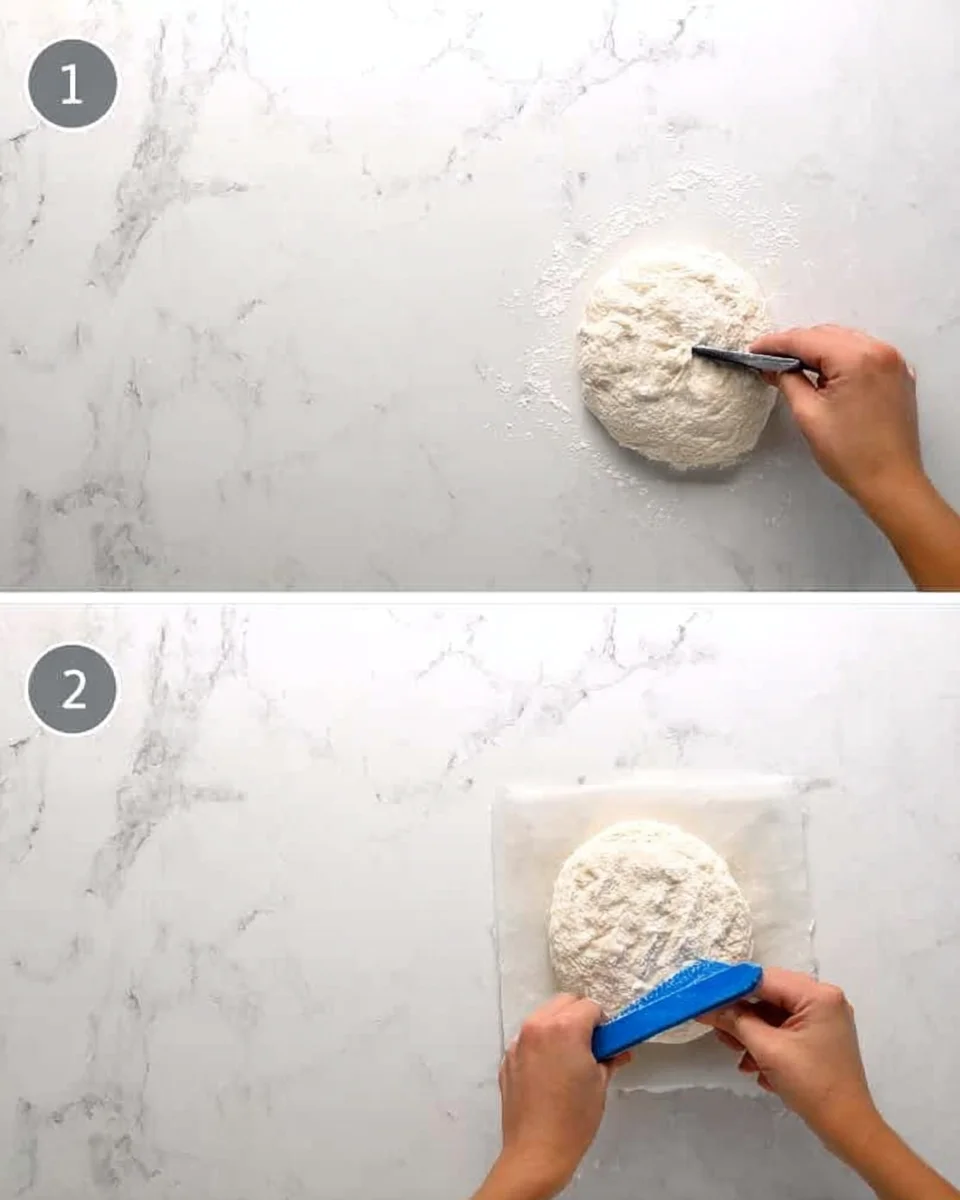
Place a large piece of parchment paper beside your dough, then flip the dough upside down onto the paper using your scraper. The seams for the folds should face down, leaving a nice smooth surface on top.
Give the dough a gentle slide or push toward the center, then quickly shape it into a round or slightly oval shape.
Don’t fuss over a neat shape—this bread is meant to look rustic! A scruffier shape means even better crunchy edges.
7. Get ready to bake!
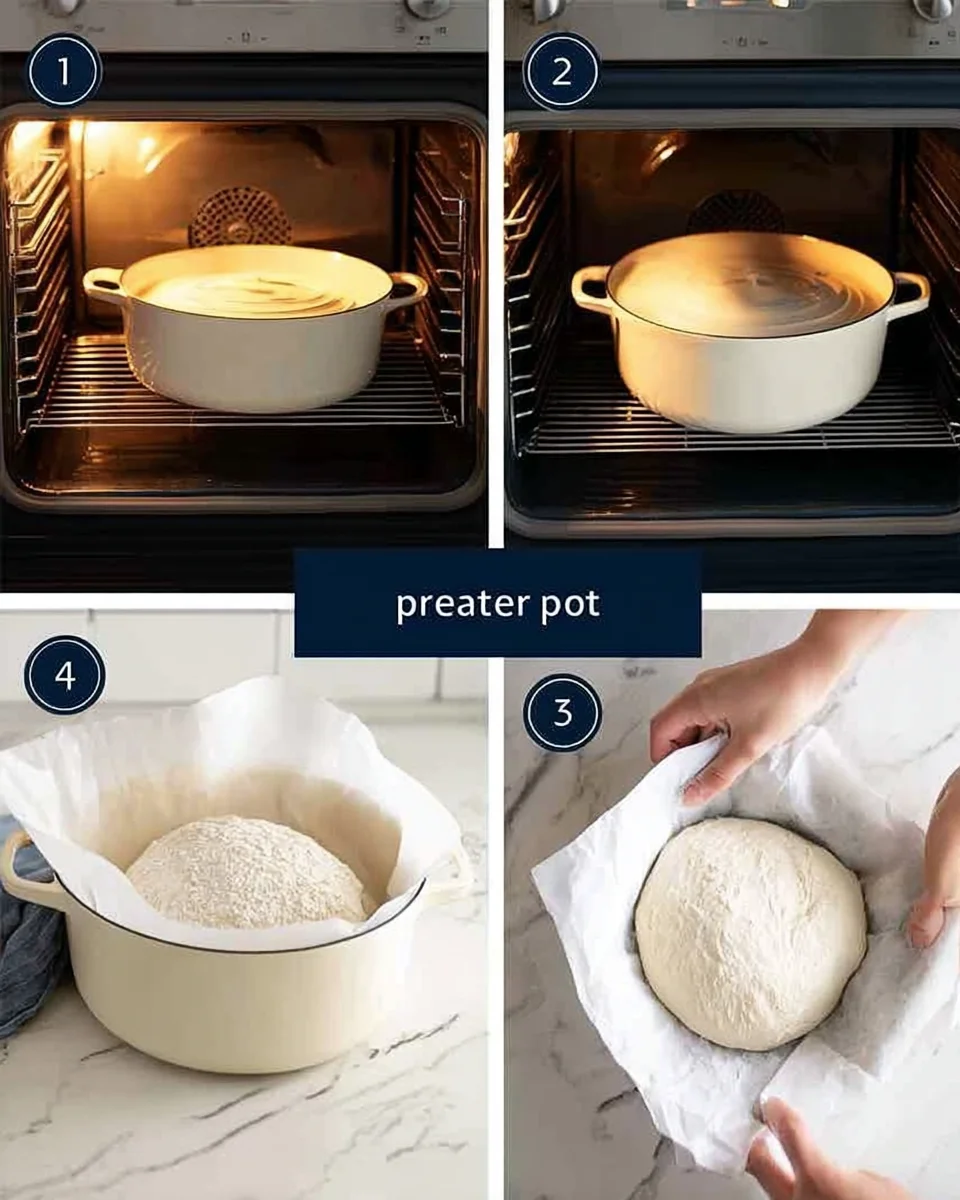
Carefully take the super-hot pot out of the oven, then pick up the dough with the parchment paper and place it right into the hot pot. Put the lid on straight away.
Check the notes below if you don’t have a Dutch oven.
8. Bake!
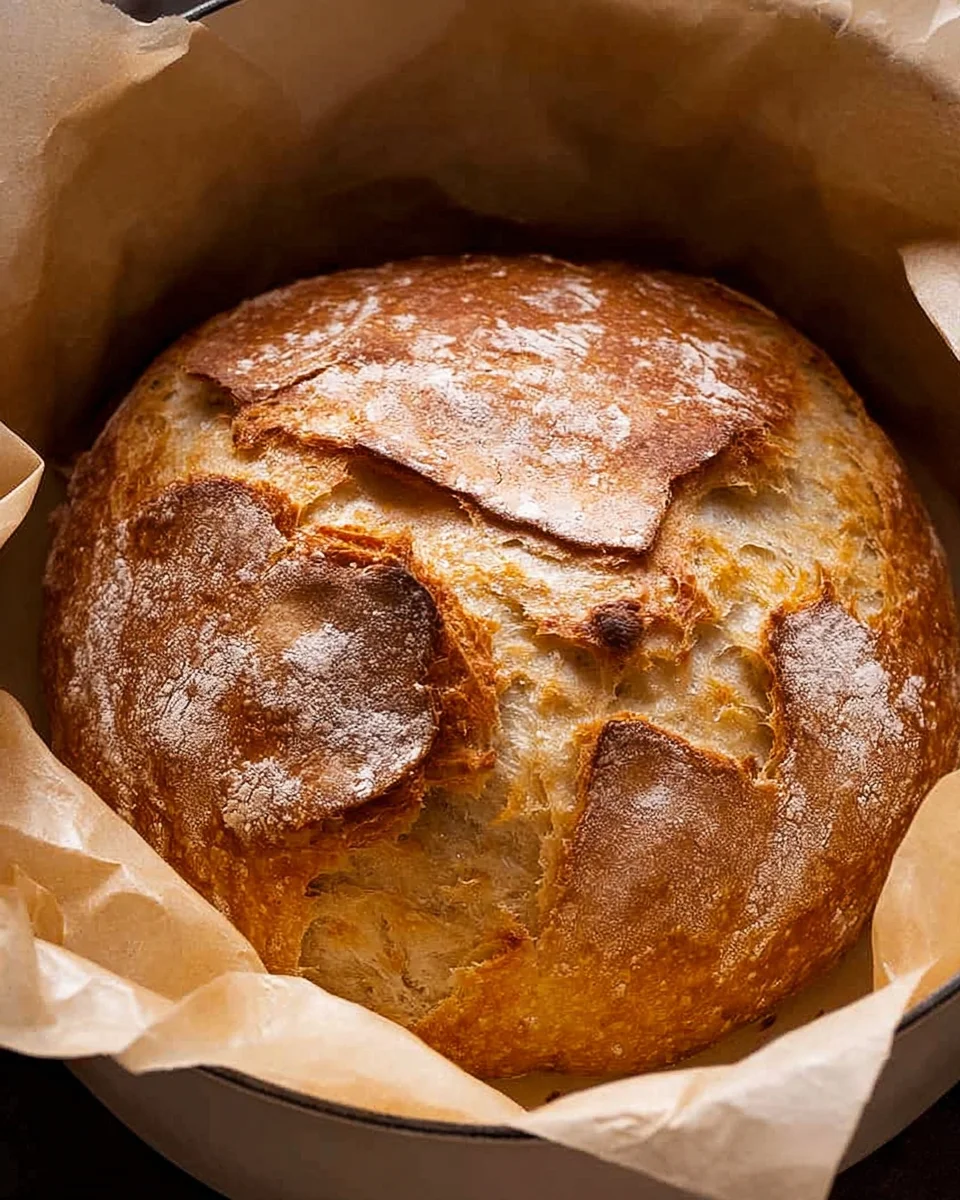
Bake with the lid on for 30 minutes. This traps steam, helping the bread rise as it bakes before the crust hardens. Then take the lid off and bake for another 12 minutes to get that gorgeous deep golden color and extra crunchy crust. The surface will crack up—this is exactly what you want! It looks just like the artisan bread from your favorite bakery. 😇
Once out of the oven, let it cool for 10 minutes before slicing. Trust me, this patience pays off. If you slice too soon, the bread might feel a bit doughy in the middle. I learned this one the hard way because patience is not really my strong suit!
Remember — you don’t need a Dutch oven to make this bread!
Why this bread recipe works – and handy TIPS!
- Loose, sticky dough rises more easily than stiffer doughs, making it perfect for this style of bread.
- No kneading needed means the dough stays rough and wild, but because it’s soft and airy, it puffs up enough to smooth itself out as it rises. Prefer a soft, sliceable loaf? Try our Simple Soft Sandwich Bread (6-Ingredients, No-Knead).
- The dough is super forgiving — if it feels too stiff, just add a splash of water. If it’s too wet, sprinkle a little more flour. Not rising? Try a warmer spot in your kitchen. Whether it takes 45 minutes or 5 hours, as long as it roughly doubles in size and looks bubbly like in the video, it’ll still turn out great — just make sure your yeast isn’t expired!
- Why you want a preheated Dutch oven: It creates a steamy environment that gives the bread a nice “boost” in the oven before the crust sets. Professional bakeries use steam ovens, but your heavy pot does the same job at home. This same Dutch-oven steam method powers our No-Knead Rosemary Sea Salt Bread.
- No Dutch oven? No sweat! Just put a pan of hot water on a lower rack inside your oven while baking the bread on a baking tray to mimic the steam effect.
- Big holes inside the bread come from the wet dough, high oven temperature, and the steam effect created by the hot pot. Bread flour also helps — you’ll notice slightly smaller holes if you use all-purpose flour instead.
- In a pinch? Bake your bread right after the first rise.
- But for the tastiest results, refrigerate your dough for 8 or more hours. I usually mix it up first thing in the morning and bake that night, or prepare it at night and bake fresh the next morning, about 10 to 12 hours refrigerated.
- Why refrigerating makes tastier bread: The cold slows down the yeast rising too fast, giving enzymes time to convert starches into sugars that add delicious complexity to the bread’s flavor. That’s why you rise first at room temp, then refrigerate.
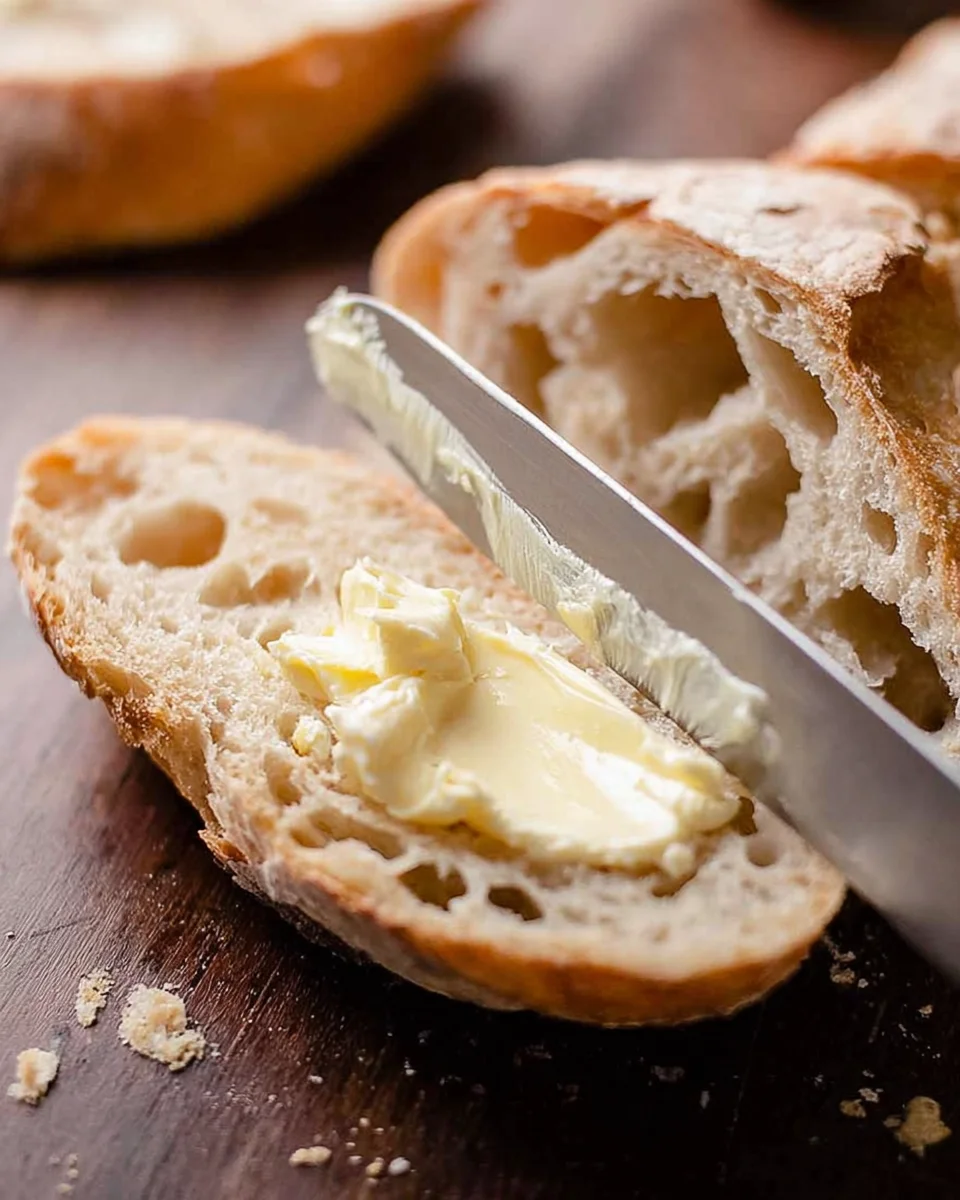
All the ways to enjoy this bread!
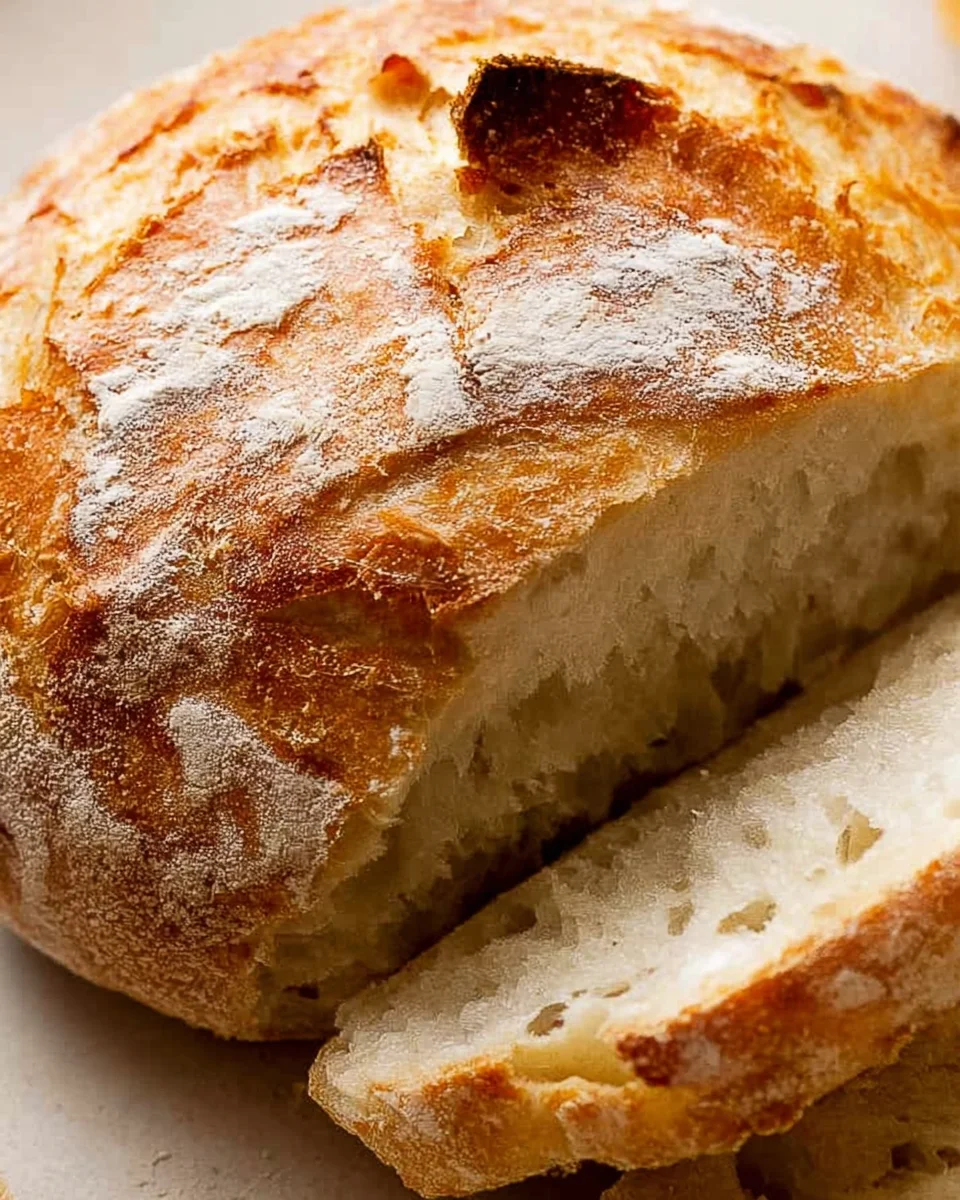
Any way you’d use store-bought bread, you can use this homemade version. It has all the strength and texture of bakery bread, so it’s endlessly versatile!
Enjoy it right out of the oven, loaded with butter. Make sandwiches or toast it up for breakfast. Use it as a dipper for soups and stews, serve with the Classic Spinach Dip, or turn it into bruschetta, garlic bread, a grilled cheese masterpiece, or even cheesy garlic CRACK bread!
An easy, no-knead artisan yeast bread with a crunchy crust, chewy interior, and large holes similar to sourdough. Requires minimal hands-on time and can be refrigerated to enhance flavor.
- Total Time: 2 hours 45 minutes (including 2 hours rise time)
- Yield: 10 servings (10-12 slices) 1x
Ingredients
- 3 cups (450g) flour, bread or plain/all purpose (bread flour recommended)
- 2 tsp instant or rapid rise yeast (if using active dry yeast, dissolve in water first)
- 2 tsp cooking/kosher salt, NOT table salt
- 1 1/2 cups (375 ml) very warm tap water (up to 55°C/130°F, not boiling)
- 1 1/2 tbsp flour, for dusting
Instructions
- Mix Dough: In a large bowl, stir together flour, yeast, and salt. Add warm water and mix with a wooden spoon until all flour is moistened; dough will be wet and shaggy.
- Rise: Cover bowl with cling wrap or plate; let dough rise at room temperature (25-30°C/77-86°F) for 2-3 hours until doubled in size with bubbles and jiggles like jelly.
- Optional Refrigeration: For better flavor, refrigerate dough up to 3 days after first rise. Let come to room temperature (45-60 minutes) before baking.
- Preheat Oven: Place Dutch oven or heavy cast iron pot (26 cm/10″ or larger) with lid in oven and preheat to 230°C/450°F about 30 minutes before baking.
- Shape Dough: Lightly dust work surface with 1 tbsp flour. Scrape dough onto surface, sprinkle 0.5 tbsp flour on top. Fold edges inward about six times forming a loose round shape; don’t overwork.
- Transfer to Parchment: Place large piece of parchment paper next to dough, flip dough onto paper seam side down, smooth side up. Push dough lightly to center and reshape round or oval.
- Bake Dough in Pot: Carefully remove preheated pot from oven, using parchment paper lift dough into pot. Cover with lid immediately.
- Bake Covered for 30 minutes to trap steam, then uncover and bake for additional 12 minutes until crust is deep golden and crispy.
- Cool: Remove bread from oven and cool on rack for 10 minutes before slicing and serving.
Notes
Dough consistency may vary; add water if too dry, flour if too wet., If dough doesn’t rise well, try warmer spot or elevate bowl in warm water bath; avoid direct sunlight., For wholemeal flour, reduce flour by 30g (1/4 cup) and adjust liquid as it absorbs more., If using table salt, reduce to 1 1/4 tsp due to higher saltiness than kosher salt., If no Dutch oven, use a baking tray and create steam by placing a pan of boiling water in oven below bread during baking., Dough can be refrigerated up to 3 days after first rise, enhancing flavor; dough may deflate but is normal., Bread best fresh for 2 days; store airtight, freeze up to 3 months., Using bread flour results in chewier texture and longer freshness; all-purpose flour results in smaller holes and different texture.
- Prep Time: 5 minutes
- Cook Time: 40 minutes
- Category: Bread
- Cuisine: Artisan
Nutrition
- Serving Size: 1 slice
- Calories: 155 cal
- Fat: 1 g
- Carbohydrates: 32 g
- Protein: 5 g