Graham Flour Pie Crust (Graham Cracker Pie Crust)

This graham flour pie crust is for anyone who can’t choose between a buttery, flaky pie crust and the nutty, delicious graham cracker crust! This graham flour pie crust combines the best of both and makes an incredibly flaky pie crust with the flavor of classic graham crackers!
This pie crust can replace a classic pie crust in any pie recipe. It goes so well with cream pies, custard pies, and fruit pies too. Here I’ll show you how to make this fantastic crust with foolproof results with a step by step recipe.
Why I love this recipe
- Just like my classic pie crust recipe, this recipe will provide detailed step by step instructions on how to make this pie crust.
- I provide tips on how to make perfect pie crusts that are easy to follow, even if you’re a complete beginner!
- Graham cracker pie crust has more flavor and a texture that I love, and it’ll make your pies even better!
- This pie crust can be blind-baked, par-baked, or baked with the filling too, just like regular pie crust.
Ingredients to make graham flour pie crust
Ingredients for the dough
AP flour – All purpose flour has medium protein content and is the most suitable flour to use for various baking recipes. Traditionally it can contain between 10 – 12% protein content.
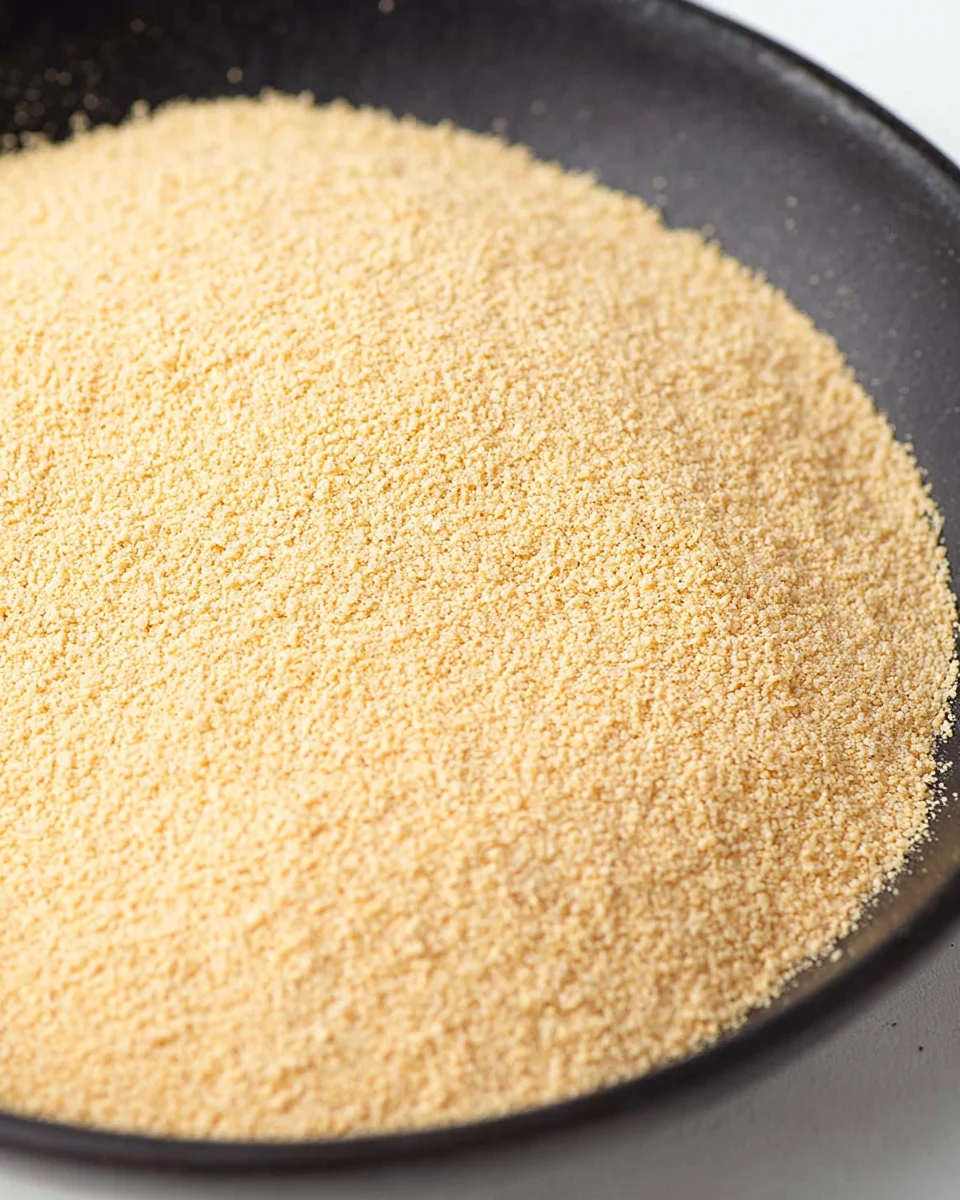
Graham crackers – For this pie crust, I use the classic honey graham crackers. However, you can use cinnamon or other flavors as well. The crackers are processed in a food processor so that they are ground into fine crumbs.
Unsalted butter – Just like my classic pie crust, this will also be an all butter crust. I use unsalted butter that is chilled and cubed. But you can use salted butter as well. Just reduce (or eliminate) the amount of salt you add.
Salt – I prefer my crust to have some saltiness (over sweetness). So salt is non-negotiable for me. It’s the difference between a delicious crust and a bland crust. Reduce the salt if you use salted butter.
Sugar – I add sugar for flavor and to bring out the nutty flavor of the graham crackers.
Ice water – One of the most important steps in making pie crusts is to keep the dough nice and cold. So, it’s important to use ice cold water. I use ice cubes to keep the water chilled. The flour will also form gluten in the presence of water in the dough. So it’s important to only add just enough to hydrate the dough. Otherwise the dough might form TOO MUCH gluten.
Other equipment and ingredients needed
Pie plates – A traditional pie plate can be between 9 and 10 inches in diameter. A regular pie plate will have a depth of about 1.5 inches, and a shallow pie plate will be about 1 inch in depth. A deep pie plate will have a depth of around 2 inches (maybe up to 2.25 inches). This pie crust recipe will be enough to cover a 2 inch deep pie plate, and to have a top crust as well (i.e. double crust pie).
Spray bottle with cold water – This is totally optional. But if you’re a beginner, and you have had issues with adding too much water to your pie crust before, then a spray bottle will be your savior! You can use this to mist the water into dry spots on your dough so that you can control the hydration, without adding too much AND without handling the dough too often.
Rolling pin – To roll out the pie dough.
Egg wash – An egg wash is optional when making pie crust, but it can be beneficial in some applications. An egg wash will give the crust a beautiful golden sheen when baked through. An egg wash can also help to “seal” the crust, and slow down the crust from getting soggy when filled with a cooked filling.
Foil or parchment paper – When blind-baking a pie crust, you will need either foil or parchment paper to place inside the crust. This will act as the barrier between the crust and the pie weights. I prefer to use foil.
Pie weights – Absolutely necessary when blind-baking or par-baking. You can purchase ceramic pie weights, but after using many different types of pie weights, I have two favorites.
- Regular granulated white sugar
- Uncooked rice
Both of these are small enough to cover a larger surface area, and be more efficient in keeping the crust in place while it bakes.
Baking tray or pizza stone – This equipment will help you get that beautiful golden crust on the bottom of your pie as you bake it. Trust me!
Step by step recipe for making the graham flour pie dough and pie crust
Making the dough
It’s imperative that the butter and liquid ingredients are all chilled prior to making the pie dough. This will make sure that the dough (and most importantly, the butter) will be nice and cold.
To keep the butter cold, cut it into cubes, weigh, and then keep them chilled in the fridge until needed.
Place the graham crackers in the food processor and process until you have fine crumbs that resemble coarse flour. You could also purchase graham cracker crumbs separately.
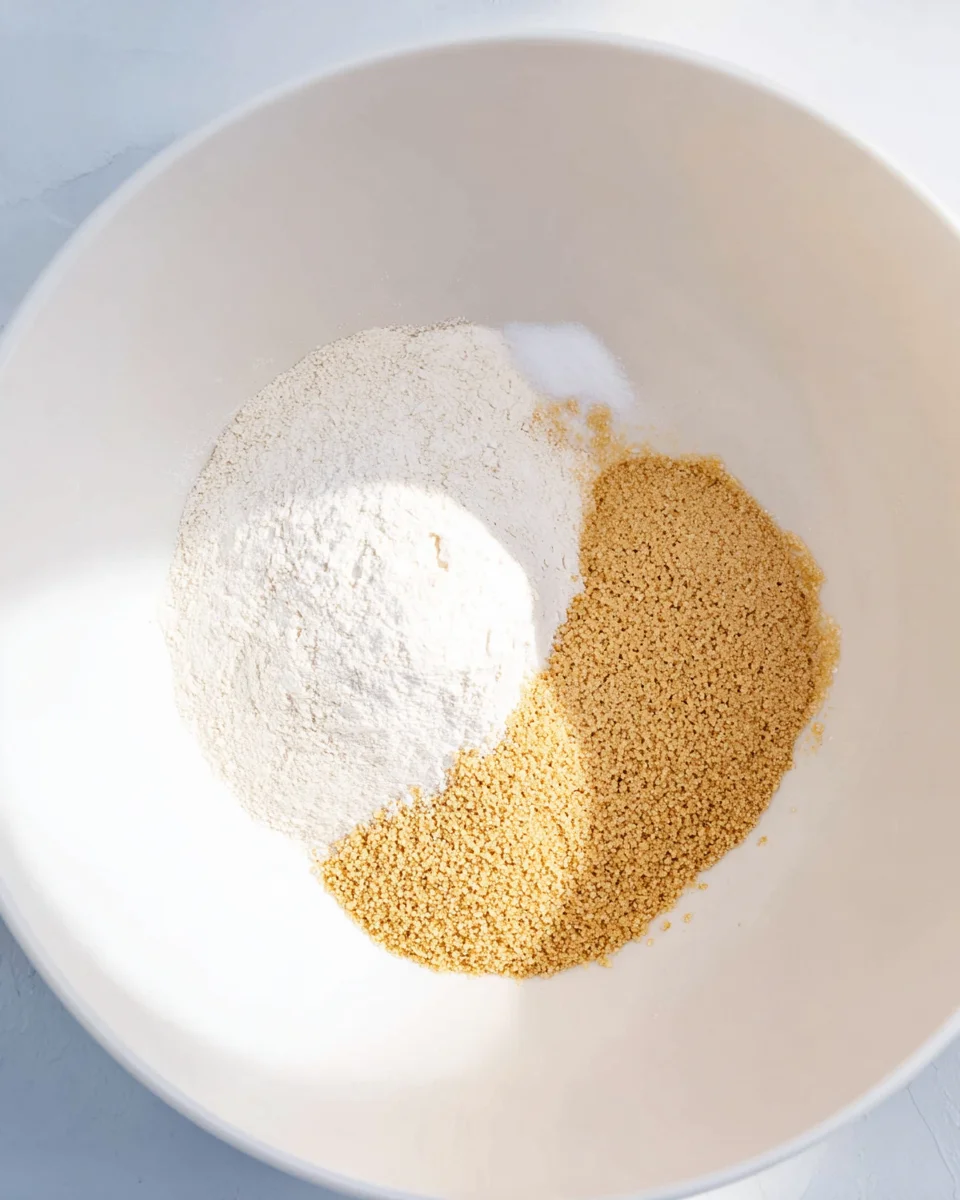
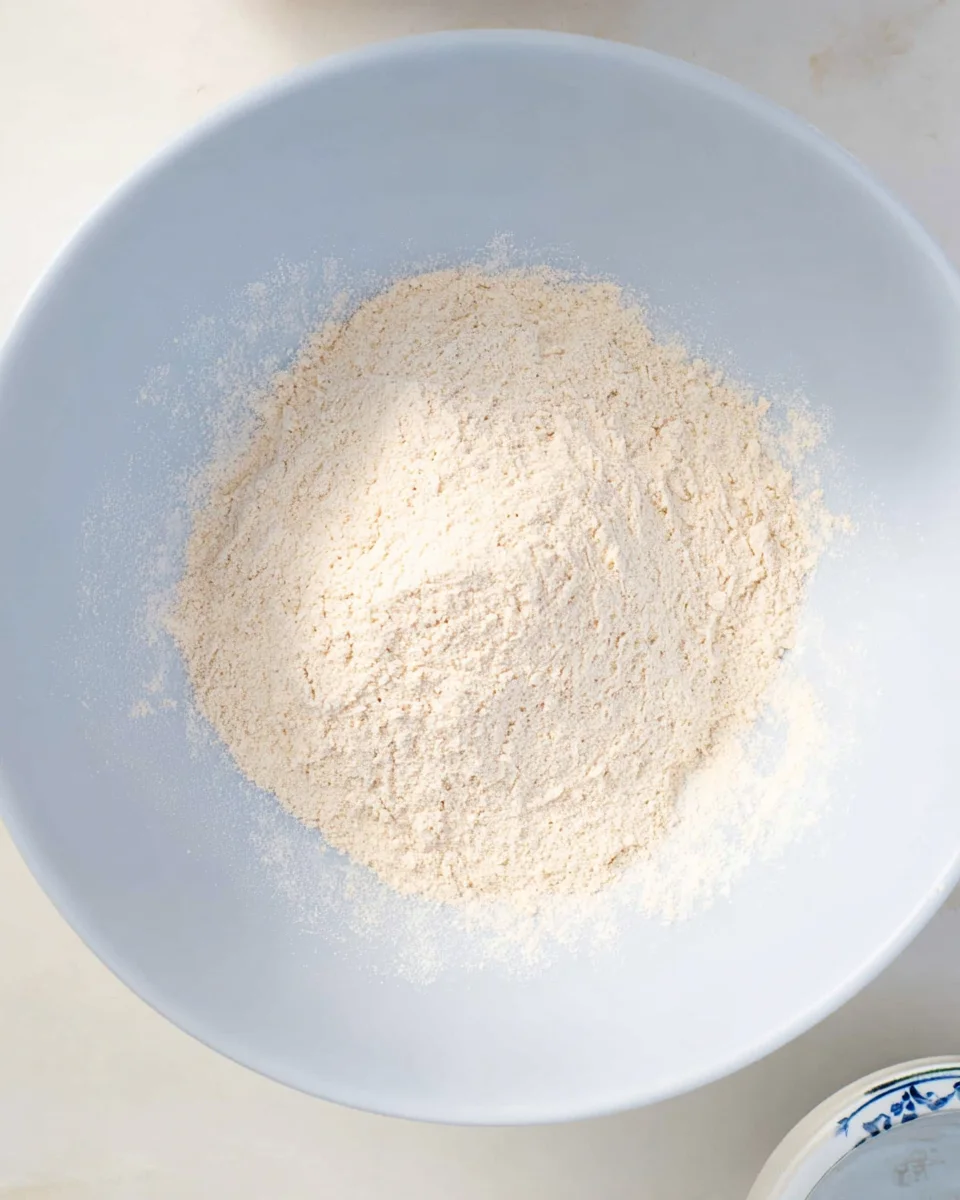
Place the graham flour, AP flour, sugar, and salt in a large bowl. Whisk to mix it all together as shown below.
Mixing the butter
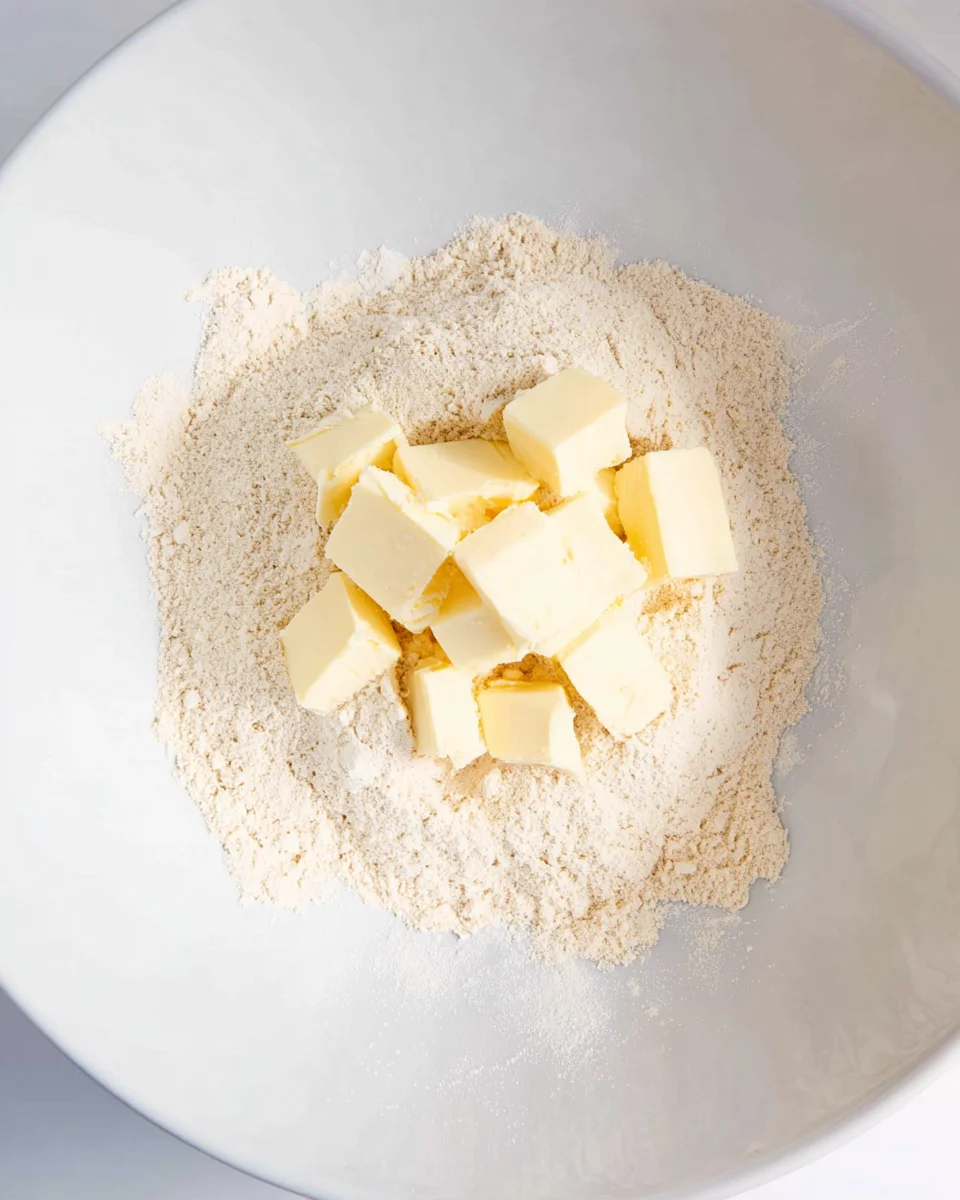
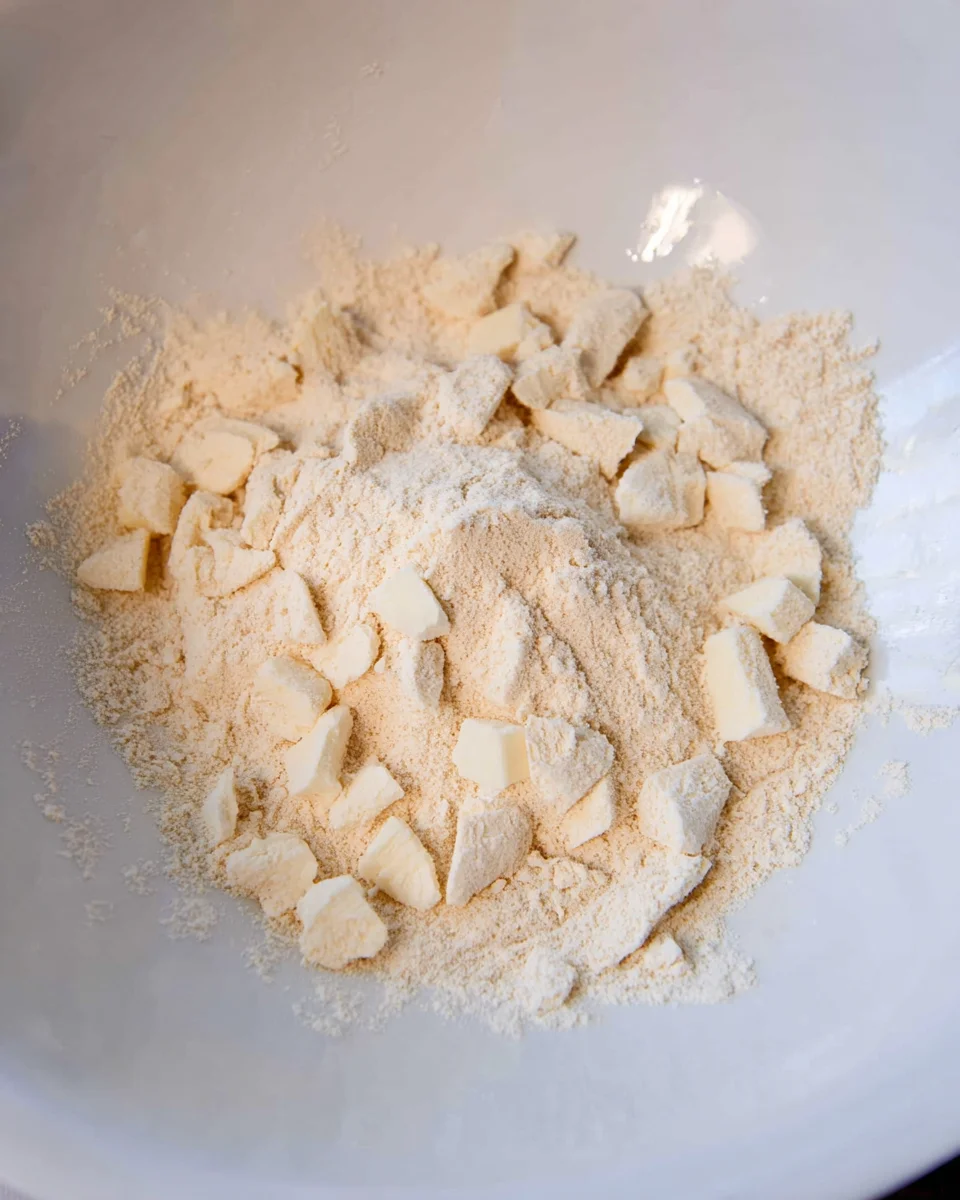
Add the butter and toss the cubes to coat with the dry inredients. Working quickly, cut the butter into the dry flour. This can be done in several different ways.
- Using a pastry cutter, cut the butter into the flour to get smaller butter pieces coated in the flour mix.
- Use your fingers to squeeze the butter pieces to flatten them and break them into smaller pieces. Coat the flattened butter pieces with the flour mix as you go. This is my preferred method.
- Instead of cutting the butter into cubes, you can grate frozen butter and then keep that chilled in the fridge until this step. Then add the grated butter into the flour and toss to coat. Since the butter pieces are already small, you don’t have to do anything further.
- You can also use a food processor. Pulse the flour mixture and butter until the butter is processed into smaller pieces and mixed with the flour.
The larger the butter pieces, the more flaky the pie crust. And the smaller the butter pieces, the more mealy and crumbly the pie crust. I aim to have butter pieces that are about the size of hazelnuts, or large flattened pieces of butter, along with smaller coarse sand-like pieces.
If at any point the butter is too soft, please place the entire bowl in the fridge of freezer until the butter firms up again. This happens to me during summer, because the kitchen is warm and my hands also warm up quite a bit. I just cover the bowl with plastic wrap and place it in the fridge or transfer the flour and butter in to a freezer bag, and then place this in the fridge or freezer.
Adding the liquid
After you cut the butter into the dough, you can mix in the liquid. Make sure the butter is still nice and cold, and the vodka (if using) and water are also chilled.
Mix the vodka with about 1/2 of the water and add this to the flour – butter mixture, and gently mix it in. Only use your fingertips to mix the dough because you don’t want to handle the dough more than you need to.
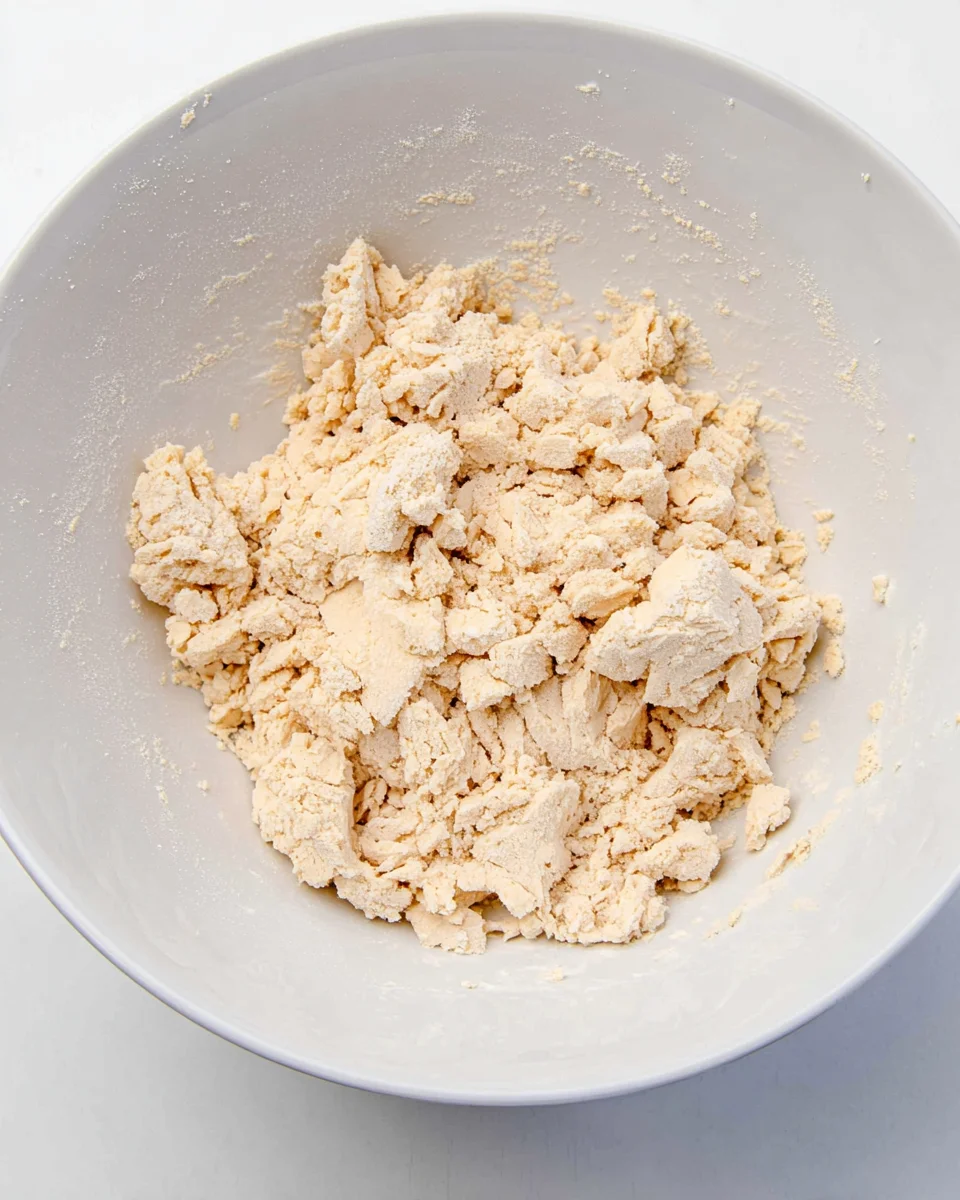
Then stream in the rest of the ice cold water in small amounts and mix it in with your fingers as well. Do not knead the dough.
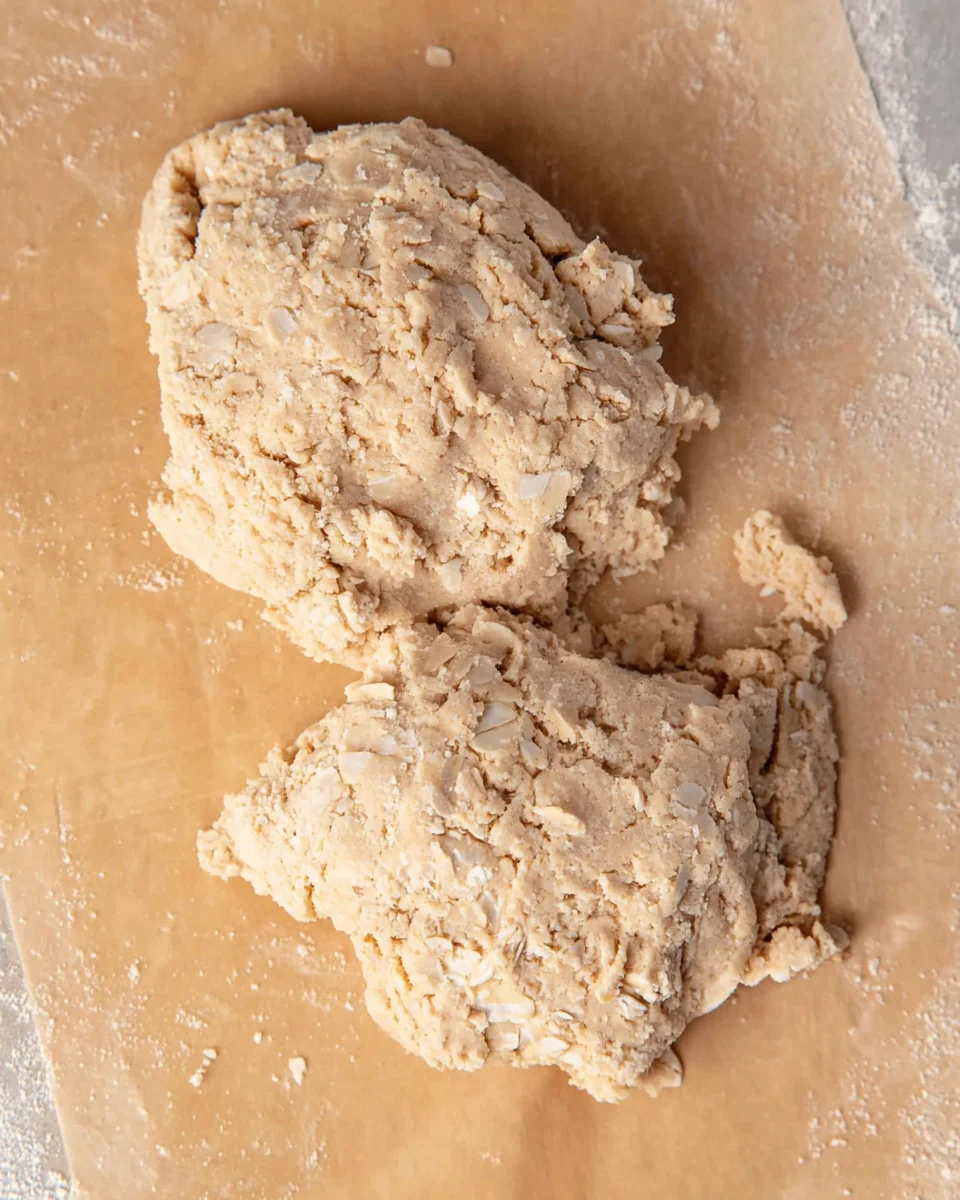
The dough should just hold together, while still having some dry spots. If the whole dough is saturated with water and is even a little sticky to the touch, then you’ve added too much water.
I’ve shared tips on how you can make sure to add just enough water to your dough in my article on how to make perfect pie crusts. This is where a spray bottle comes in handy. When I was learning how perfect my pie crusts, this was the hardest part to learn. So I share how I learned to get this step right in that pie crust guide.
The same techniques apply in this graham flour pie crust as well.
Creating the layers for flaky graham flour pie crust
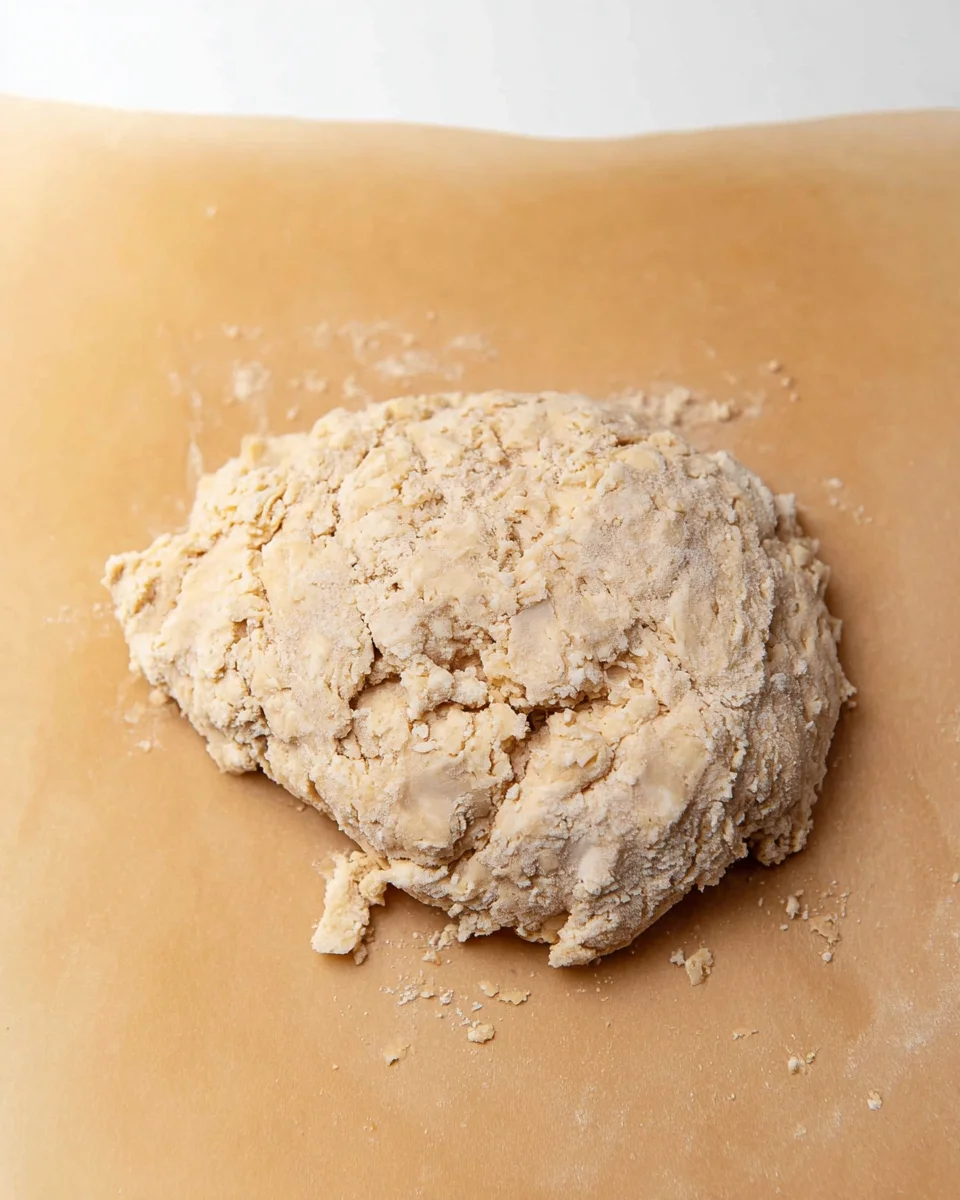
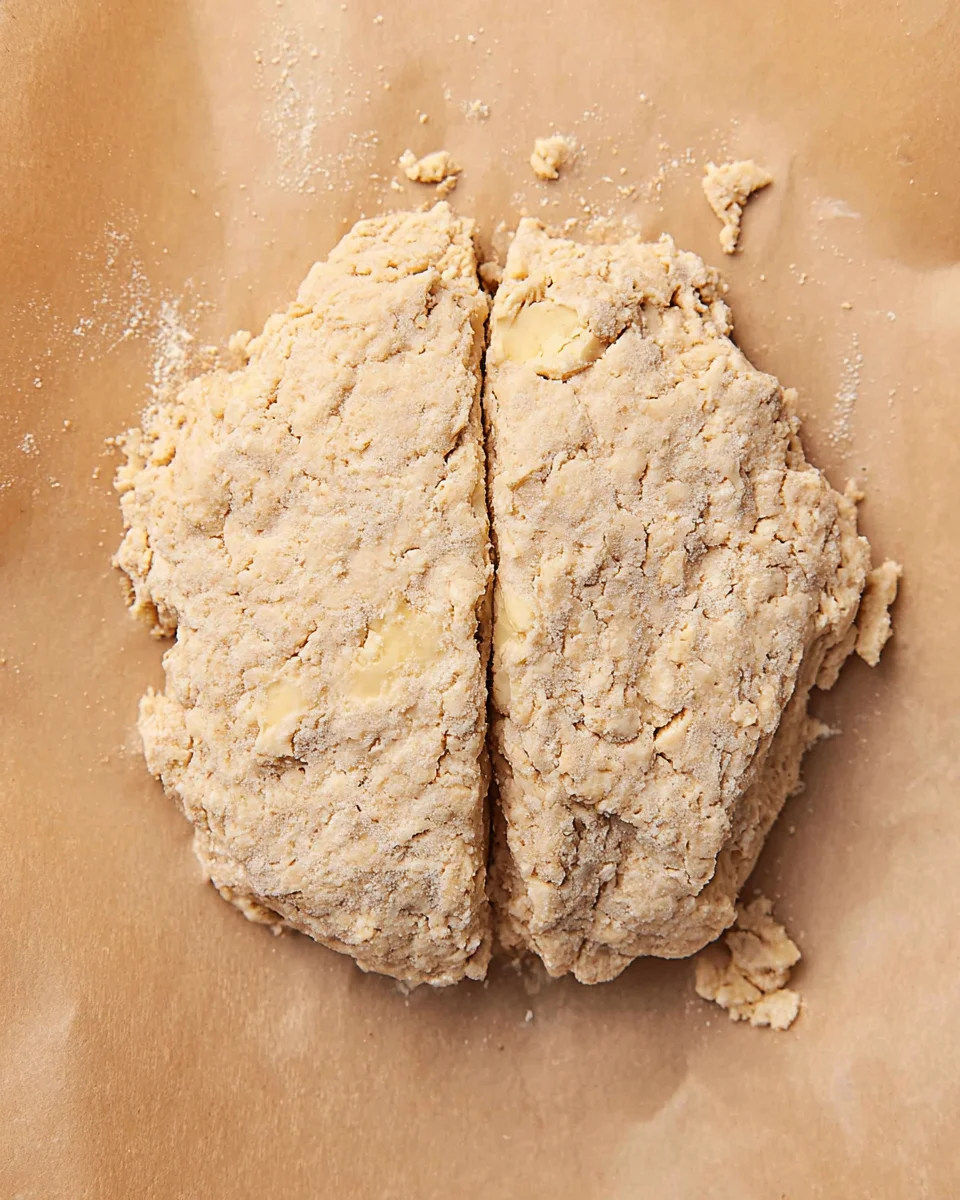
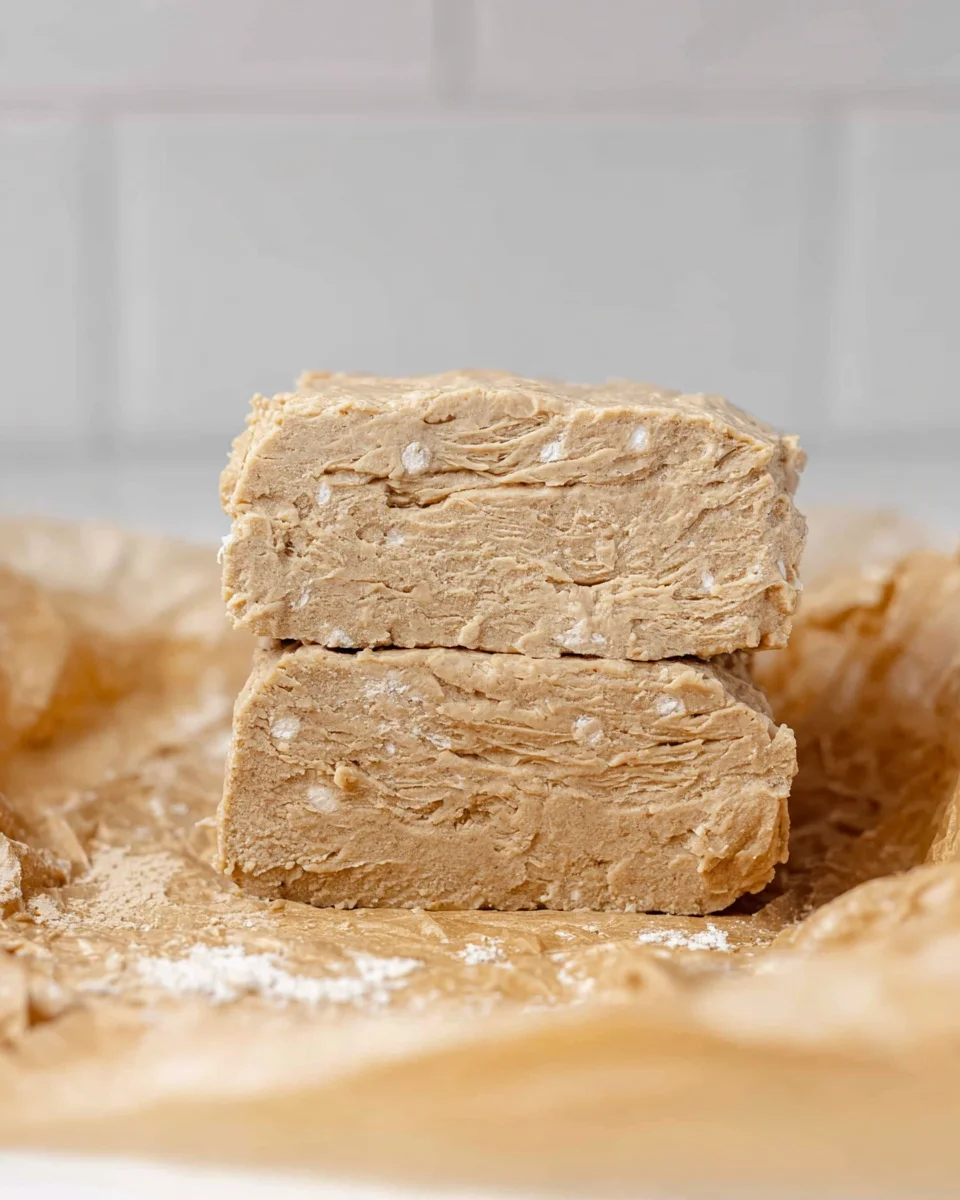
Once you have formed the dough, flatten it into a disc or square shape. Cut the dough into four pieces and stack them on top of each other. Slightly flatten the dough again and cut it in half.
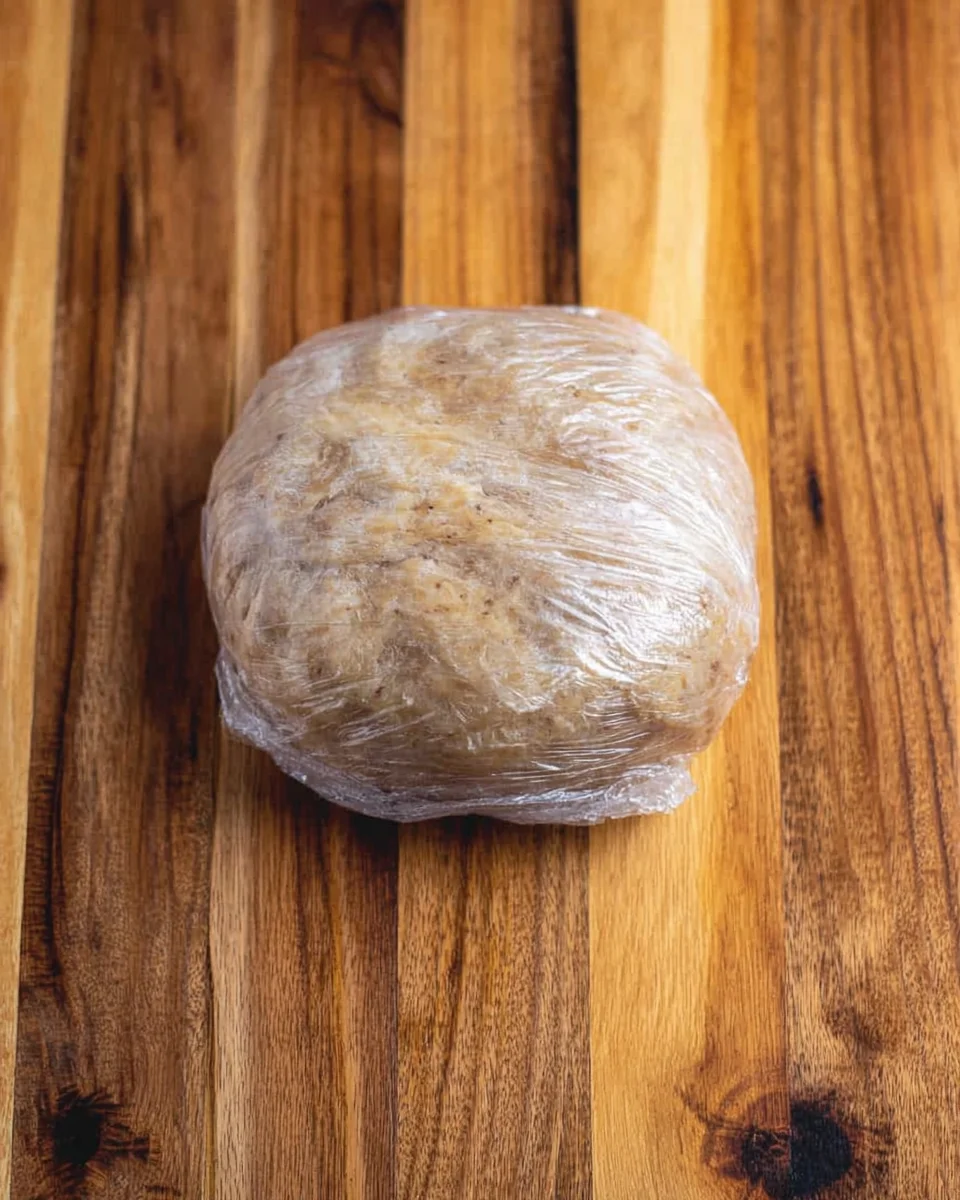
Form each portion into a round disc and wrap each with plastic wrap. Refrigerate for at least 1 hour. I prefer to let it rest in the fridge overnight.
Rolling out the dough
For more detailed information, you can read the tips I have shared here. But here’s a quick overview.
Roll out the pie dough on a well-floured countertop or work surface. If your dough had too much water added to it, you can add more flour to your countertop to prevent the dough from sticking.
If the butter and dough are too solid, use your rolling pin to slap the dough a few times to make it more malleable.
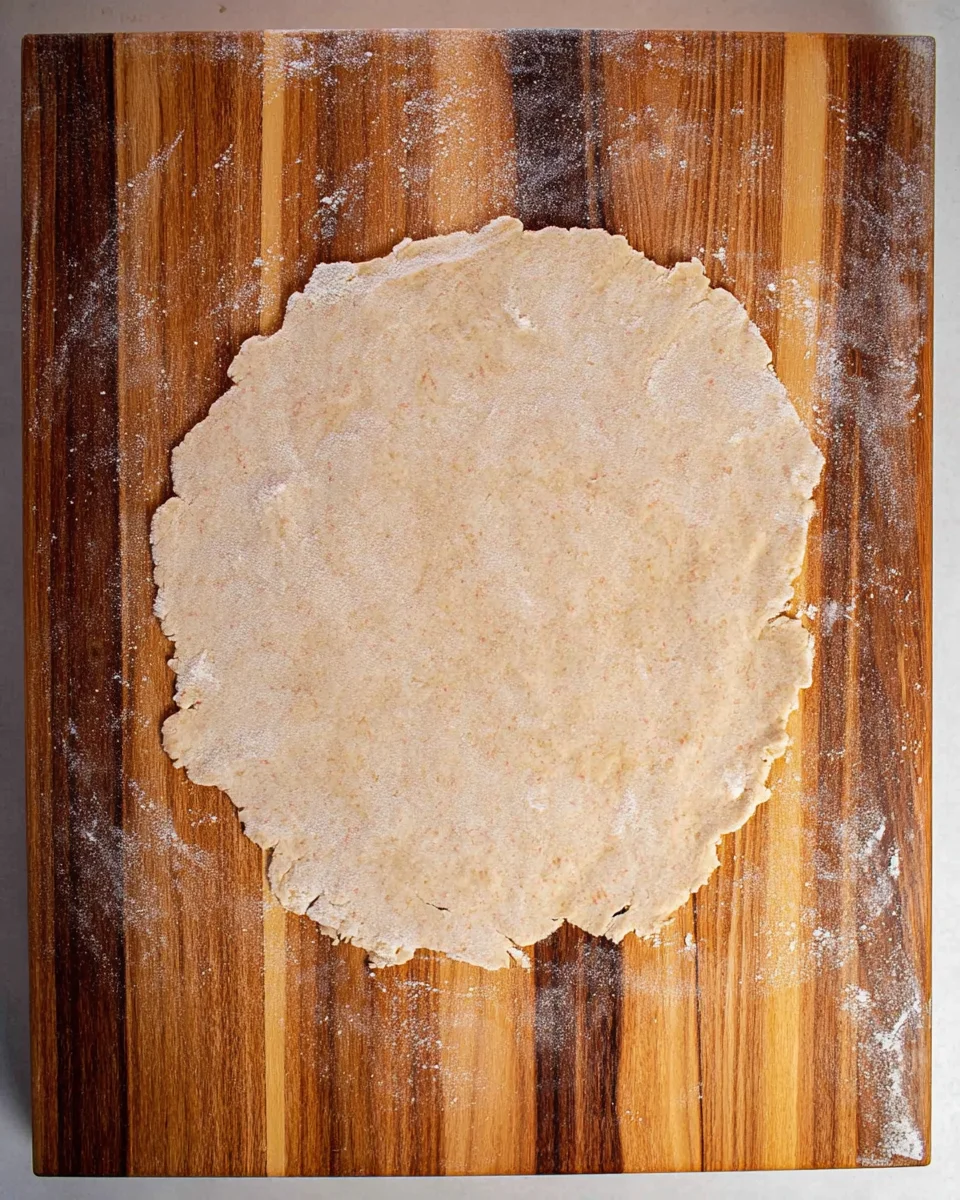
Roll out the dough in mostly one direction, from the center towards the outside. Rotate the dough 90 degrees each time, and also remember to flip the dough over and repeat on the other side too.
Cracks will appear in the dough, so just pinch them together to close any cracks as you roll it out.
It’s very important that,
- The dough does not stick to the countertop. So move the dough around to make sure it’s not sticking, and use flour on your work surface as needed.
- The dough is evenly thick throughout. It’s OK if the dough is slightly thinner at the edges, but most of it should be evenly thick to ensure that it bakes evenly too. The thickness of the dough should be about 3 mm.
Once the dough has been rolled out, you can transfer the dough to line your pie dish.
If the pie dough shrinks as you roll it out at any point, wrap the dough with plastic wrap and place it on a tray and refrigerate it for at least 20 minutes. The dough shrinks because the gluten has been overworked, and the more you roll it, the more it’ll want to shrink. Letting the dough rest in the fridge will help relax the gluten, so you can roll it out better afterwards.
This will prevent the dough from shrinking as it bakes.
Lining the pie dish
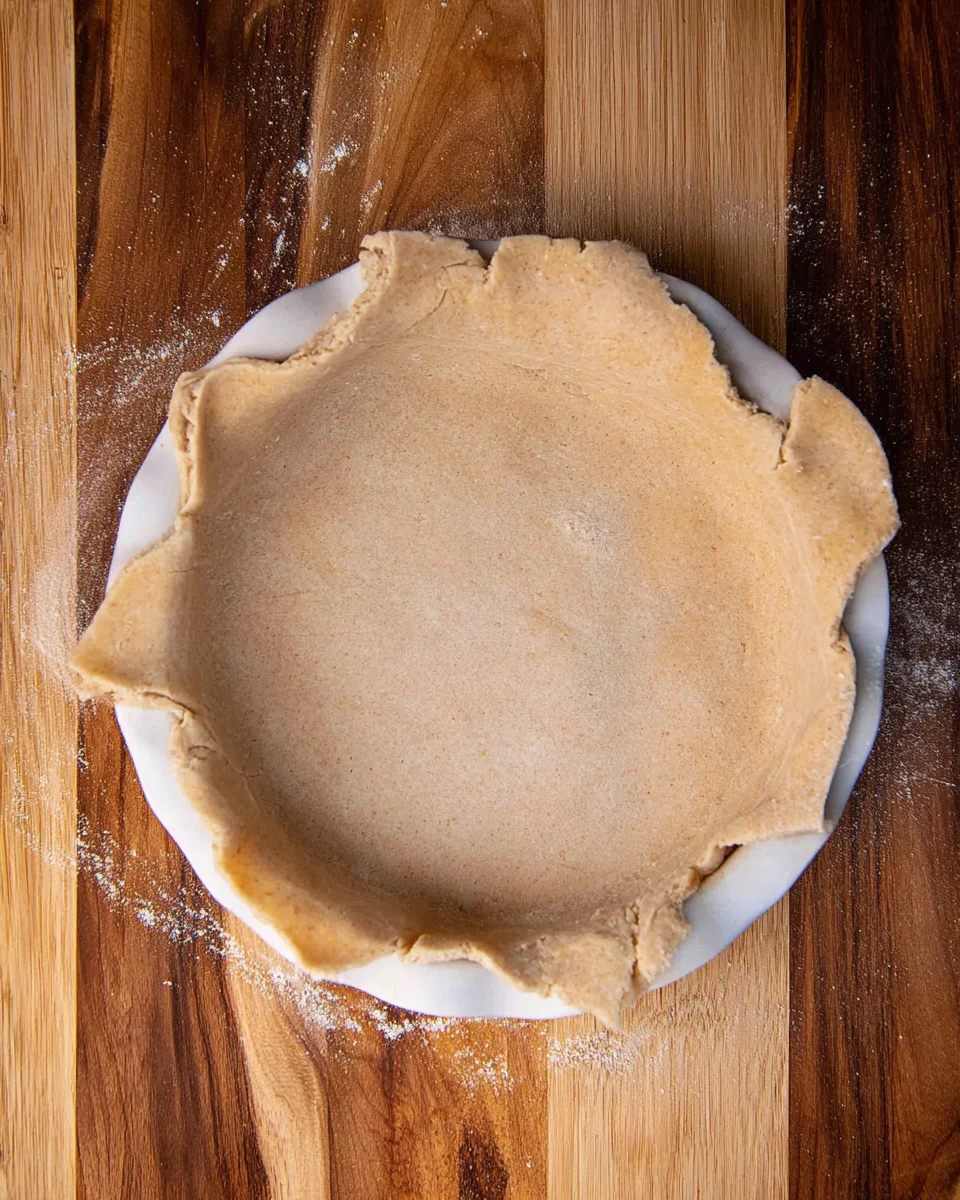
Carefully transfer the rolled out pie dough into the pie dish.
Roll up the dough onto the rolling pin, and then unravel it over the pie dish.
Gently fold the dough into quarters (roughly), and then place the dough in the pie dish with the corner close to the center of the pie dish. Then unfold so that the rolled out dough is centered better in the pie dish.
When fitting the dough into the pie dish, DO NOT stretch the dough to fit the plate. Instead, gently lift the dough and let it gently fall onto the pie dish. Then using the back of your fingers, gently press it into the inside edges of the pie dish WITHOUT stretching the dough.
Stretching the pie dough will cause the pie crust to shrink as it bakes.
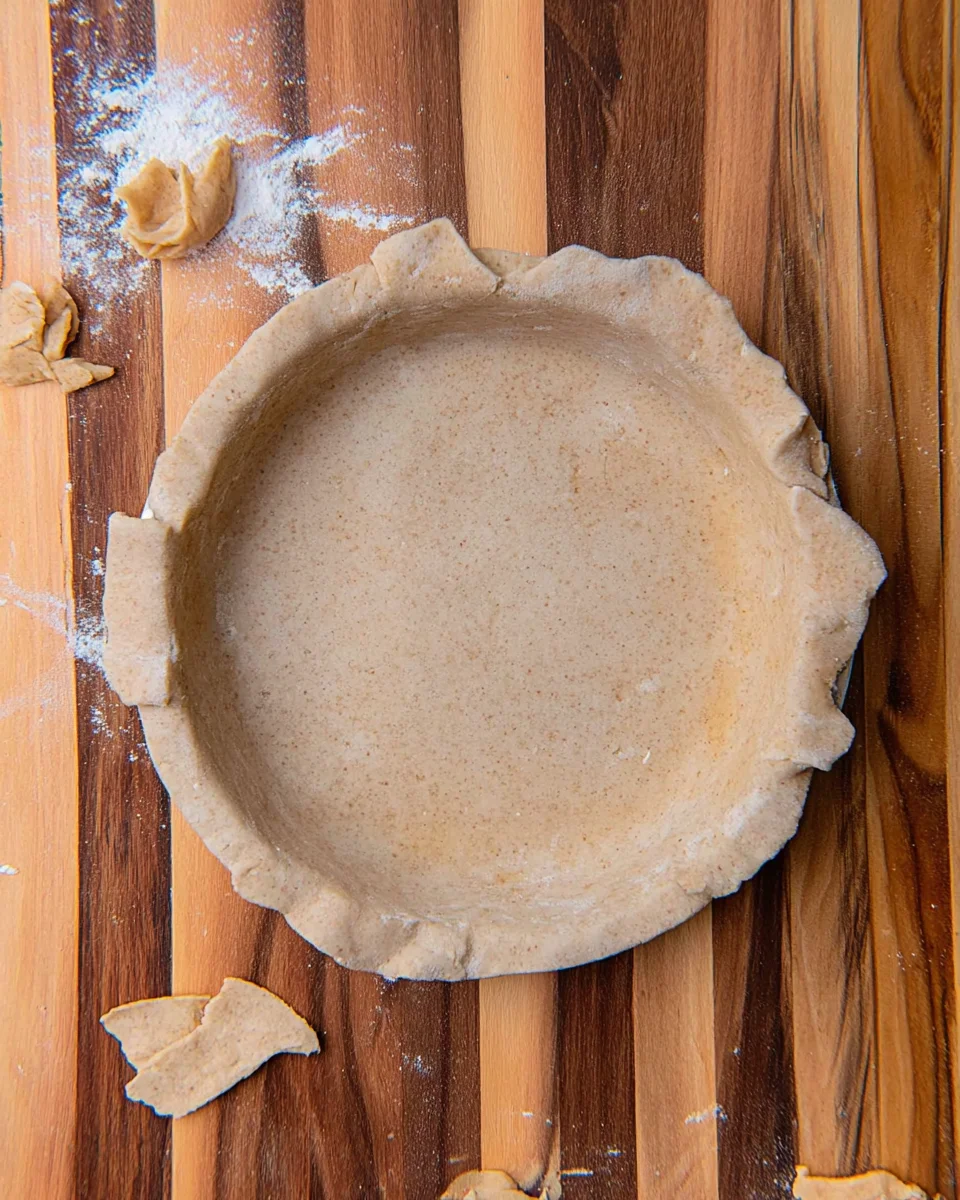
Cut the overhang of the pie dish so that there is at least 0.5 inch over the edge of the pie dish. If you’re a beginner, it’s safer to have a 1 inch overhang. Any scraps can be used to repair any holes in the pie dish, and to also mend any edges that don’t have enough dough to create a fluted edge.
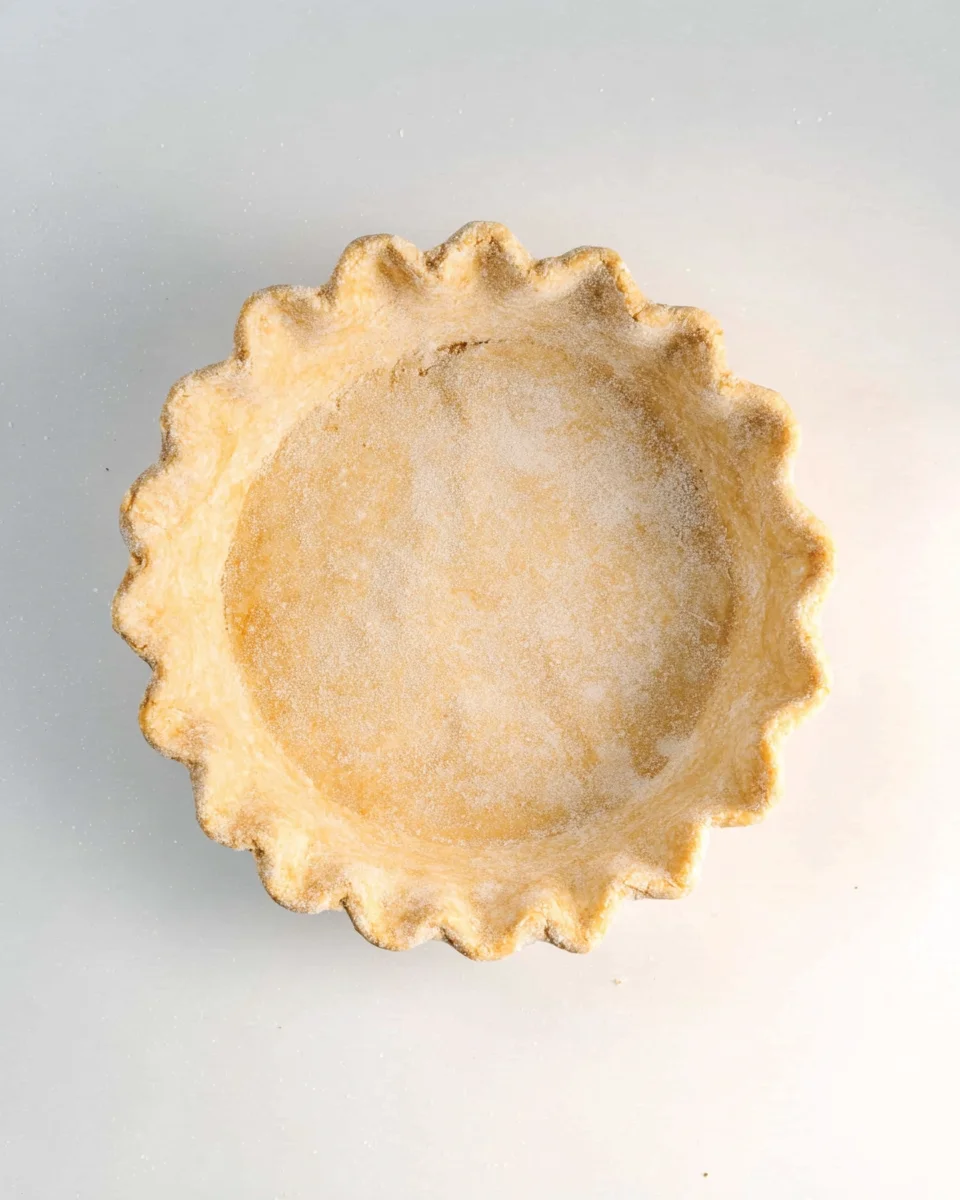
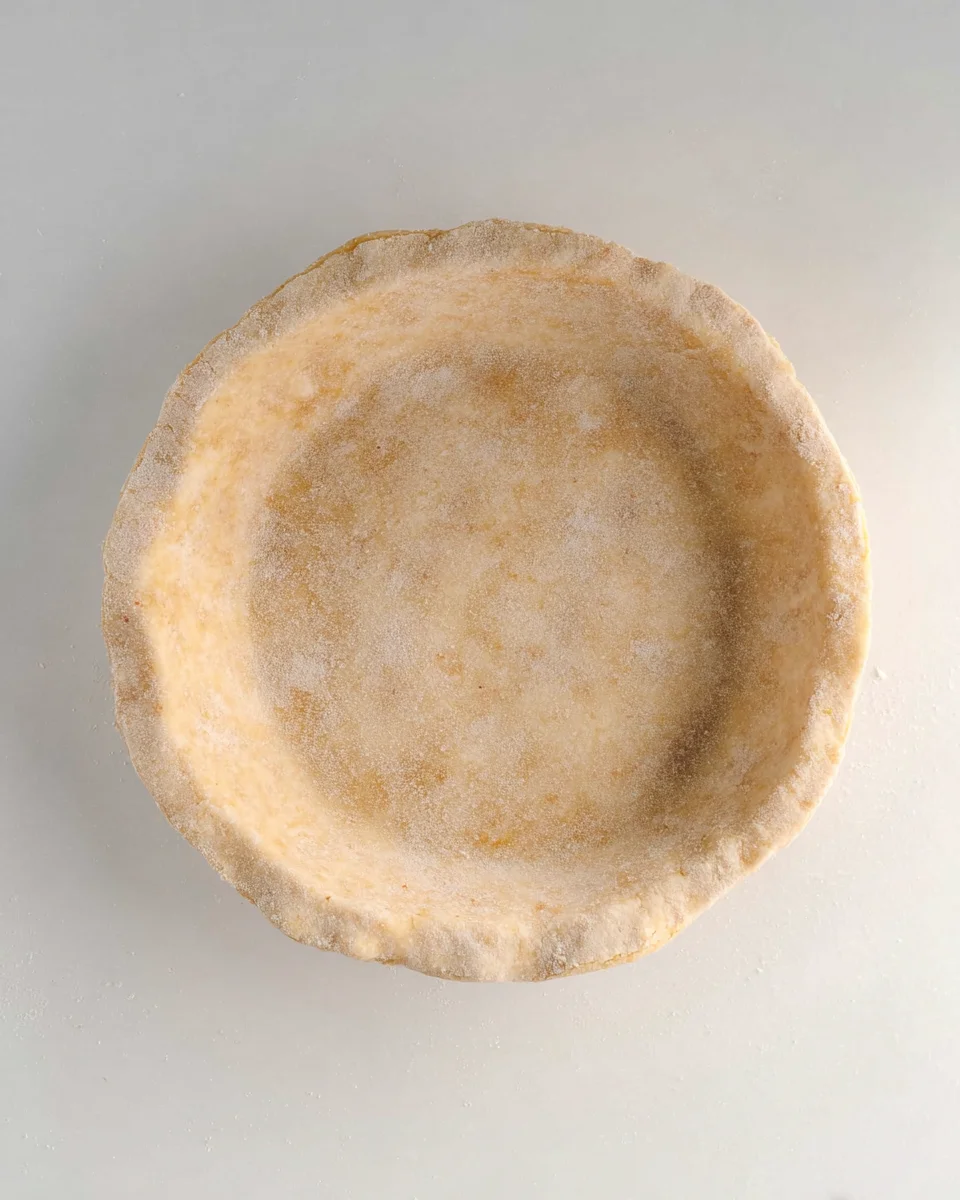
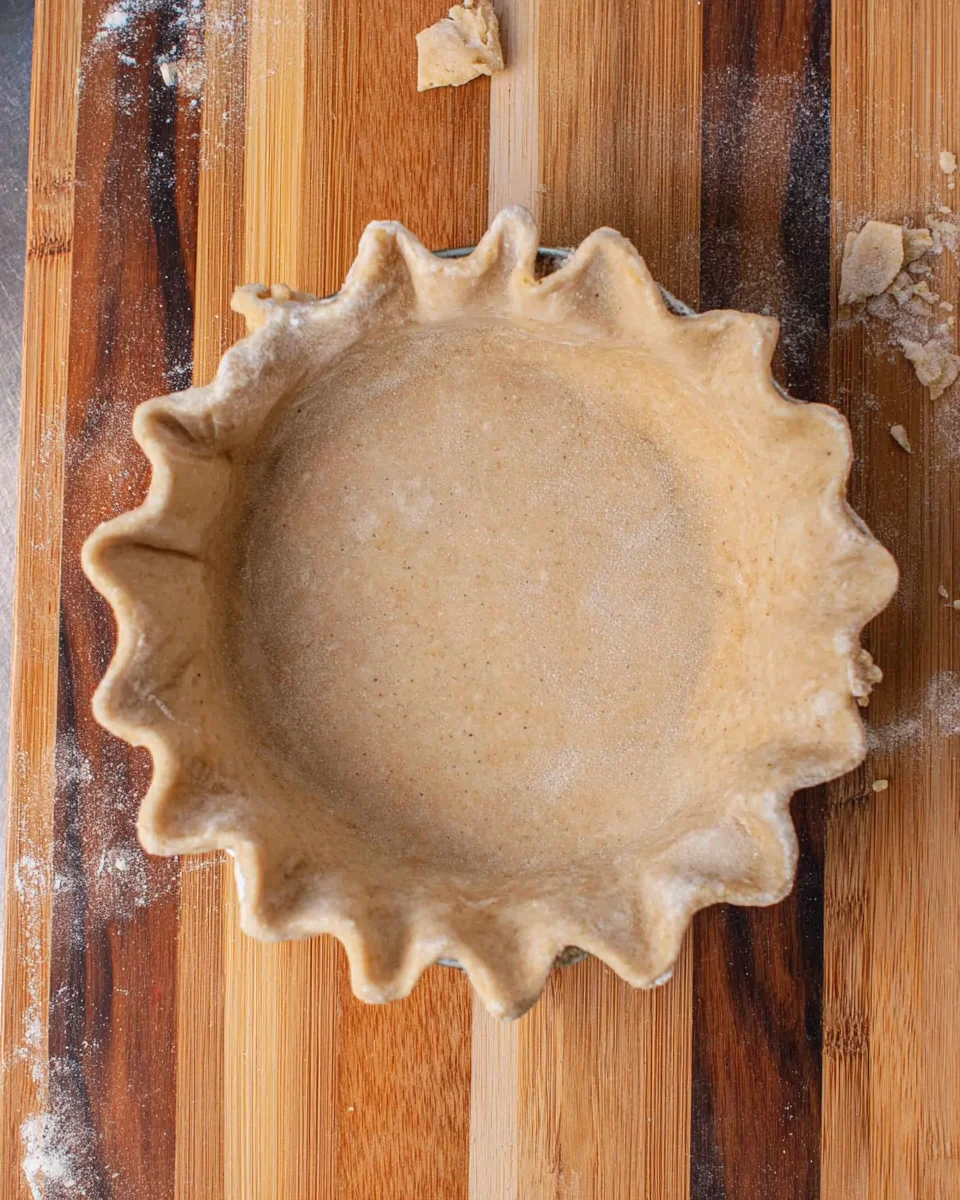
Roll the pie crust overhang underneath to create a thickened pie crust that is flush against the edge of the pie dish. Then you can create a decorative pie crust edge as well. The classic method is to use your fingers to create a fluted pie crust edge. However, you can also use a fork to crimp it.
Cover the pie crust and pie plate and let it refrigerate for at least 45 – 60 minutes before baking. You must ensure that the crust is nice and chilled when you bake it. This helps to create a crust that is wonderfully flaky, and prevents the crust from shrinking as well.
If at any point the crust is too soft, you can transfer it into the fridge for a few minutes so that the dough hardens, and it will be easier to handle.
Baking the graham flour pie crust
Par-baking and blind-baking
While the pie crust is chilling, preheat the oven to 350 F / 180 C. Place the oven rack in the lower third of your oven. Keep a baking tray or a pizza stone on the oven rack as the oven preheats. If you’re using a pizza stone, make sure that it preheats for at least 45 minutes, ideally 60 minutes. The baking tray should preheat for about 30 – 40 minutes as well.
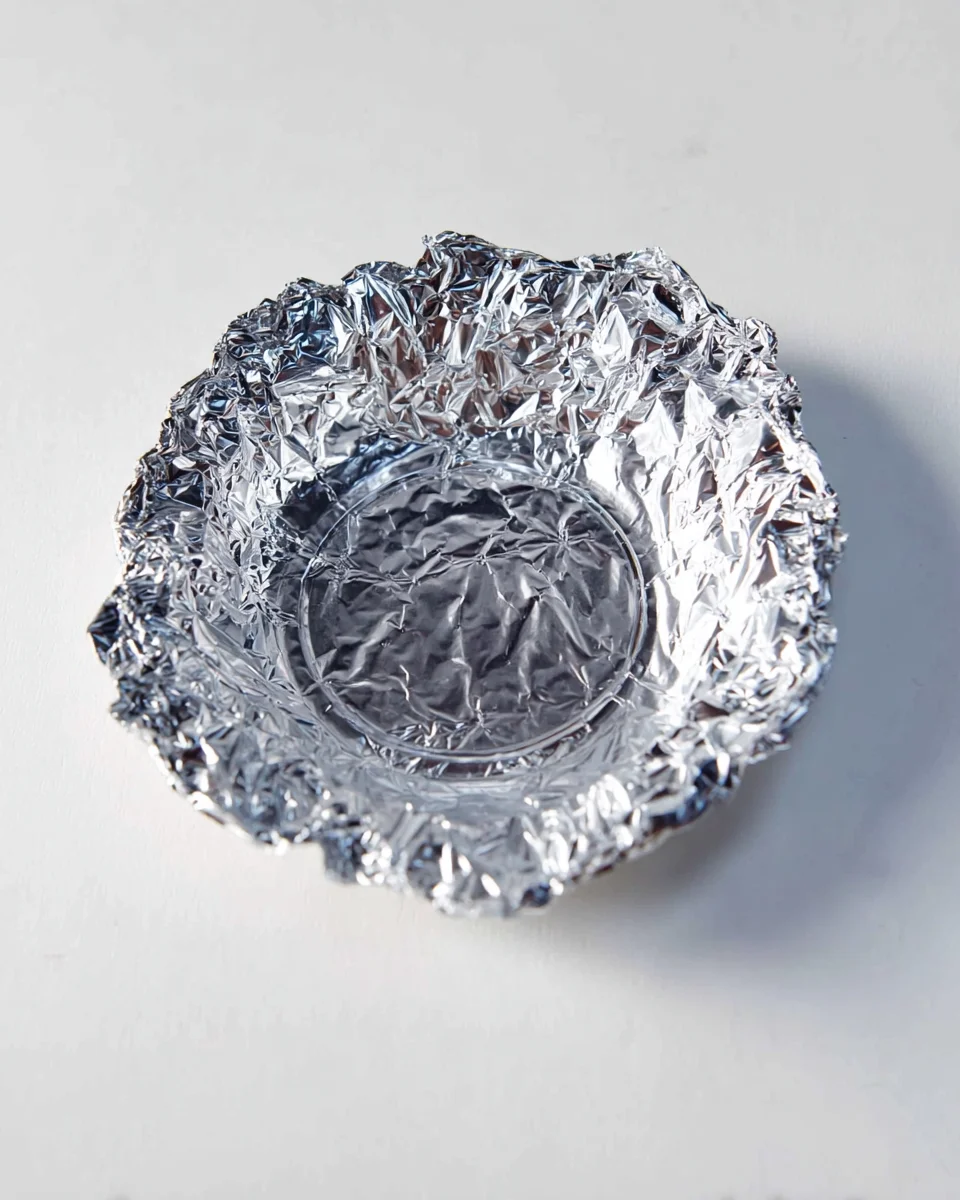
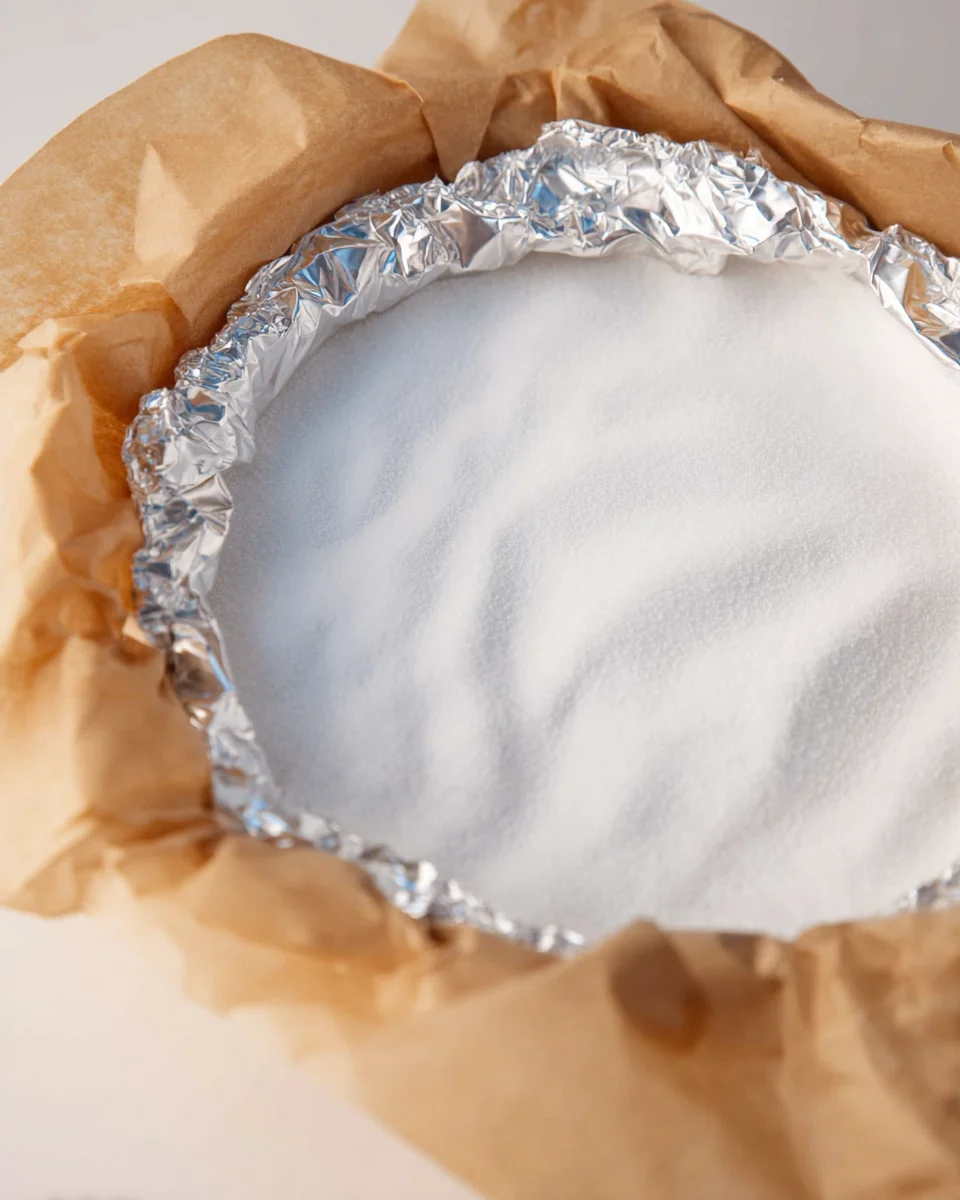
Line your pie crust with foil or parchment paper, ensuring that the whole crust is covered. You may need to use two pieces of foil as well. Then fill it with white sugar or rice. Make sure that you fill the pie plate at least 3/4 of the way up, or right up to the point before the fluted edge starts. This is because you want the sugar to weigh down the crust and flatten it against the pie plate. This will prevent the crust from shrinking, or creating air bubbles below the crust.
In the image below I use a layer of foil and then parchment paper as well. You do not have to do this. The reason I did this here is because I had to use 2 pieces of foil that were not very strong. It would have been hard to lift the sugar out of the pie after baking with just that flimsy foil.
If you’re using a pizza stone, I still recommend using a baking tray under the pie plate, so that it can catch and contain any melted butter. Otherwise the melted butter will create too much smoke as it drips.
Place the pie plate in the oven and bake for about 60 minutes.
Then remove the pie plate from the oven and carefully lift out the foil WITH the sugar or rice inside. Be careful not to rip the foil so that the rice and sugar won’t spill all over the pie crust. That would be VERY hard to clean up!
Par baked crust
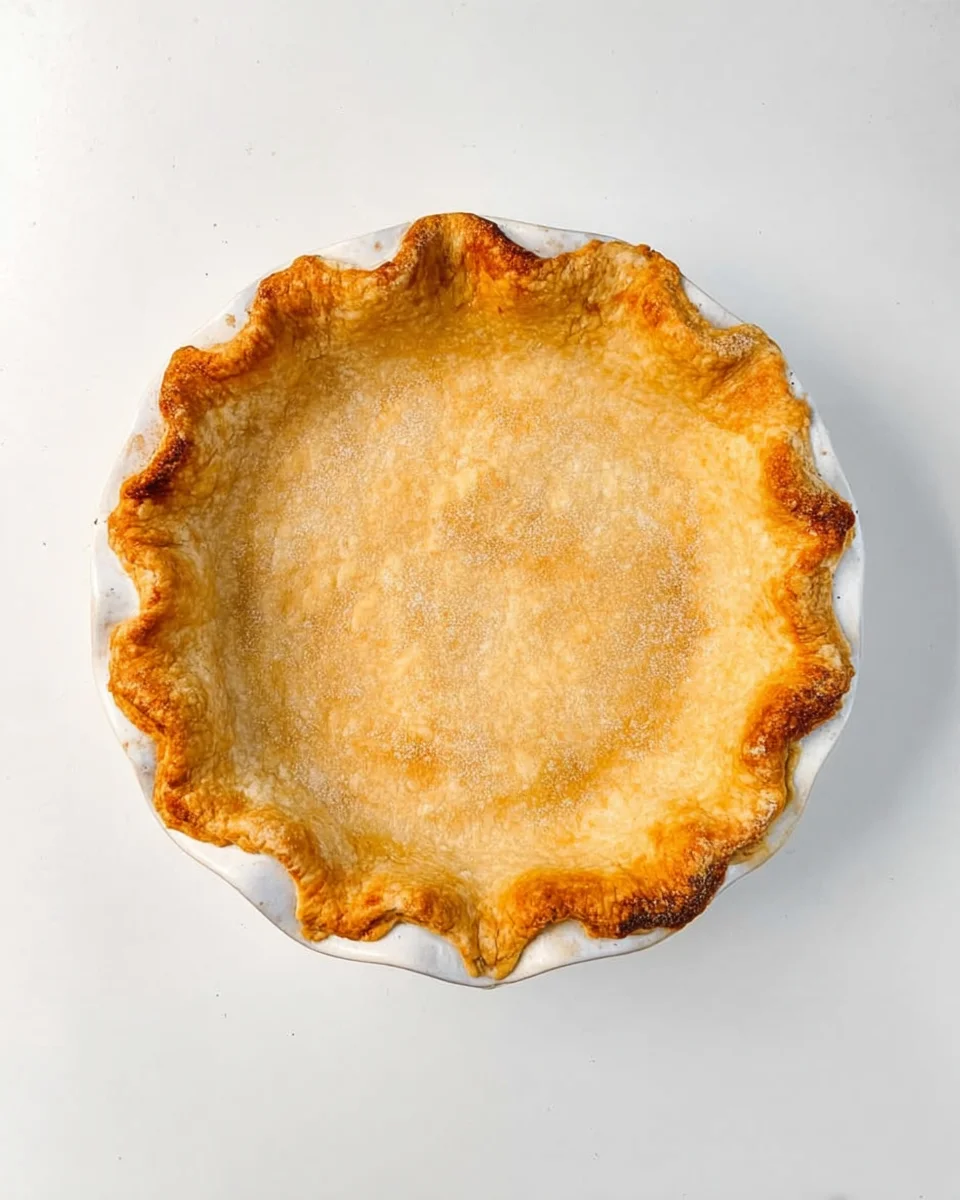
Prick all over the bottom of the par-baked crust with a fork. Then bake the pie crust in the oven for a further 5 – 10 minutes until the crust has lost the glossy look from the melted butter. The surface should have a more matte look.
For a fully baked (blind baked) crust
Prick all over the bottom of the par-baked crust with a fork. Return the pie crust into the oven and bake it for a further 15 – 20 minutes. Optionally, in the last 5 minutes, you can brush an egg wash over the crust and let it bake the final 5 minutes until the crust turns a glossy golden color.
If you’re looking to make a double crusted pie, you can follow the tips I share here to make double crusted pies perfectly.
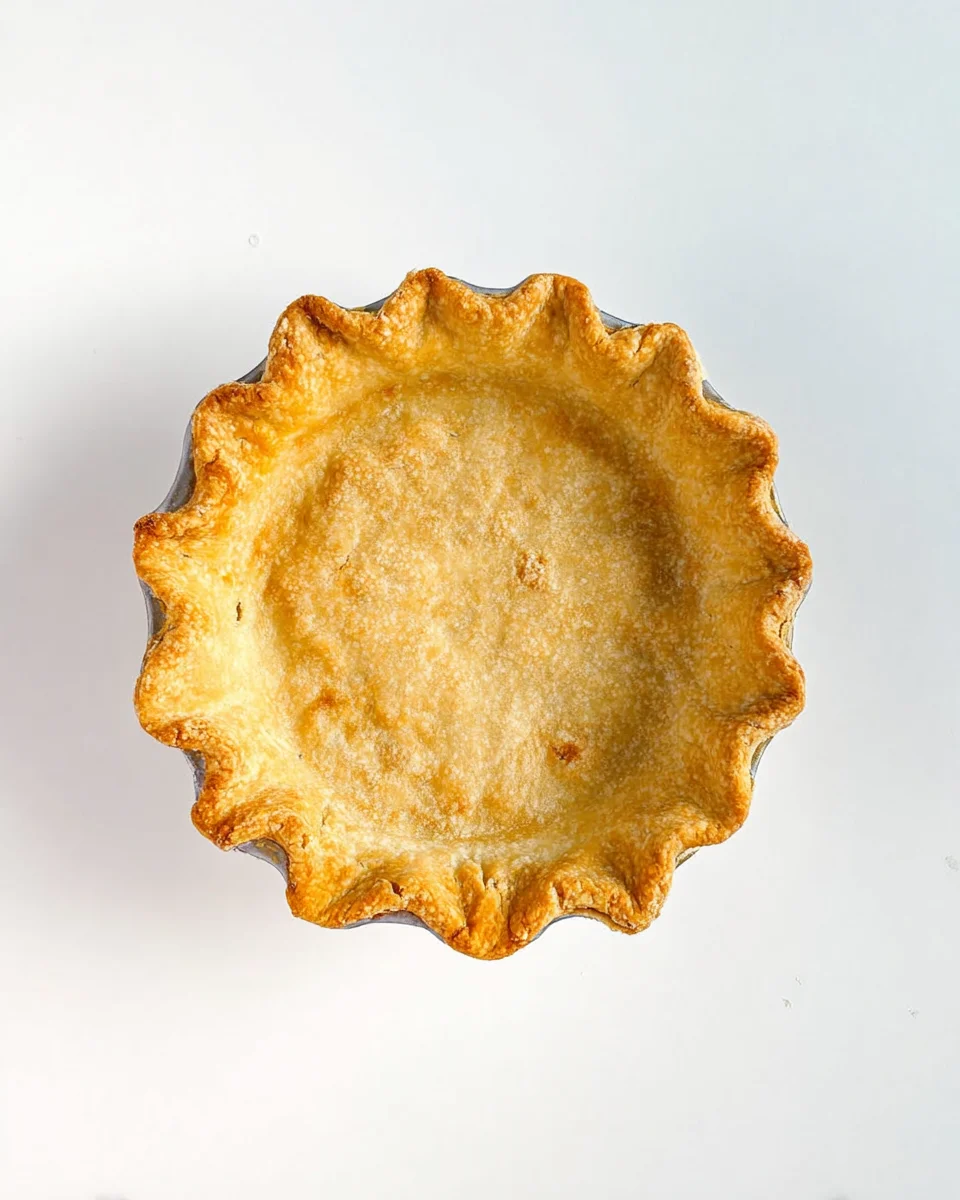
There you have it! Now you can make a flaky, buttery pie crust that tastes like graham crackers! The graham flour added to the pie dough will give the crust a darker color than regular pie crust – almost like it was made with wheat flour. The flavor is nutty, sweet, and definitely tastes like graham crackers!
Pie recipes you can make with this graham cracker pie crust
This pie crust can replace almost ANY pie crust! But it’s obviously more suited to be used with sweet dessert pies. I made this incredible banana cream pie using this graham cracker pie crust.
You could also make a delicious graham cracker mixed berry slab pie! Just substitute some of the flour with graham flour (by weight).
This butterscotch apple pie would be AMAZING with this graham flour pie crust too.
You could even make a galette with this version of pie dough. Like this strawberry galette or peach galette.
Pro tips for getting perfect graham flour pie crusts
Make sure that the butter, water, and vodka (if using), are chilled before using. You could even chill the flour and the bowl if you like. The butter should be firm throughout the whole process of making the pie crust, even after cutting the butter into the flour. This ensures that you get flaky, butter layers!
If at any point in the recipe, the butter softens too much, return the dough to the fridge or freezer to let the butter harden again.
When mixing the dough, do not overwork the dough. Do not knead it. Mix it just enough to form the dough. Pie dough does require some gluten, but too much gluten will make the dough too rubbery and hard to roll out.
Vodka will help with limiting gluten development, but you can leave it out if you like. However, be extra careful about not overhandling the dough if you’re not using vodka.
Flour your worktop and move the dough around while rolling it out to prevent it from sticking to the worktop. Also roll it out on both sides to help with getting a smooth rolled out dough.
Do not stretch out the dough to fit it in the pie plate. Gently ease the dough into the pie plate instead.
Blind bake / par bake the pie crust in a low heat oven! Not at high heat.
Place the pie dish on a pie plate and/or baking tray. This will help the pie crust form a golden crust at the bottom.
If you’re using a pizza stone, keep the pie plate on a baking tray while baking, so that any melted butter won’t drip onto the pizza stone or the oven and create too much smoke.
Storage instructions
This graham flour pie dough can be kept in the fridge for up to 3 days, if wrapped very well. You can also store the pie dough in the freezer for about 2 months. Let the dough thaw out in the fridge overnight before using.
A baked graham flour pie crust will be good at room temperature for about 3 days (stored in an air-tight container, with no filling), but it will get soggy. It will last in the fridge for about 5 days, but it will get soggy there as well. If you need to “re-fresh” the crust, you will need to reheat it in the oven for a few minutes.
Frequently Asked Questions
My pie crust shrinks
Too much gluten is responsible for making the pie crust shrink. The gluten acts like elastic and doesn’t want to stretch out. Another reason the pie crust shrinks is if there isn’t enough weight on the pie crust as it blind bakes. This allows the crust to slip down the sides of the pie plate.
To prevent this, make sure to,
Always keep the dough chilled.
Do not add too much water (more water can encourage gluten development, which can cause the crust to shrink).
Do not over-work / over-handle the dough.
If the dough starts shrinking during the rolling process, let it rest in the fridge for a few minutes before proceeding.
Do not stretch the dough to fit it inside the pie plate.
Make sure that the pie crust edge is thick, and is gripping onto the top of the pie plate well. So that it will hold firm in place.
Line and generously fill the pie crust with rice or sugar, right up to the top, so that the crust is pressed well against the plate and won’t slide down the pie plate either.
Can I make this gluten free?
Unfortunately I haven’t made gluten free pie crust, so I don’t have experience with it. However there are many recipes out there that do make great gluten free pie crusts. Substitute 1/3 of the flour with gluten free graham crackers, and you should be able to get similar results.
Can I make this vegan?
You can make this pie crust vegan by substituting the butter with a good quality vegan butter. Make sure to use a vegan butter that is solid in the fridge, so that you can still get great flaky results.
My pie crust is not flaky
If the butter was cut into very small pieces (sandy texture), then the pie crust will be more crumbly than flaky. This can happen if you use a food processor, as you have less control over how big the butter pieces will be when making the pie crust.
This can also happen if the butter softens and melts into the flour, rather than remaining as larger pieces. Those larger pieces of butter in the dough are what create the light, flaky layers.
A flaky, buttery graham flour pie crust combining the flavor of graham crackers with a classic pie crust, suitable for cream, custard, and fruit pies. This recipe includes tips for perfect results, handling, rolling, and baking the crust, with optional vodka for tenderness.
- Total Time: 1 hour 30 minutes to 2 hours (including chilling)
- Yield: Enough for a 9-10 inch 2-inch deep pie plate with a top crust (double crust pie)
Ingredients
- 1 cup graham crackers (processed into fine crumbs)
- 1 cup all-purpose flour (10-12% protein)
- 1 tablespoon granulated sugar
- 1/2 teaspoon salt (adjust if using salted butter)
- 1 cup unsalted butter, chilled and cubed
- 2 tablespoons ice water (adjust as needed)
- 1 tablespoon iced vodka (optional)
Instructions
- Keep butter, iced water, and vodka chilled before starting.
- Process graham crackers in a food processor until fine crumbs form.
- In a large bowl, whisk together graham cracker crumbs, all-purpose flour, sugar, and salt.
- Add cold butter cubes to dry ingredients and toss to coat.
- Cut in butter using pastry cutter, fingers, grated frozen butter, or food processor until butter pieces are about hazelnut-sized along with smaller pieces.
- If butter softens, chill dough in fridge or freezer until firm.
- Mix vodka with half of the ice water, then gently incorporate into dry mixture using fingertips (do not knead).
- Add remaining ice water in small amounts, mixing gently with fingertips, until dough just holds together with some dry spots.
- Flatten dough into a disc or square, cut into four pieces, stack and slightly flatten, then cut in half to make two portions.
- Form portions into discs and wrap in plastic wrap; refrigerate at least 1 hour, preferably overnight.
- On a floured surface, roll out dough mostly in one direction, rotating and flipping to ~3 mm thickness.
- Pinch any cracks as you roll and ensure dough doesn’t stick—adjust flour as needed.
- Carefully transfer rolled dough to pie plate by rolling onto and unrolling over dish; avoid stretching dough.
- Fold dough roughly into quarters when placing into dish, then unfold gently.
- Trim overhang to approx 0.5-1 inch and roll under to create thick edge; shape edge by fluting or crimping.
- Refrigerate lined pie crust for 45-60 minutes before baking.
- Preheat oven to 350°F (180°C) with baking tray or pizza stone on lower rack.
- Line crust with foil or parchment and fill with pie weights (white sugar or rice) up to 3/4 full or near fluted edge.
- Bake 60 minutes, then carefully remove pie weights with foil/parchment.
- For par-baked crust, prick bottom with fork and bake an additional 5-10 minutes until matte.
- For fully baked crust, prick bottom, bake 15-20 minutes more, optionally brush with egg wash last 5 minutes for golden sheen.
Notes
Keep all ingredients and tools cold to ensure flakiness., Do not overwork or knead dough to prevent toughness and shrinkage., Use a spray bottle to add water carefully and avoid overhydration., Be gentle when fitting dough into pie plate; stretching causes shrinkage., Blind bake at low heat and use weights to prevent bubbling and shrinking., Chill dough if it shrinks during rolling for 20 minutes before continuing., Pie plates typically 9-10 inches diameter with 1-2 inch depth; this recipe covers a 2-inch deep pie plate including top crust for double crust pies., Store raw dough wrapped well in fridge up to 3 days or freeze up to 2 months; thaw in fridge overnight before use., Baked crust lasts about 3 days at room temp or 5 days in fridge but may get soggy; reheat to refresh., To make vegan, substitute butter with solid vegan butter chilled well., Vodka is optional but helps limit gluten development, improving tenderness., Butter pieces size affects texture: larger pieces yield flakier crust; smaller pieces more crumbly., Avoid stretching dough in pie plate and overworking dough to prevent shrinkage., Use baking tray under pie plate even when using pizza stone to catch drips and prevent smoke.
- Prep Time: 30 minutes (plus 1 hour to overnight chilling)
- Cook Time: 60-90 minutes depending on bake method
- Category: Dessert, Pie Crust
- Cuisine: American
Nutrition
- Serving Size: 1 slice (depending on pie size)
- Calories: Approximately 250-300 per serving (varies by serving size)
- Fat: 18-20 grams per serving
- Carbohydrates: 20-25 grams per serving
- Protein: 3-4 grams per serving
More in Breakfast
Vanilla Chia Pudding
Refreshing Earl Grey Chia Seed Pudding