Delicious Homemade Amish Sweet Bread

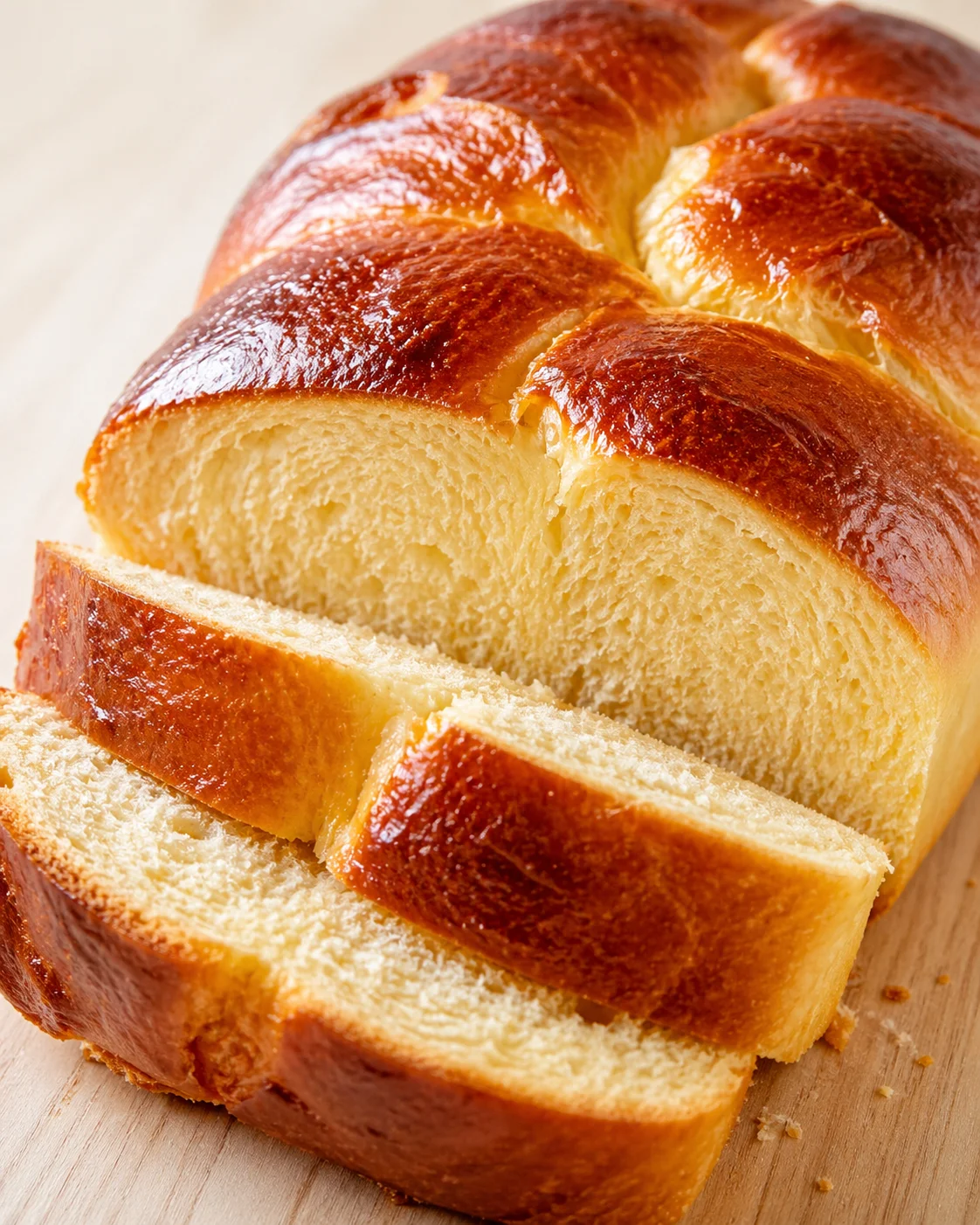
Hey there! This Homemade Amish Sweet Bread is one of those comforting, old‑school loaves that makes your house smell like a bakery. You’ll get a soft, pillowy bread with a light sweetness that’s just right to eat fresh with butter, toasted up for a quick breakfast, or sliced for sandwiches. It’s a real crowd-pleaser!
In this recipe, I’ll walk you through a simple, beginner-friendly method using everyday ingredients – flour, sugar, yeast, oil, and water. There’s no need for a special starter or long, complicated rising times. Just easy steps that fit perfectly into busy days.
- Time and yield: Plan for about 15 minutes to prep and around 30 minutes to bake. This recipe makes roughly 6 servings.
- What you’ll learn: We’ll go through how to mix and knead dough, tell when it’s risen just right, shape it nicely, and bake to a perfect golden crust.
- Extras included: I’ve added helpful baker’s tips, ideas for fun flavor swaps (think rolls, cinnamon twists, savory herbs), and how to store or freeze your bread so you can always have it ready.
Stick with me, and you’ll be slicing into warm, tender Amish bread in under two hours. Plus, I’ll share little tweaks so you can enjoy it for breakfast, sandwiches, or special treats.
Why This Bread Works
- Soft, fluffy crumb that’s great for sandwiches, toasting, or just spreading lots of butter on.
- A gentle sweetness that’s cozy without feeling like dessert.
- Perfect for beginners: no fancy starters or long wait times, just simple ingredients and an easy recipe.
- Versatile: enjoy it plain, make French toast, or try out different shapes and flavors like cinnamon swirls or savory herb loaves.
- Freezer-friendly, so you can make extra loaves and pull one out when mornings get busy.
Ingredients and Options
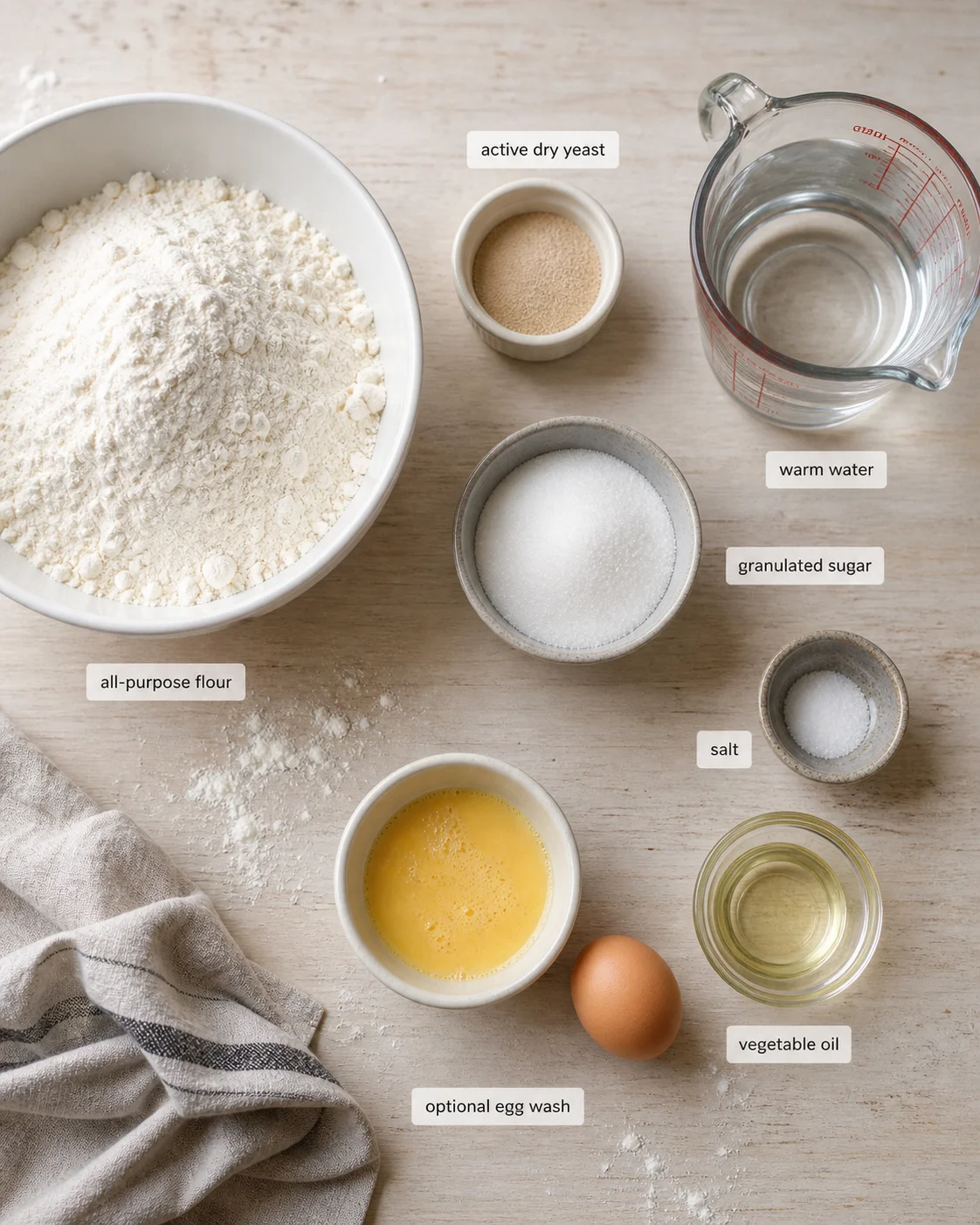
- 2 ¼ teaspoons (1 packet) active dry yeast
- 2 cups warm water (around 110°F / 43°C)
- ½ cup granulated sugar
- 1 ½ teaspoons salt
- 2 tablespoons vegetable oil (or melted butter if you prefer)
- 6 cups all-purpose flour, plus more for kneading
- Optional: 1 egg plus 1 tablespoon water for an egg wash, which gives a beautiful shiny, golden top
How to Make the Bread
- Dissolve the yeast and 1 tablespoon of sugar in warm water (105–110°F / 40–43°C) and let rest 5–10 minutes until foamy.
- Add the remaining sugar, salt, and oil to the yeast mixture; stir in 3 cups of flour until smooth, then slowly add the remaining flour one cup at a time until a soft dough pulls away from the bowl.
- Lightly flour your work surface and knead the dough about 8–10 minutes until elastic and smooth (or knead about 5 minutes with a stand mixer and dough hook).
-
Grease a large bowl, place the dough inside and turn to coat with oil; cover and let rise in a warm, draft-free spot about 1 hour or until doubled in size.
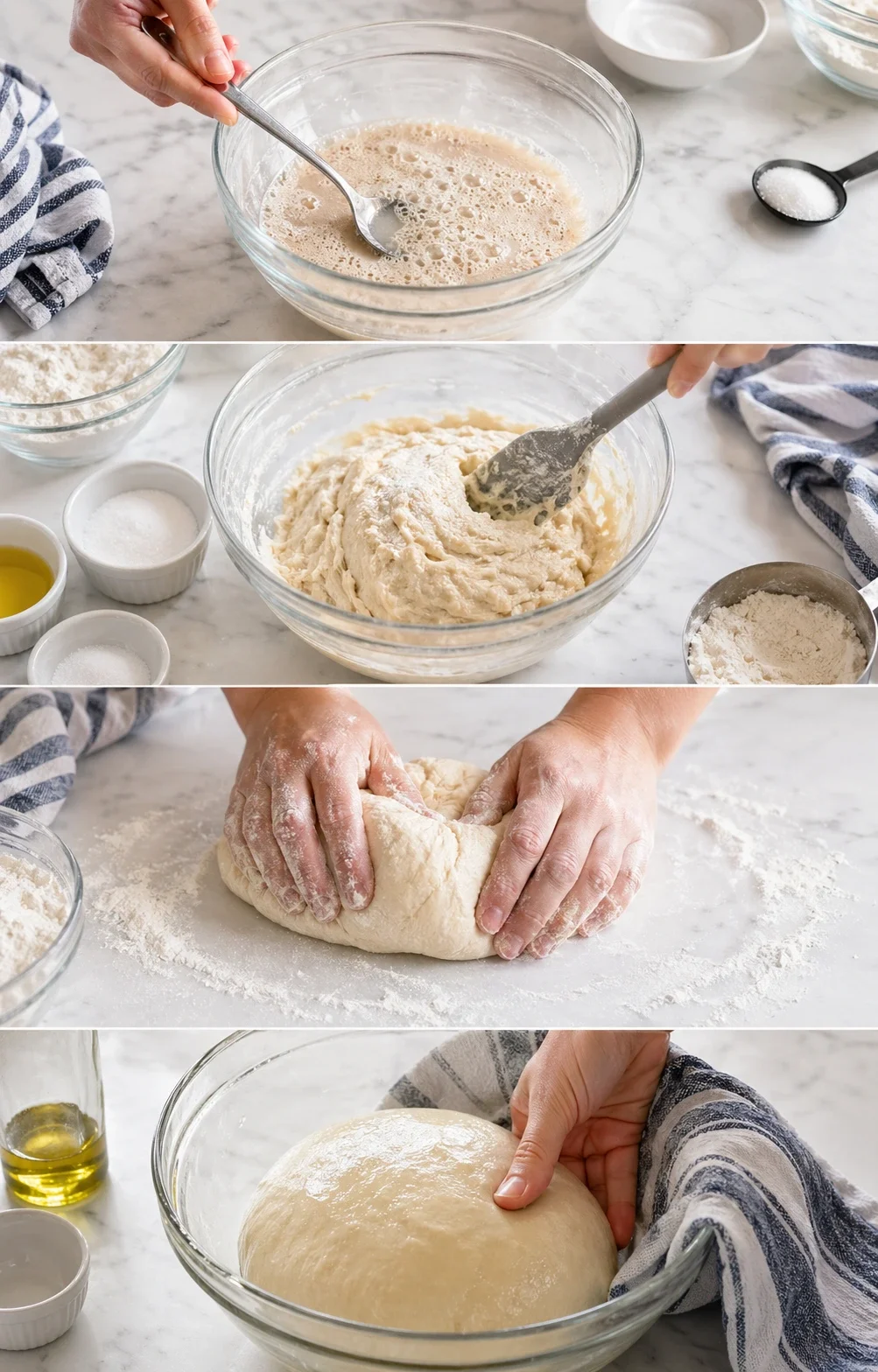
- Punch down the dough to release air, divide it in half, and shape each piece into a smooth loaf.
- Place the shaped loaves in two greased 9×5-inch loaf pans, cover, and let rise 30–40 minutes until risen just above the edges of the pans.
- Preheat the oven to 350°F (175°C).
-
Optional: brush the tops with an egg wash (1 egg + 1 tablespoon water) for a shiny, golden crust.
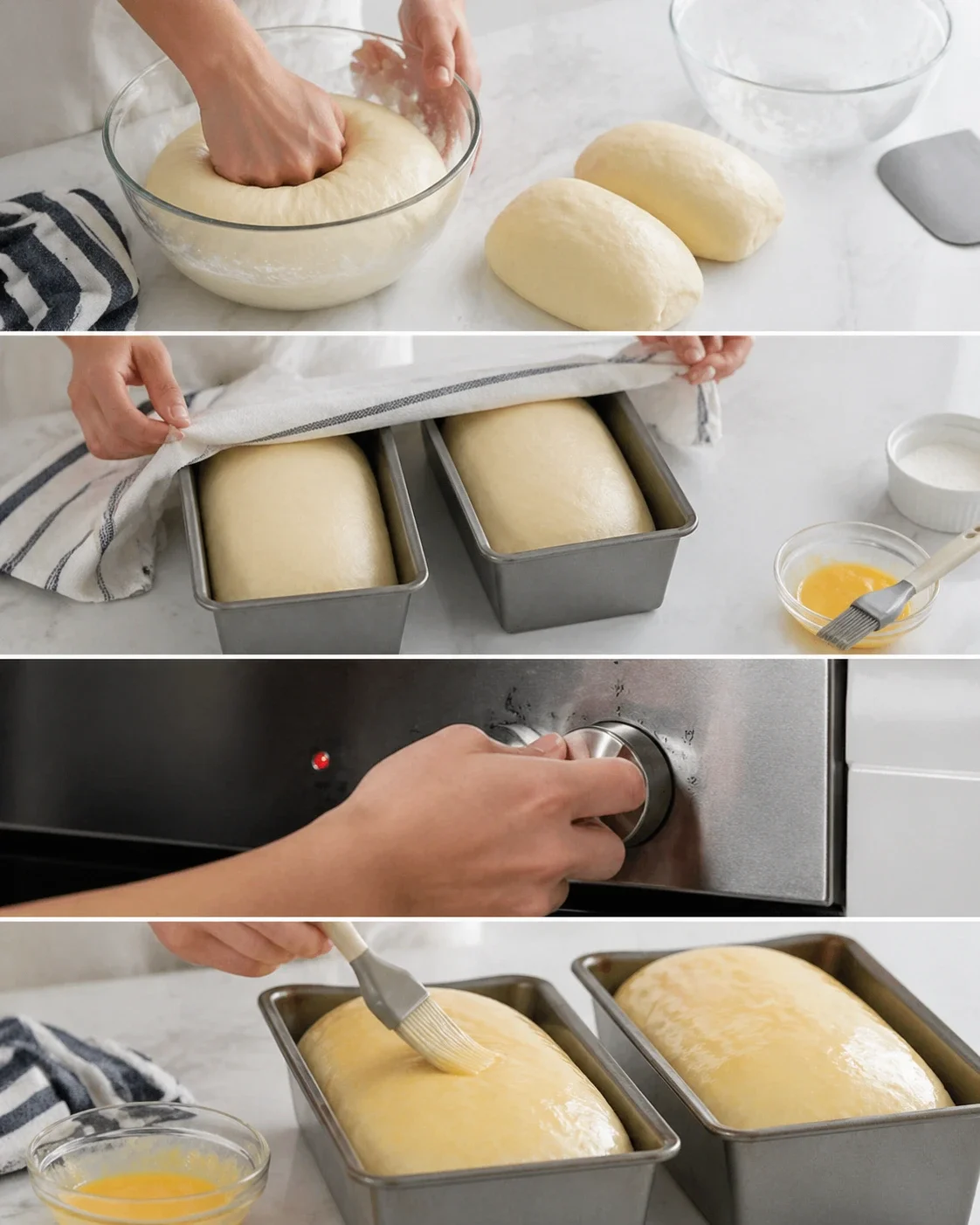
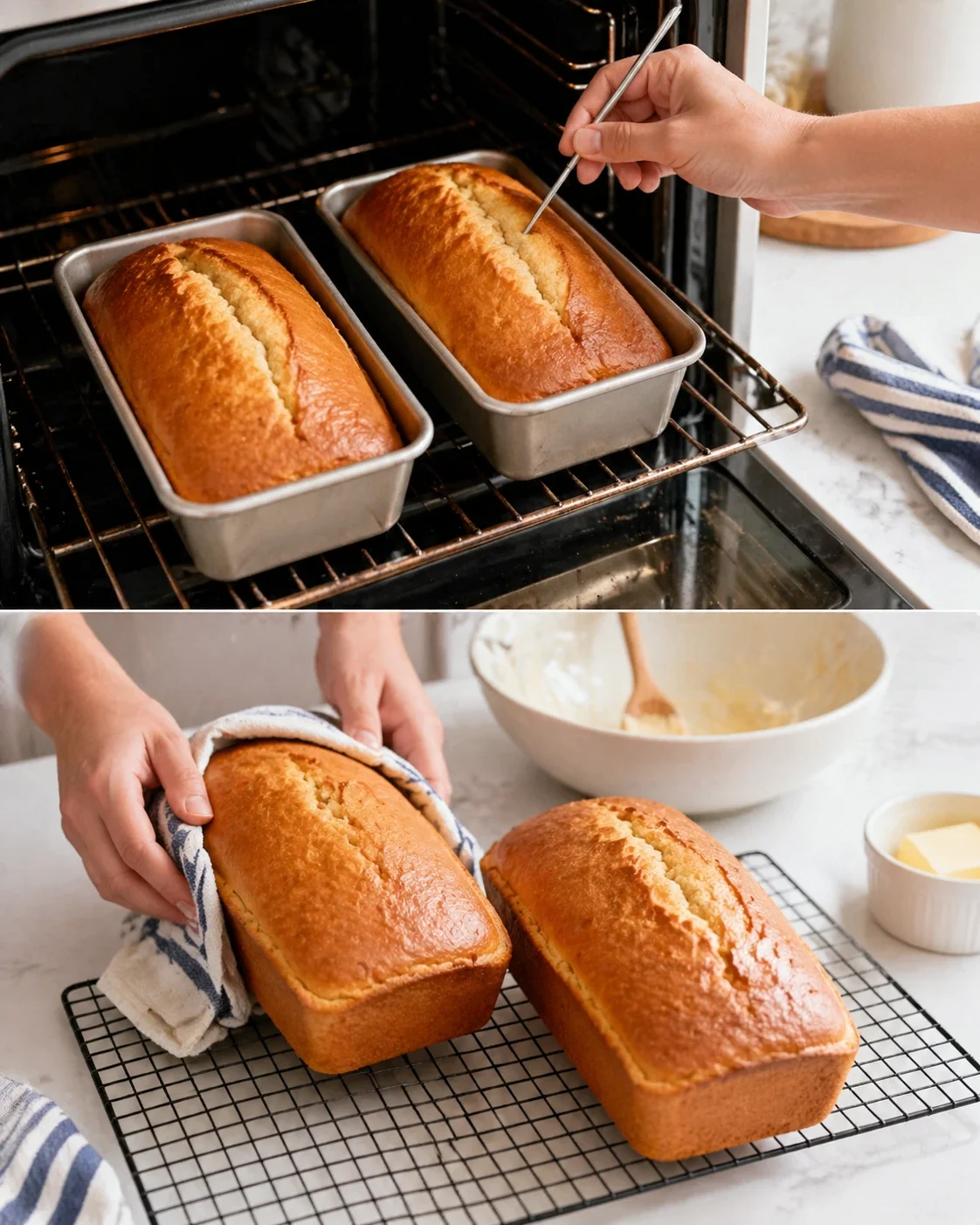
- Bake the loaves 25–30 minutes until golden brown and hollow-sounding when tapped, or until the internal temperature reaches 190–195°F (88–90°C).
-
Remove the loaves from the pans and cool completely on a wire rack before slicing.
Tips for Best Results
- Watch your water temperature: Keep it between 105–110°F. If it’s too hot, it can kill your yeast, and if it’s too cold, the yeast won’t activate properly.
- Proof the yeast: If after 10 minutes you don’t see bubbles or foam, your yeast might be expired or inactive. It’s best to start fresh.
- Flour can vary: Add it gradually and go by feel. The dough should be a little tacky but still manageable. Too much flour makes the bread dense and tough.
- Kneading is key: Proper kneading develops gluten, which builds that great texture. Under-kneaded dough can be gummy, while over-kneading—though rare with hand-kneading—makes it tougher.
- Find a warm spot: Let your dough rise somewhere draft-free and cozy—inside an oven with the light on or on a sunny counter works great.
- Use a thermometer for best results: Rather than just relying on time, check that your bread reaches 190–195°F inside.
- Don’t slice hot bread: Let your loaf cool completely before cutting. Slicing too soon can leave your bread gummy instead of tender.
- If you use instant yeast: You can skip the proofing step and mix it directly with the dry ingredients. Rise times will stay about the same.
Mix-Ins and Variations
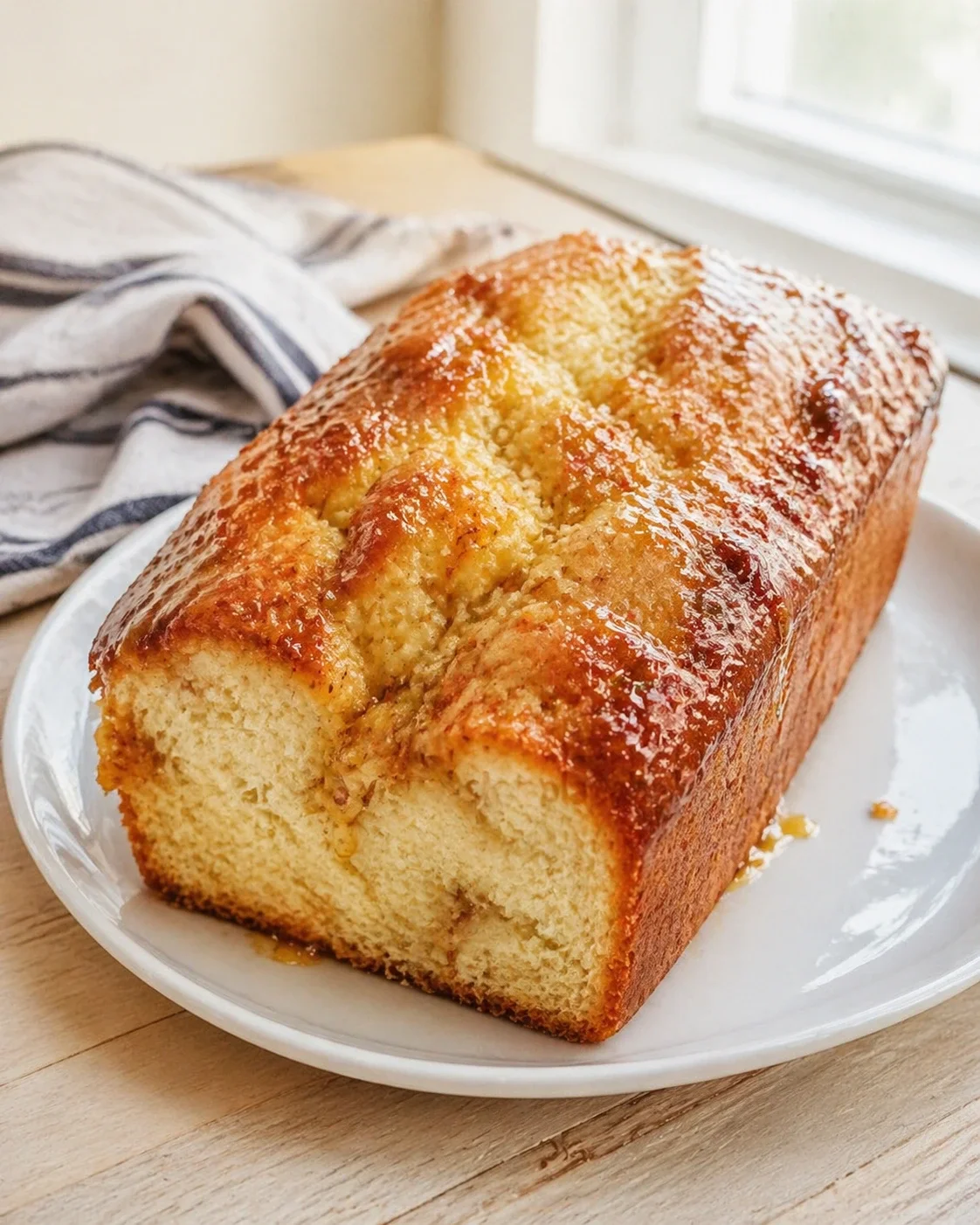
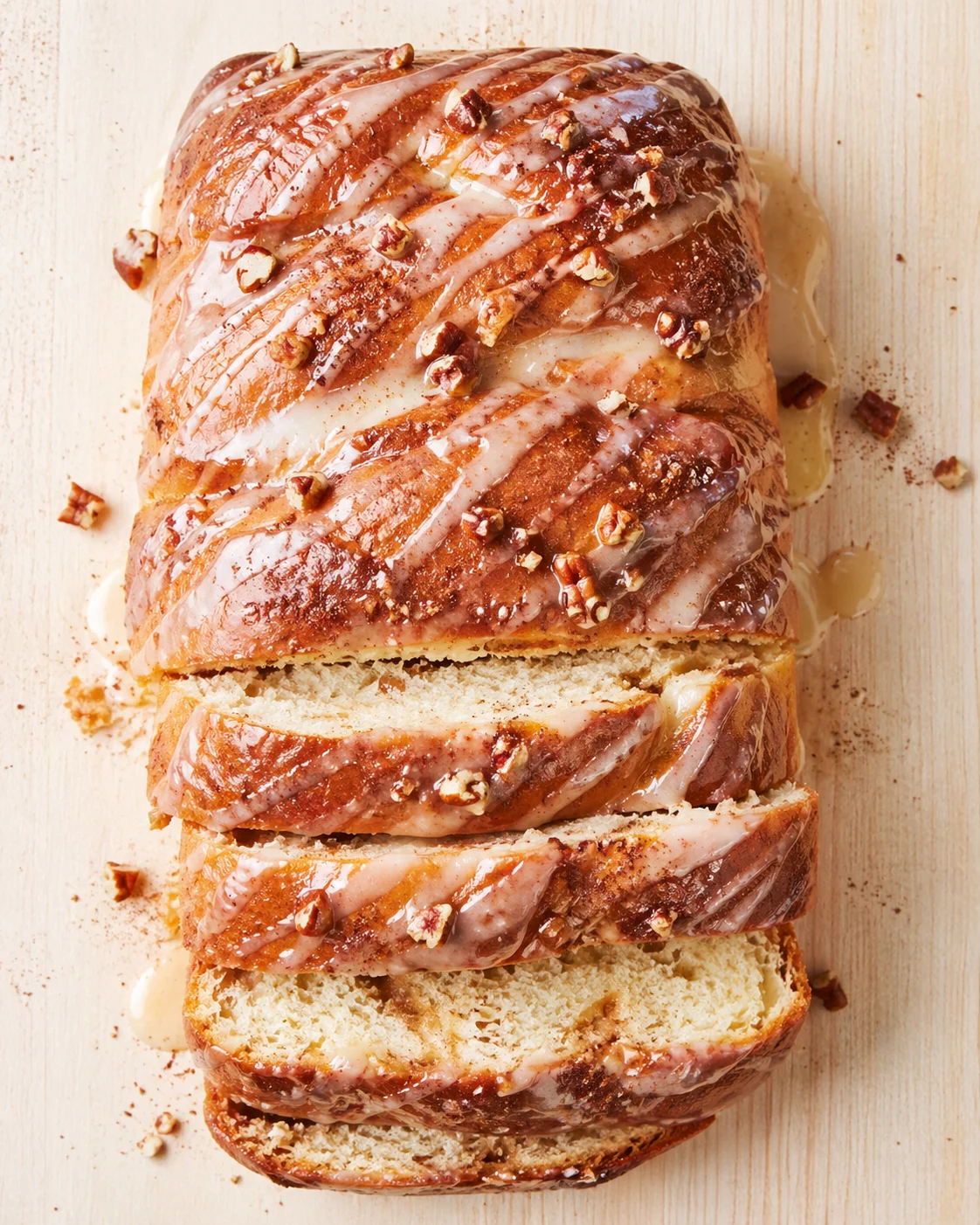
- Cinnamon swirl: Roll your dough into a rectangle, sprinkle generously with cinnamon sugar, roll it up tight, then shape into loaves and bake. It’s a yummy twist for breakfast!
- Honey bread: Swap out ¼ to ½ cup of the sugar for honey for a lovely floral sweetness. You might want to cut back just a bit on the water to keep the dough balanced.
- Dinner rolls: After the first rise, divide the dough into small balls, arrange them in a baking dish, and bake for 15–18 minutes until golden. Perfect for family dinners or snacks.
- Garlic & herb loaf: Add 1–2 teaspoons garlic powder along with your favorite dried herbs (like rosemary or thyme) right into the dough for a savory bread that pairs fantastically with soups and salads.
- Mix-ins: Stir in 1 to 1 ½ cups of raisins, nuts, or seeds for added flavor and texture.
- Richer flavor: Use melted butter instead of oil to make your bread taste richer. For a heartier loaf, replace up to half the all-purpose flour with whole wheat flour.
Storage, Freezing, and Refreshing
- Room temperature: Once completely cool, keep your bread in an airtight container or bag at room temp for up to 3 days. This keeps it fresh and soft.
- Freezing: Wrap whole loaves or slices tightly in plastic wrap, then cover with foil to protect from freezer burn. Freeze for up to 2 months. Thaw wrapped at room temp before slicing for best texture.
- Refreshing bread: If your bread gets a little stale, warm slices in a 300°F oven for about 5 minutes or toast until crispy. Avoid microwaving slices for long periods, since that can make the bread rubbery.
- Make-ahead tip: You can do the first rise, shape your loaves, cover, and refrigerate overnight. The next day, let them finish rising at room temperature before baking. Just remember the cold dough will need extra time to rise.
Troubleshooting & FAQs
- Can I use whole wheat flour instead of all-purpose? — Absolutely! Just swap up to half the flour with whole wheat to keep your bread soft. Using all whole wheat will make the bread denser and heavier.
- How do I know if my yeast is alive? — If your yeast and sugar mixture doesn’t get foamy and bubbly within 5–10 minutes, it means the yeast is probably inactive or your water was at the wrong temperature.
- Can I make this bread without a stand mixer? — Yes, kneading by hand works perfectly and is what many folks have done for generations.
- Why did my bread turn out dense? — Usually it’s from not kneading enough, old yeast, adding too much flour, or not giving the dough enough time to rise.
- Can I halve the recipe to make one loaf? — Yes, just cut all ingredients in half and bake in one 9×5-inch pan.
- Can I make this dairy-free? — This recipe uses oil, not milk or butter, so it’s naturally dairy-free. Just remember that switching to butter will add dairy.
- Can I use instant yeast? — Yes! Use the same amount and add it straight to the dry ingredients without proofing. Watch the rise times, though—they might be a bit faster.
- How do I tell when the bread is done? — It should have a deep golden color and sound hollow when you tap it. For the surest method, use a thermometer—the inside should reach about 190–195°F.
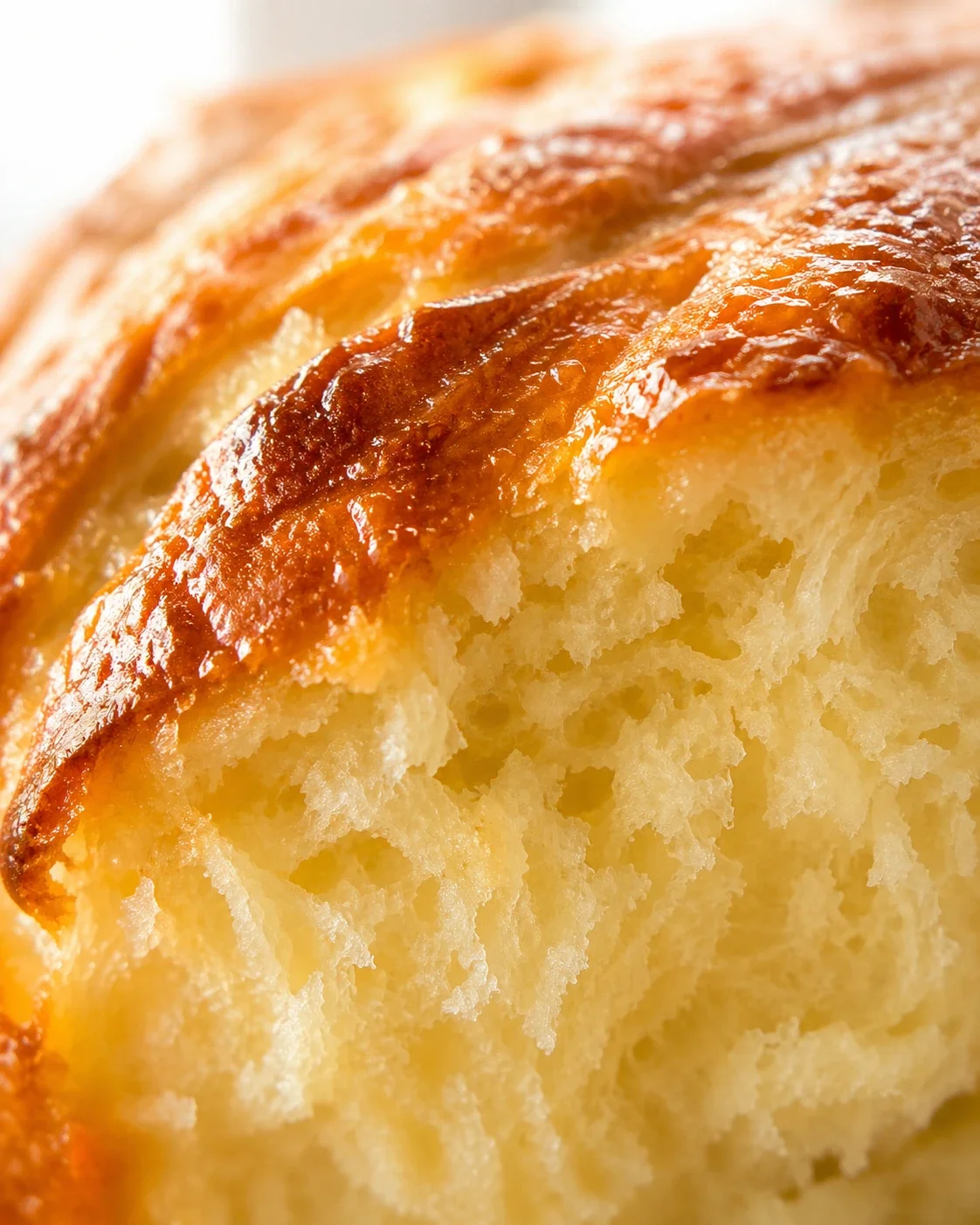
A soft, pillowy, gently sweetened bread perfect for fresh eating, toasting, or sandwiches. Beginner-friendly recipe using simple ingredients with straightforward mixing, kneading, and rising steps.
- Total Time: 1 hour 45 minutes to 2 hours (including rises)
- Yield: 6 servings 1x
Ingredients
- 2 ¼ teaspoons (1 packet) active dry yeast
- 2 cups warm water (around 110°F / 43°C)
- ½ cup granulated sugar
- 1 ½ teaspoons salt
- 2 tablespoons vegetable oil (or melted butter as alternative)
- 6 cups all-purpose flour, plus more for kneading
- Optional: 1 egg plus 1 tablespoon water for egg wash
Instructions
- Dissolve yeast and 1 tablespoon sugar in warm water (105–110°F / 40–43°C), rest 5–10 minutes until foamy.
- Add remaining sugar, salt, and oil to yeast mixture; stir in 3 cups flour until smooth, then add remaining flour gradually until dough pulls away from bowl.
- Lightly flour work surface and knead dough 8–10 minutes by hand (or 5 minutes with stand mixer) until elastic and smooth.
- Grease large bowl, place dough inside, turn to coat with oil; cover and let rise in warm, draft-free spot about 1 hour until doubled.
- Punch down dough, divide in half, shape each into smooth loaf.
- Place loaves in greased 9×5-inch pans, cover and let rise 30–40 minutes until risen just above pan edges.
- Preheat oven to 350°F (175°C).
- Optional: brush tops with egg wash (1 egg + 1 tablespoon water) for shiny, golden crust.
- Bake loaves 25–30 minutes until golden brown and hollow-sounding when tapped or internal temp 190–195°F (88–90°C).
- Remove loaves from pans, cool completely on wire rack before slicing.
Notes
Use a thermometer to check bread’s internal temperature for best results., If yeast doesn’t foam in 10 minutes, it might be inactive—use fresh yeast., Adjust flour gradually to avoid dense bread; dough should be slightly tacky., Proper kneading develops gluten for ideal texture; do not over-knead., Let dough rise in warm, draft-free place, like inside oven with light on or sunny counter., Let bread cool completely before slicing to avoid gummy texture., Instant yeast can be used directly with dry ingredients skipping proofing, but rise times may vary., Variations include cinnamon swirl, honey substitution (adjusting water accordingly), dinner rolls, garlic & herb additions, mix-ins like raisins, nuts, or seeds, and using melted butter or partial whole wheat flour for richer or heartier bread., Store bread in airtight container at room temp up to 3 days or freeze wrapped up to 2 months., Refresh stale bread by warming in 300°F oven for 5 minutes or toasting; avoid long microwaving., First rise and shaping can be done ahead and refrigerated overnight; allow extra rise time when cold.
- Prep Time: 15 minutes
- Cook Time: 25-30 minutes
- Category: Bread
- Cuisine: American
Nutrition
- Serving Size: 1 slice (approximate)
- Calories: Approximately 200-220 calories per 1 slice serving (estimate based on typical ingredients)
- Fat: Approximately 3 grams per slice
- Carbohydrates: Approximately 40 grams per slice
- Protein: Approximately 5 grams per slice