Everything Rhubarb: How to prepare, store, freeze & cook with rhubarb

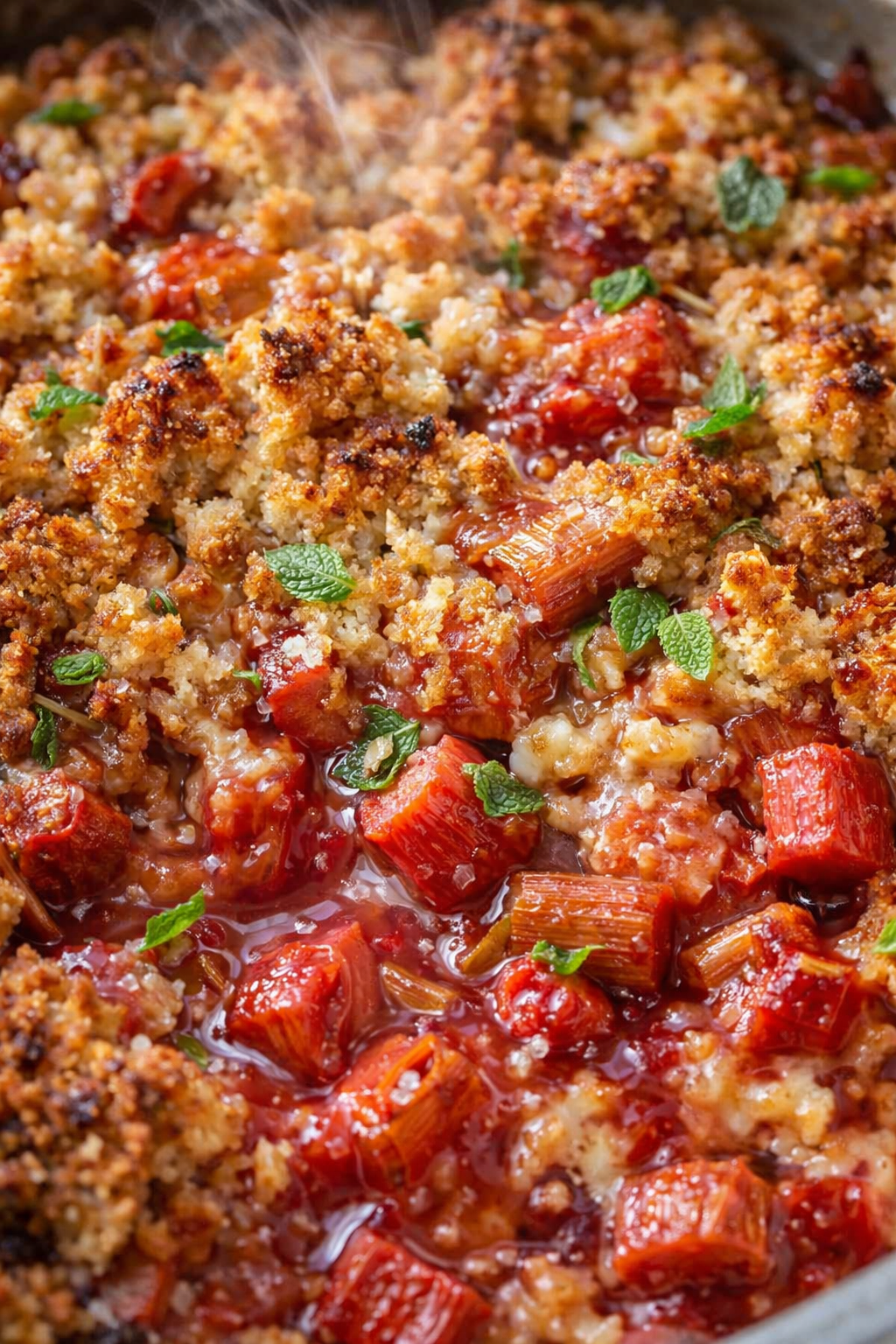
Are you diving into rhubarb this season? That’s awesome! I’ve put together all my favorite tips for picking, prepping, storing, and cooking with fresh rhubarb. Whether it’s from your own garden or the market, you’re going to find easy, tasty ideas to get the most out of this bright and tangy ingredient.
When rhubarb season hits, I go all in! I bake, cook, and prep as much as possible, then freeze plenty so I can enjoy that zingy flavor any time of year.
Let me walk you through how to harvest and prepare rhubarb, plus my best tips for cooking it fresh and ripe. Plus, I’ll show you how to keep it fresh in your fridge for weeks and the easiest way to freeze it so you can enjoy it long after the season fades.
Is Rhubarb a Fruit or Vegetable?
Here’s a little kitchen trivia: rhubarb is technically a vegetable! But most of us treat it like a fruit because it shines best in sweets and baked goodies.
In the northern half of the world, rhubarb pops up around April. The best rhubarb season in the U.S. usually lasts from April through June. Weather affects this, but sometimes greenhouses bring rhubarb earlier or even year-round.
In parts of Washington state, you can find rhubarb harvested as late as July. Meanwhile, in the southern hemisphere, rhubarb shows up in October and November. So, with a little savvy shopping, you can enjoy rhubarb much of the year—though off-season will usually cost more.
Every spring, I get excited about rhubarb—whether I’m clipping stalks from a huge patch or grabbing a fresh bunch at the market. This post is your friendly guide to go from harvesting your stalks to cooking up delicious plates and desserts, no matter if it’s peak season or you’re lucky enough to find hothouse rhubarb at other times.
I’ll show you safe and simple harvesting, quick prepping, storing tricks to keep it fresh in your fridge for weeks, plus easy ways to freeze it so you never lose that fresh rhubarb flavor. Along the way, I’ll share useful tips, what tools you actually need (spoiler: not many!), and favorite flavor matches—all with a little safety note about those tricky leaves!
- Exactly how to harvest and trim the stalks the right way (and why you have to toss the leaves immediately).
- Simple prep steps for fresh eating, baking, or roasting with zero fuss.
- Smart storage strategies for your fridge and foolproof freezing methods to keep rhubarb fresh up to a year.
- Creative flavor combos and fresh ideas for macerating, pairing (hello strawberries and vanilla!), plus savory uses that might surprise you.
Rhubarb packs a bright, tangy punch and really stretches far. It’s amazing in sweet desserts, tangy compotes, or even savory glazes. Best of all, it’s incredibly easy to work with—no peeling required—and it keeps beautifully in the fridge or freezer. Just a few straightforward steps will lock in its fresh taste, so you can enjoy rhubarb goodness long after season’s done without any fancy tools or fuss.
- Its bold, tart flavor loves sugar, strawberries, vanilla, and cozy spices like ginger and cinnamon.
- Quick prep—trim the leaves, rinse, chop—done!
- Lasts up to two weeks in the fridge or freezes well for up to a year.
- Super versatile—eat raw, macerate, bake in pies or crisps, simmer into compotes, or whip up savory sauces.
Spring and early summer bring one of my kitchen favorites: tangy, bright rhubarb. Whether you’re harvesting stalks from your patch or picking some up at the market, this guide will take you step-by-step from garden to freezer with easy, practical tips so you can enjoy rhubarb all year long.
Keep reading for clear instructions, quick tips, and simple recipes. I’ll walk you through safe harvest and prep, fast cooking methods like making compote, roasting, and classic strawberry-rhubarb combos, plus the best fridge and freezer storage tricks so you never lose that fresh flavor after the season ends.
- Harvest and prep basics: when to pick, how to trim and rinse, and why the leaves must go straight into the trash.
- Easy cooking choices: macerate fresh, simmer into compote, roast, or bake into pies and glazes.
- Simple storage and freezer hacks: keep stalks crisp for up to two weeks in the fridge or freeze chopped or cooked rhubarb for up to a year.
- Flavor pairings and time-saving shortcuts so you can pull off delicious rhubarb dishes without complicated gear or recipes.
Short, sweet, and safe—this section is your starting point to dive into harvesting, prepping, and storing rhubarb with confidence and ease.
Why You’ll Love Rhubarb
This guide keeps cooking with rhubarb easy and enjoyable. It breaks down simple, practical steps for harvest, prep, storage, and freezing so you can savor rhubarb’s bright, tangy flavor all year—without special tools or complicated methods.
- Quick and easy prep—no peeling necessary! Just cut off leaves, rinse, and slice into half-inch to one-inch pieces.
- Flavor-packed versatility—rhubarb’s tartness pairs wonderfully with strawberries, vanilla, ginger, and warming spices; use it in sweets, savory glazes, roasted toppings, pickles, and sauces (try a tangy rhubarb relish).
- Long-lasting storage—fridge-stored stalks stay crisp for two weeks, and you can freeze raw pieces, sweetened fruit, or cooked compote for up to a year—then put them to use in a classic rhubarb crisp with frozen rhubarb.
- Flexible cooking options—make a quick compote in under 12 minutes, roast to caramelized perfection, or freeze for later pies and smoothies; adjust texture easily for chunky or smooth.
- From garden to table—tips for gently harvesting by snapping or cutting stalks about 10 inches long, and discarding leaves immediately for safety.
Ingredients and Easy Substitutes
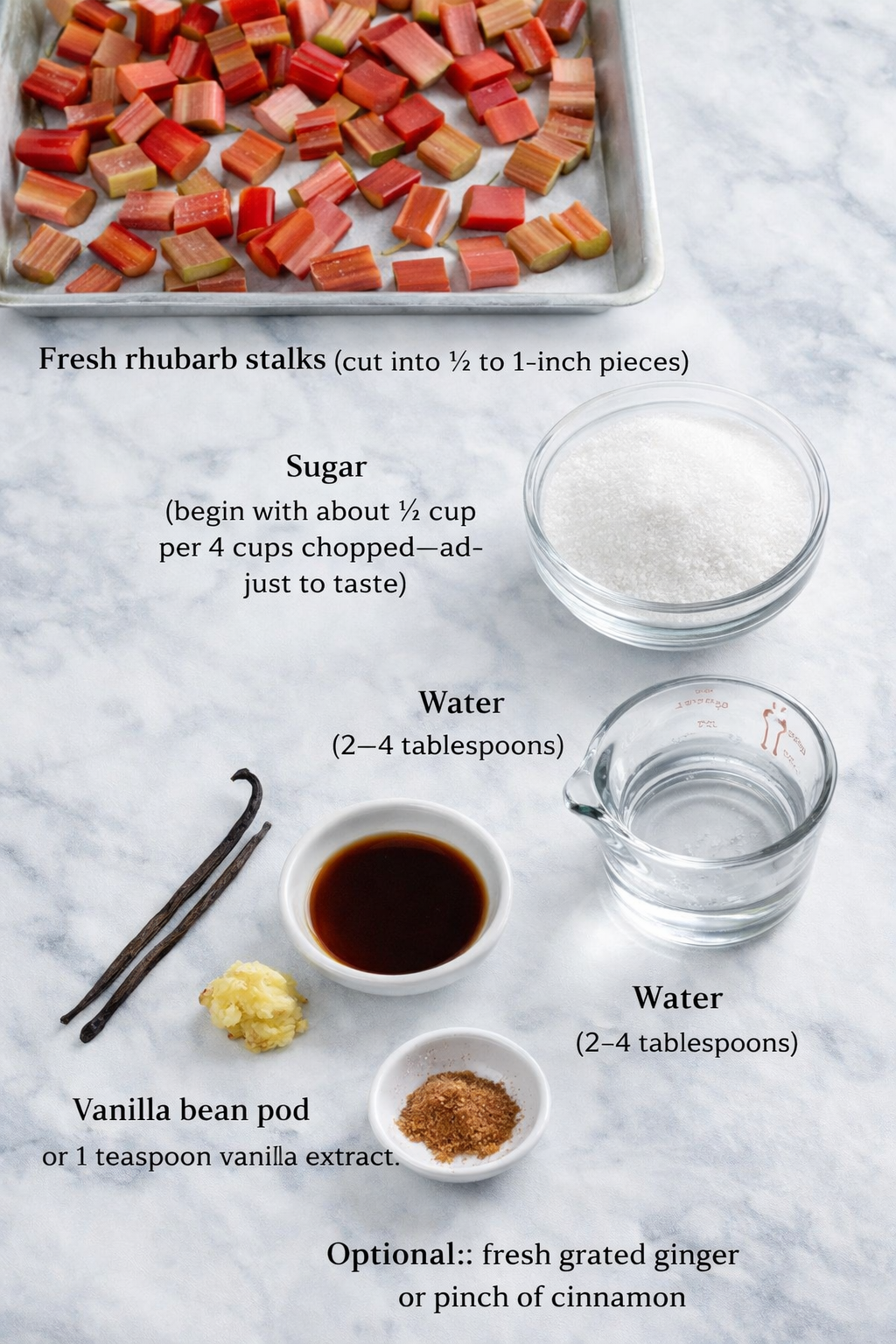
- Fresh rhubarb stalks (cut into ½ to 1-inch pieces)
- Sugar (begin with about ¼ cup per 4 cups chopped—adjust to taste)
- A splash of water (2–4 tablespoons)
- Vanilla bean pod or 1 teaspoon vanilla extract
- Optional spices: a little fresh grated ginger or a pinch of cinnamon
How to Harvest, Prep, and Cook
- Harvest stalks when they reach about 10 inches long.
- Cut stalks near the base with kitchen shears or a sharp knife, or hold the stalk’s base and twist until it snaps off.
- If possible, pick rhubarb early in the morning when stalks are cool and crisp.
-
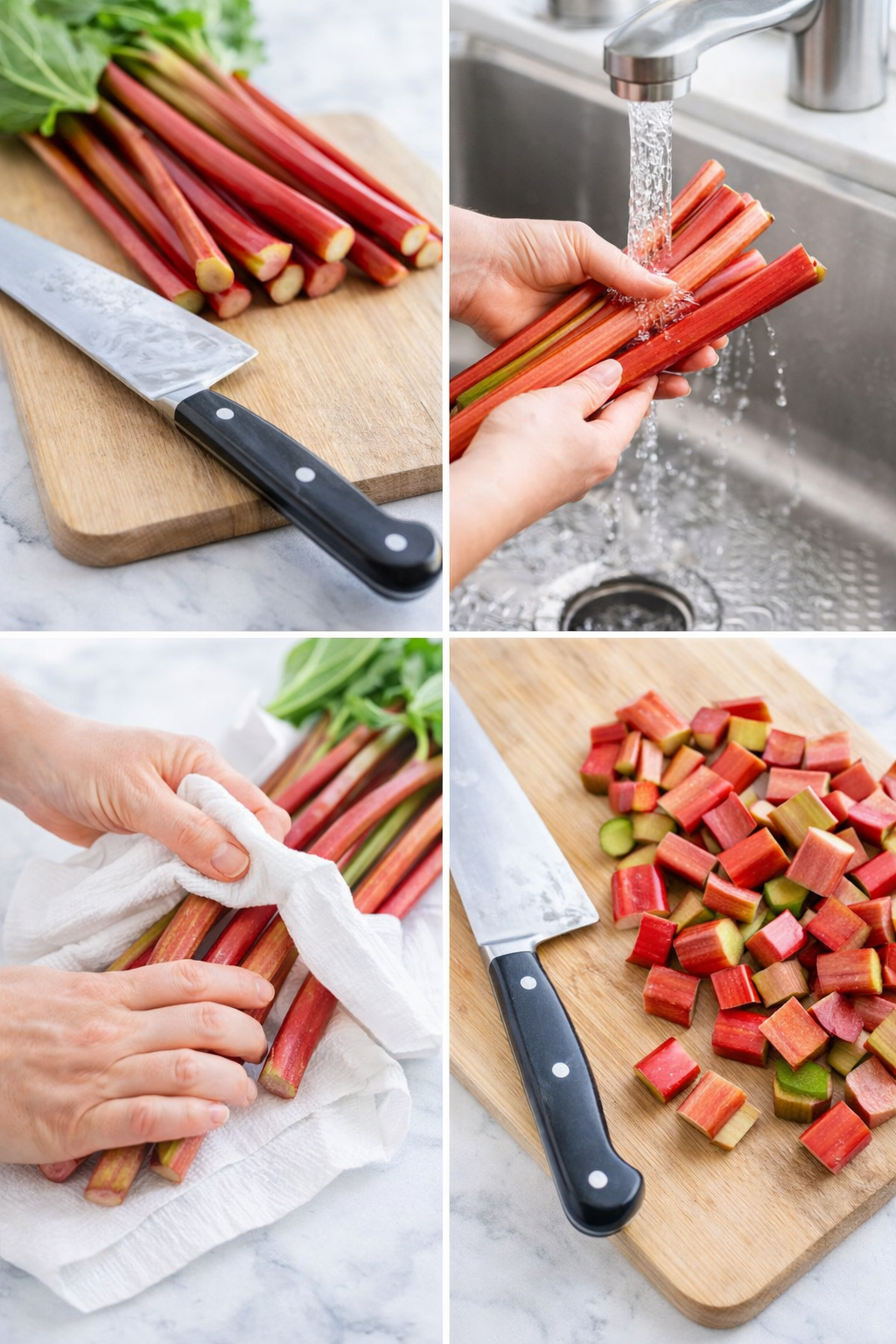
Immediately cut off leaves and discard them.
- Trim off the root ends or bottom tips of the stalks.
- Rinse stalks gently under cold water to remove dirt and debris.
- Dry the stalks by patting them with a clean towel or paper towels.
-
Slice stalks crosswise into ½ to 1-inch pieces (no peeling required).
- Macerate chopped rhubarb with about ¼ cup sugar per 4 cups, letting it sit for 15–30 minutes to get juicy and soft (optional).
- Transfer the rhubarb and any juices to a saucepan; add 2–4 tablespoons water, a vanilla bean pod or 1 teaspoon vanilla extract, and optional grated ginger or a pinch of cinnamon.
- Simmer gently over medium heat, stirring now and then, until the rhubarb softens and breaks down, about 8–12 minutes.
-
Adjust cooking time for texture: cook less for chunkier compote, or cook longer and mash smooth with an immersion blender.
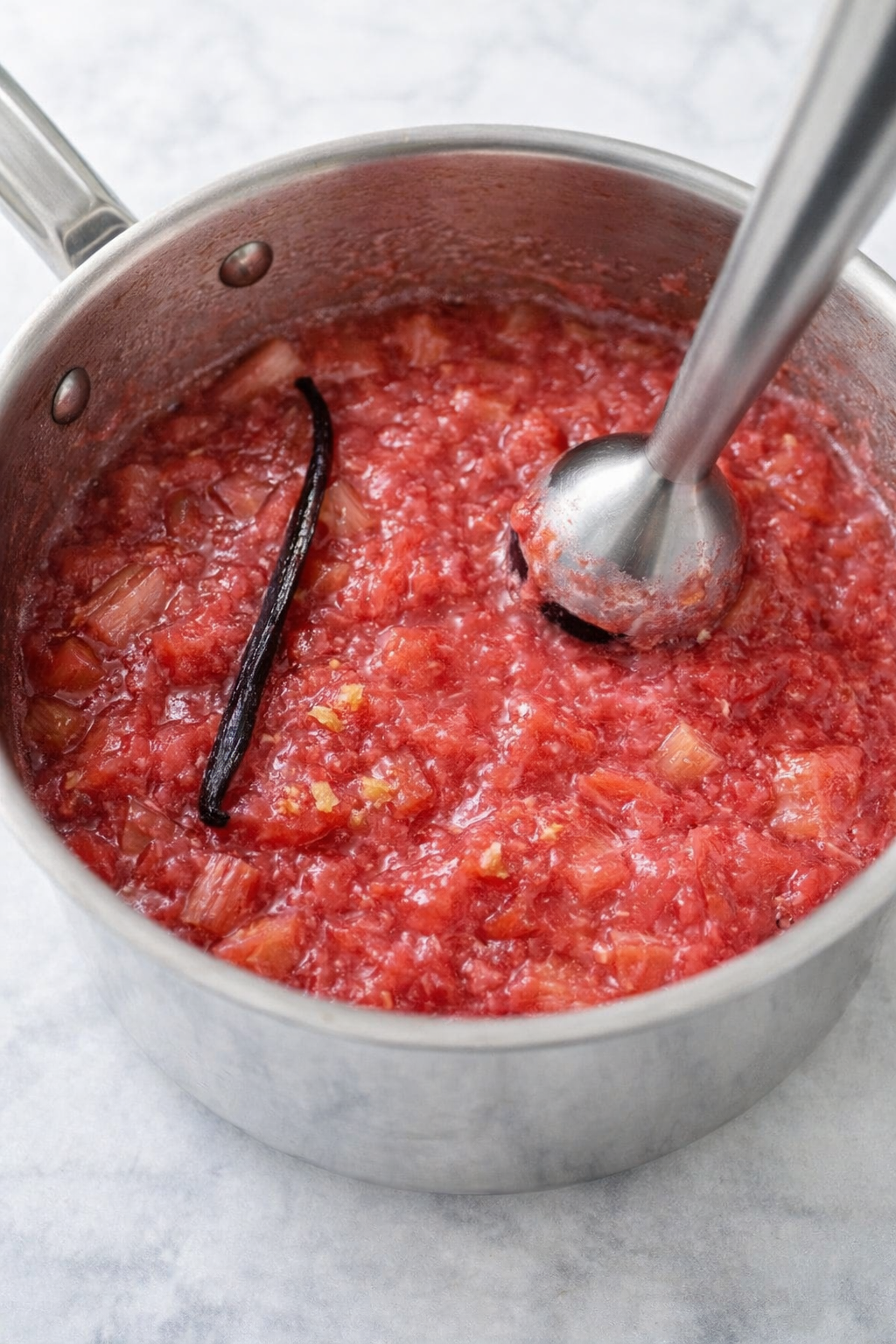
- Taste and add sugar if desired, then remove from heat.
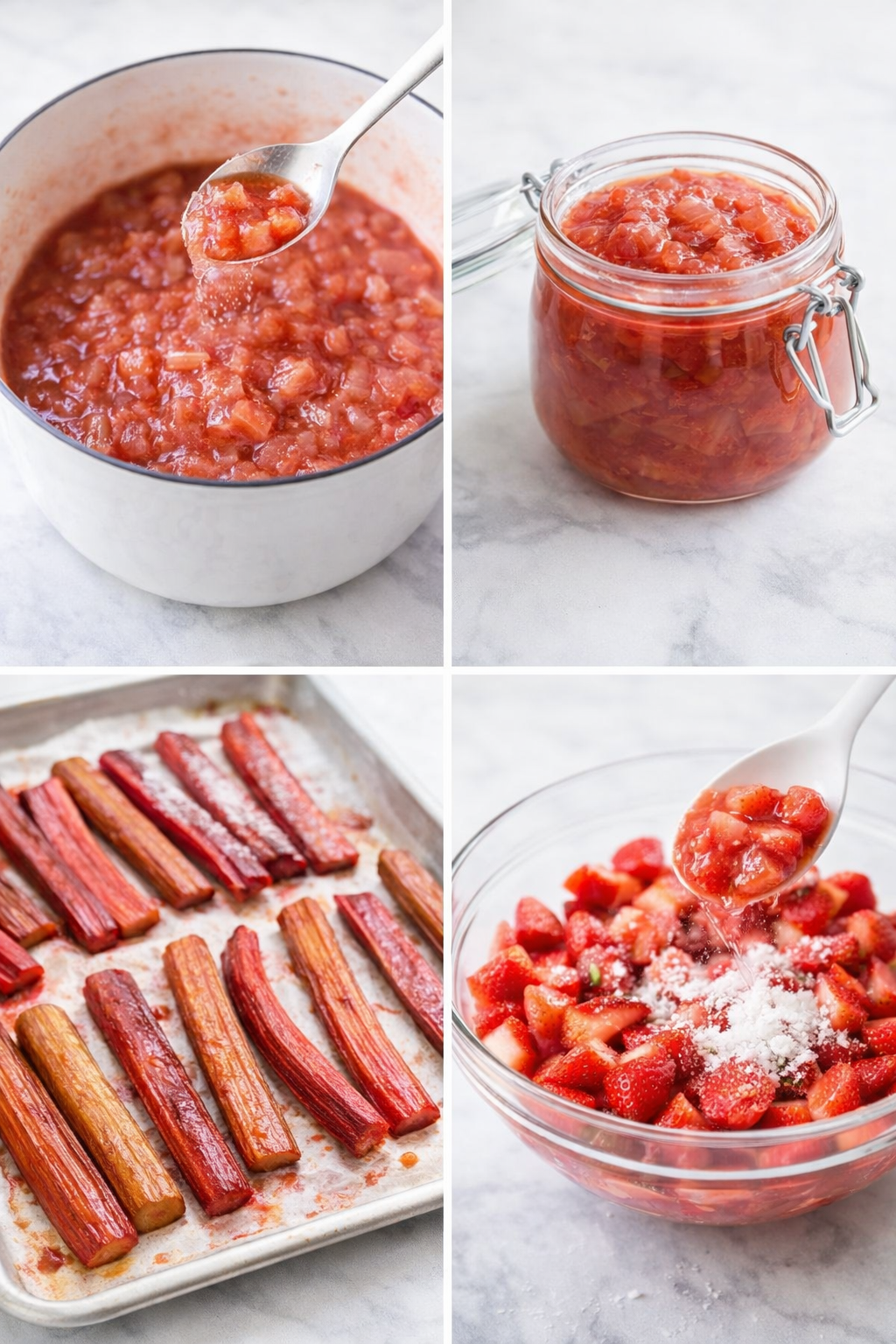
- Let the compote cool slightly, spoon into a clean jar, and chill completely.
- Toss whole or halved stalks with a bit of sugar, spread on a parchment-lined sheet, and roast at 400°F for 15–25 minutes until tender and slightly caramelized.
-
For strawberry-rhubarb pie filling: mix equal parts chopped rhubarb and strawberries, macerate with sugar, then drain excess juice or thicken with cornstarch before baking.
Practical Tricks and Shortcuts
Once you’ve prepped rhubarb as above, you can jump right into using it fresh—just wash, chop as you go, and toss it straight into your favorite recipes—think Rhubarb Overnight Oats for a quick breakfast.
Can you eat rhubarb raw?
Absolutely! My family loves nibbling raw rhubarb stalks with a pinch of salt—it’s a fun salty-tart combo. If you prefer sweeter, sprinkle on some sugar instead.
You can finely chop raw rhubarb for a zesty topping, mix it into salsa for a tangy twist, or macerate it with sugar to brighten up desserts—or cook it into a small-batch Strawberry Rhubarb Jam.
Do you peel rhubarb?
No need! Peeling rhubarb isn’t necessary at all. The whole stalk is fibrous, so peeling won’t make much of a difference.
Because those fibers can make rhubarb stringy, slicing it crosswise into small pieces before eating or cooking helps keep things tender and nice.
Flavor Variations and Serving Ideas
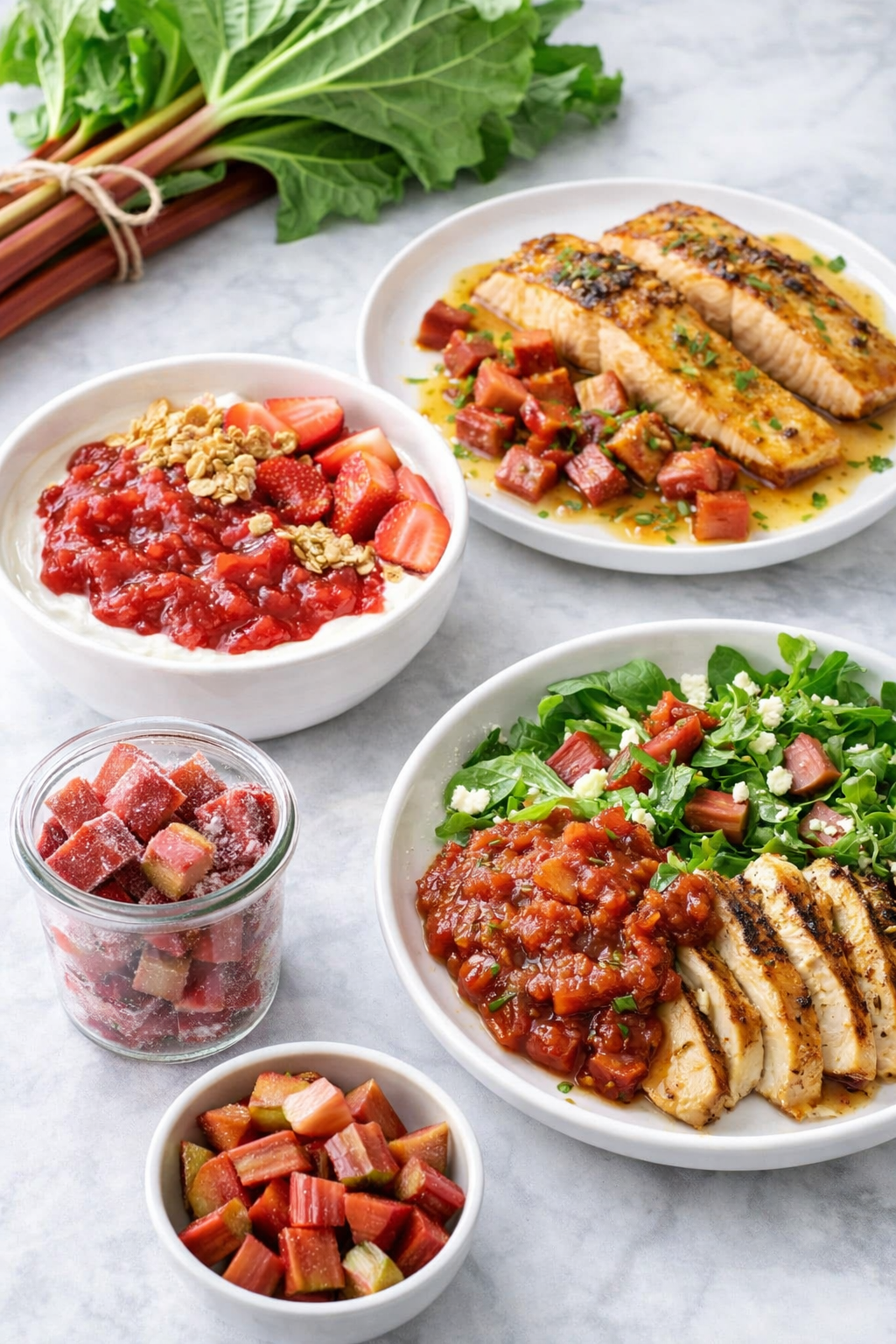
Rhubarb’s versatility is fantastic. Try roasting it with balsamic vinegar and a bit of honey for a sweet-savory twist. Or blend cooked rhubarb into smoothies with berries and yogurt. For a punch of heat, add fresh ginger or a pinch of cayenne to your compote. If you like gingerbread-spiced desserts, adding cinnamon and nutmeg to rhubarb recipes works beautifully—try a rhubarb coffee cake.
Use rhubarb compote on pancakes or on Cottage Cheese Waffles, spoon it over vanilla ice cream, or swirl it into yogurt. Roasted rhubarb pairs wonderfully with grilled pork or chicken for a tangy glaze. Fresh rhubarb stems trimmed and sprinkled with a little sugar and salt make a refreshing snack. And don’t forget classic strawberry-rhubarb pie for a family favorite!
Storing and Freezing Rhubarb
Ready to mix things up with your rhubarb? Here are some easy, tasty ideas to try:
- Freeze plain chopped rhubarb: cut it into ½ to 1-inch pieces, spread on a parchment-lined tray to freeze individually, then bag and freeze for up to a year.
- Freeze macerated rhubarb: toss chopped rhubarb with sugar before freezing to keep pies and sauces nice and juicy.
- Freeze puree or compote: cook rhubarb with sugar and vanilla, cool it well, then stash in the freezer for smoothies or sauces later.
- Pair with strawberries: use fresh or frozen together for classic strawberry-rhubarb pies and compotes that never go out of style.
- Roast rhubarb: coat stalks in a little sugar, roast until glowing and caramelized, then add as a bright topping to yogurt or ice cream.
- Make a savory glaze: simmer rhubarb with vinegar, honey, and mustard for a tangy sauce perfect on pork or chicken.
- Quick pickled rhubarb: thinly slice and pickle in a sweet-tart brine to jazz up sandwiches and salads.
To keep rhubarb fresh in the fridge, wash and dry your stalks well, then wrap them tightly in aluminum foil. This trick locks in moisture and keeps them crisp for up to two weeks.
You can also wrap rhubarb in plastic wrap or reusable bags and pop it in the crisper drawer—it works just as well.
If your stalks are too long for your fridge, cut them in half. A little splitting or curling at the cut ends is no problem—just trim as you use them. The stalks will stay crunchy and delicious.
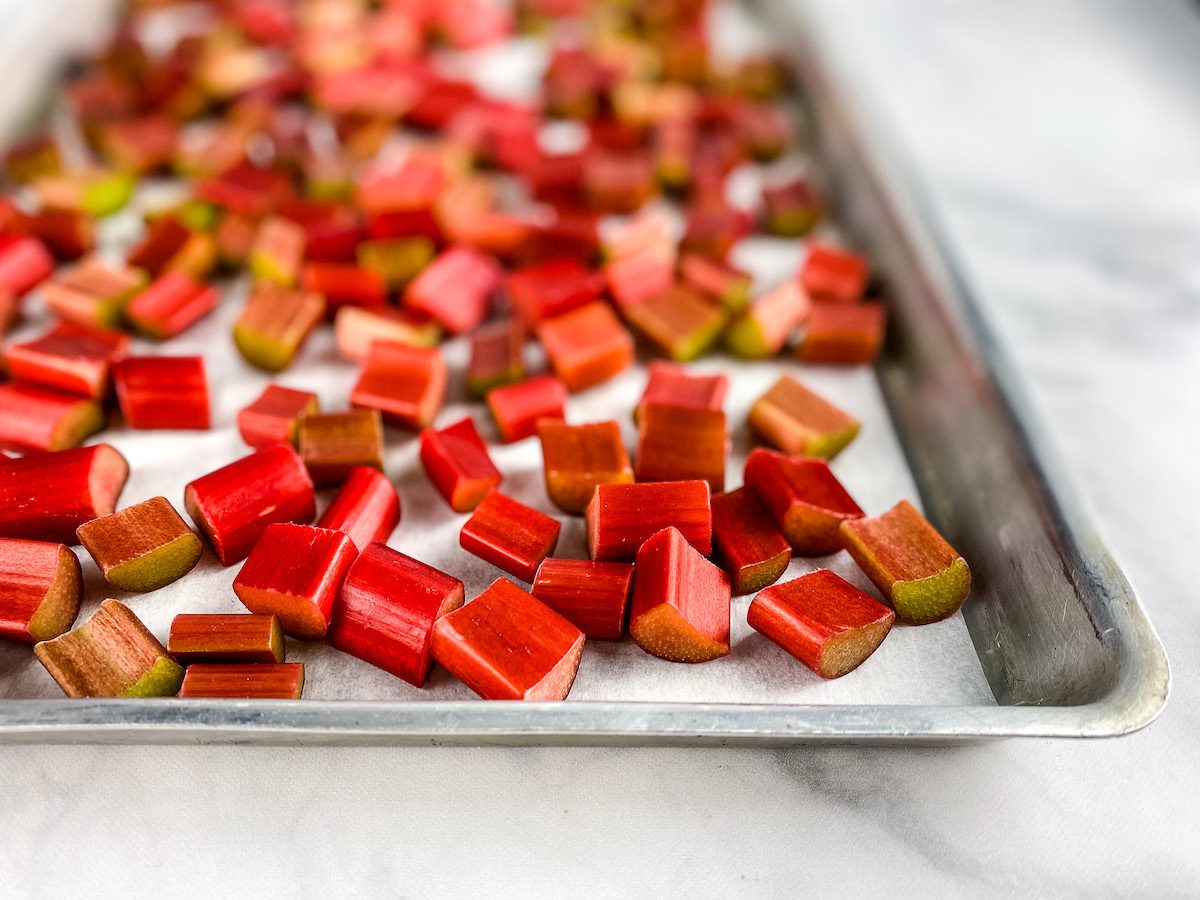
Freezing rhubarb is easy and a great way to stretch the season’s bounty!
Here’s a quick how-to:
- Wash and dry stalks thoroughly.
- Slice into ½ to 1-inch pieces.
- Spread the pieces in a single layer on a parchment-lined baking sheet.
- Freeze until firm (about 2 hours).
- Transfer the frozen pieces to freezer-safe bags or containers, label with date.
- Frozen rhubarb stays good for up to a year. No need to blanch unless you want to keep the color extra bright.
Is rhubarb toxic?
Let me remind you: rhubarb leaves contain oxalic acid, which is toxic to people and pets. Always discard leaves right after you pick or buy rhubarb, and never eat them.
Want to keep your rhubarb happy and crisp? Wrap the cleaned stalks tightly in foil or plastic wrap and store in the fridge’s crisper drawer. This seals in moisture and keeps them fresh up to two weeks. If you’re not ready to use it soon, freeze it—chopped or cooked—and you’ll have rhubarb on hand for months.
I like to prepare rhubarb compote in advance and freeze it in small batches. It’s so convenient for quick desserts or breakfast toppings. You can also macerate chopped rhubarb with sugar and freeze that for pies or sauces later. Freezing raw rhubarb pieces after a quick flash freeze means you can grab and go whenever you need it without extra prep. It’s ideal for quick bakes like a classic British Rhubarb Crumble. Or stir thawed rhubarb into an Irresistible Rhubarb Bread.
Common Rhubarb Questions Answered
There are lots of rhubarb varieties out there, each with its own little twist! You’ll find named types and many others.
Stalks range in color from bright red to green with red hints.
Flavor-wise, there’s really no major difference between red and green rhubarb. It mostly comes down to the plant type. You can harvest rhubarb when the stalks are about 10 inches long—you don’t have to wait for them to turn fully red since they might stay green!
Hothouse rhubarb tends to be paler pink with yellowish leaves, and it’s milder and more tender. On the other hand, field-grown rhubarb usually has deep red stalks and green leaves with a sharper, more tart taste. Both are wonderful, so don’t worry too much about color—it’s not a sure sign of sweetness.
Can you eat rhubarb leaves? No! Rhubarb leaves contain toxins and should never be eaten. Always discard leaves right after harvesting or buying rhubarb.
How long does rhubarb last in the fridge? Wrapped well, fresh rhubarb keeps crisp and tasty for up to two weeks in the fridge.
Do I need to peel rhubarb? Nope, no peeling needed. Just trim leaves and ends, rinse, and chop.
Can I freeze rhubarb raw? Yes! Slice stalks, flash freeze in a single layer, then store in freezer bags for up to a year. Frozen rhubarb bakes beautifully in quick breads like cinnamon rhubarb bread.
What flavors go best with rhubarb? Strawberries, vanilla, ginger, cinnamon, and a touch of sugar are classic matches that really highlight rhubarb’s tang. For a bright, bakery-style example, try a lemon rhubarb loaf.
Is red rhubarb sweeter than green? Not really—the color doesn’t guarantee sweetness. Both red and green stalks can be tart or mild.


A comprehensive guide to harvesting, preparing, cooking, storing, and freezing fresh rhubarb, including a recipe for rhubarb compote with optional variations and practical tips.
- Total Time: About 25 to 45 minutes (including optional maceration)
- Yield: Approximately 4 cups of cooked rhubarb compote
Ingredients
- Fresh rhubarb stalks (cut into ½ to 1-inch pieces)
- Sugar (begin with about ¼ cup per 4 cups chopped—adjust to taste)
- A splash of water (2–4 tablespoons)
- Vanilla bean pod or 1 teaspoon vanilla extract
- Optional spices: a little fresh grated ginger or a pinch of cinnamon
Instructions
- Harvest stalks when they reach about 10 inches long.
- Cut stalks near the base with kitchen shears or a sharp knife, or twist the stalk at the base to snap it off.
- Pick rhubarb preferably early in the morning when stalks are cool and crisp (optional).
- Immediately cut off leaves and discard them; do not eat rhubarb leaves as they are toxic.
- Trim off root ends or bottom tips of the stalks.
- Rinse stalks gently under cold water to remove dirt and debris.
- Dry stalks by patting with a clean towel or paper towels.
- Slice stalks crosswise into ½ to 1-inch pieces; no peeling required.
- Optional: Macerate chopped rhubarb with about ¼ cup sugar per 4 cups and let sit for 15–30 minutes to soften.
- Transfer rhubarb and any juices to a saucepan; add 2–4 tablespoons water, a vanilla bean pod or 1 teaspoon vanilla extract, and optional grated ginger or cinnamon.
- Simmer gently over medium heat, stirring occasionally, until rhubarb softens and breaks down (about 8–12 minutes).
- Adjust cooking time for texture preference: less for chunkier compote, longer to mash smooth.
- Taste and add more sugar if desired, then remove from heat.
- Let the compote cool; spoon into a clean jar, chill completely before refrigerating or freezing.
- To freeze raw rhubarb: spread cut pieces in a single layer on a parchment-lined baking sheet; freeze until firm (about 2 hours), then transfer to freezer-safe bags or containers and label with date.
- To freeze compote: portion cooled compote into freezer-safe containers or bags with space for expansion; label and freeze.
- For fridge storage of raw stalks: wash and dry, wrap tightly in foil, plastic wrap, or reusable bags, and keep in the crisper drawer for up to two weeks.
- To roast rhubarb: toss whole or halved stalks with sugar, spread on parchment-lined sheet, roast at 400°F (204°C) for 15–25 minutes until tender and caramelized.
Notes
Rhubarb leaves contain oxalic acid and are toxic; always discard leaves immediately after harvesting or buying., No peeling needed; slicing into smaller pieces helps prevent stringiness., Rhubarb pairs well with strawberries, vanilla, ginger, cinnamon, nutmeg, and sugar., Rhubarb can be eaten raw with a pinch of salt or sugar for a salty-tart or sweet flavor., Use rhubarb in sweet desserts like pies and crisps, savory glazes, compotes, sauces, smoothies, pickles, or roasted toppings., Freeze sliced rhubarb raw, macerated, or as cooked compote for up to one year., For strawberry-rhubarb pie, mix equal parts chopped rhubarb and strawberries, macerate with sugar, then drain juice or thicken with cornstarch before baking.
- Prep Time: 15 minutes (excluding optional maceration time)
- Cook Time: 8 to 12 minutes (depending on texture preference)
- Category: Dessert, Sauce, Condiment
- Cuisine: American
Nutrition
- Serving Size: ½ cup
- Calories: Approximately 80 calories per ½ cup serving (varies based on sugar added)
- Fat: 0 g per ½ cup
- Carbohydrates: 21 g per ½ cup (mostly from natural sugars and added sugar)
- Protein: 0.3 g per ½ cup