Authentic Kunafa Recipe for 8 Servings – For Daily Recipes

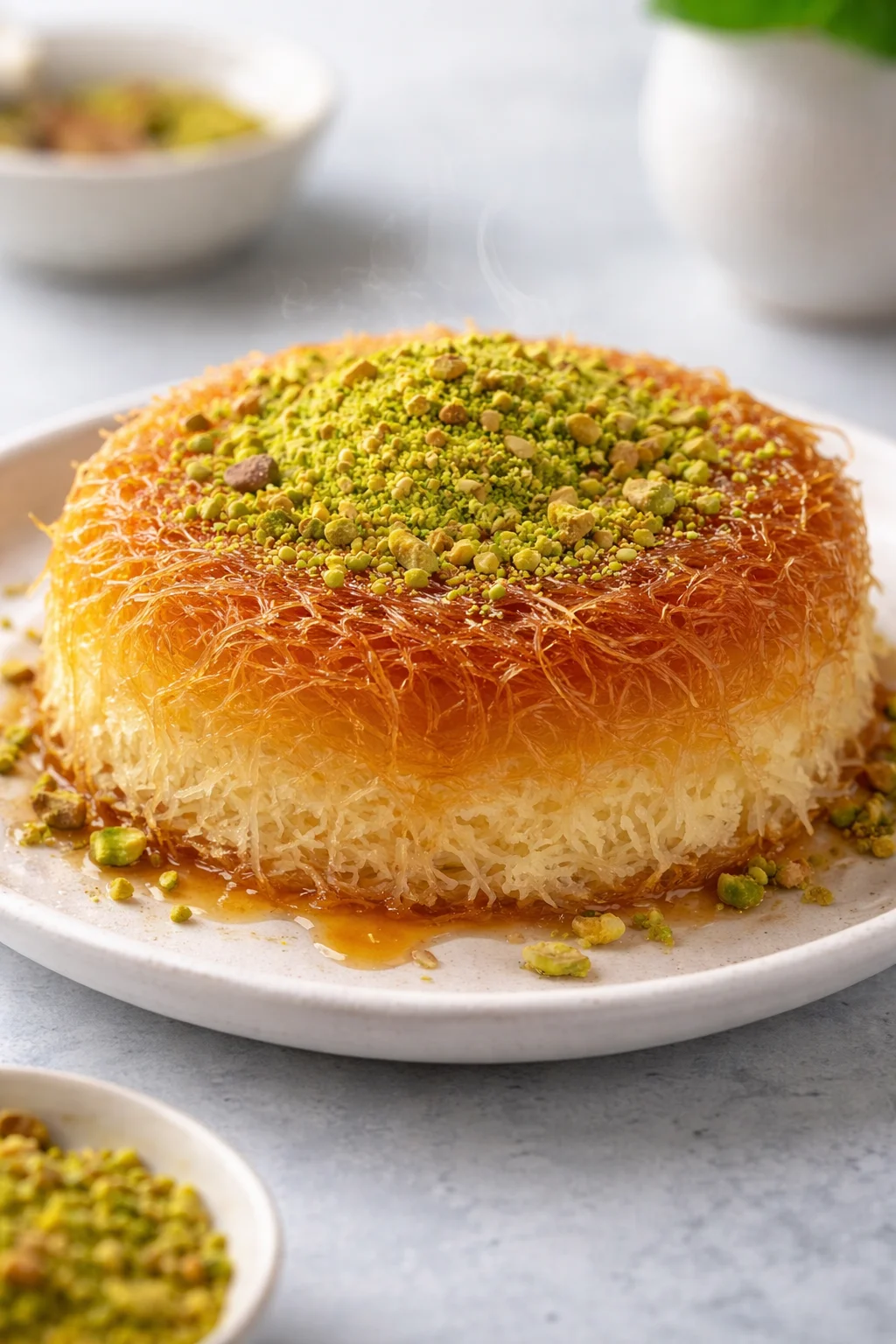
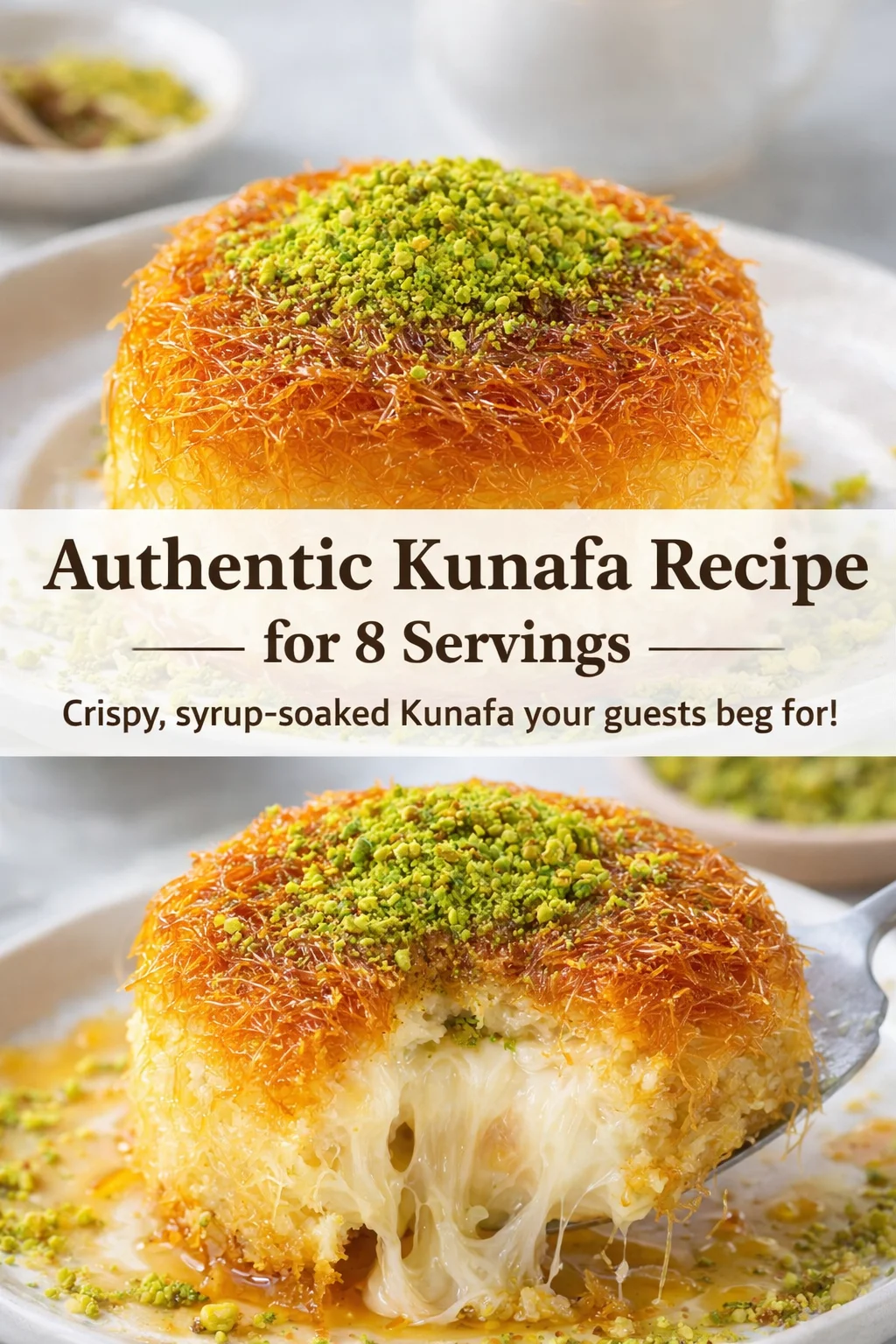
Here’s a hands-on look at a classic Middle Eastern treat: a super crisp kataifi crust hugging a gooey, stretchy cheese center, all finished off with a fragrant syrup. The magic moment? Flipping the whole tray, then drizzling cool syrup over the piping hot pastry — that quick sizzle and shiny glaze is what makes this dessert unforgettable.
- Clear, easy steps: you’ll find a straightforward, step-by-step guide for assembling and baking (oven method at 350°F / 180°C is the way to go), plus helpful timing info — around 15 minutes to prep and 30 minutes to bake, making enough for 8 servings.
- Ingredient insights and kitchen science: simple explanations about why we choose ghee, use shredded kataifi, and mix mozzarella with ricotta — plus how heat shocks and browning reactions build perfect texture and flavor.
- Smart tips and troubleshooting: how to press the base just right, master that syrup, make the big flip confidently, avoid soggy bottoms or chewy cheese, and what kitchen gear works best (think heavy-bottom pan, 9–12″ round pan, and a flat plate for flipping).
- Creative twists and storage: ideas for chocolate or vegan versions, how to cook on the stovetop, and the best ways to keep leftovers tasty.
Keep reading for a detailed look at the ingredients, the why behind each step, and easy-to-follow instructions that help you nail that shiny, crunchy crust and melty cheese pull every single time.
Why You’ll Love This Kunafa
The Thermal Shock Mechanism: Pouring room-temperature syrup over hot, fresh-from-the-oven pastry creates an instant sugar bond that seals the crust with a glassy crunch instead of letting it get soggy.
Lipid Induced Maillard Reaction: Ghee withstands high heat way better than butter, so frying kataifi strands at 350°F (180°C) helps them brown deeply without that bitter burnt taste.
Protein Emulsification: Blending ricotta with low-moisture mozzarella stops the cheese from turning greasy or rubbery — the ricotta creates a smooth matrix that holds those stretchy mozzarella proteins perfectly—much like the creamy-stretchy balance in a one-pot lasagna soup.
Cooking MethodPrep TimeResulting TextureBest ForStovetop (Traditional)20 minsExtra crispy, deeply fried baseAuthentic texture and flavorOven Baked (Standard)10 minsEven golden crust, easier to flipBig batches, beginner-friendlyAir Fryer (Modern)5 minsUltra dry, crunchy finishSmall servings or quick fixes
Picking your method comes down to your kitchen gear and experience, but for your first try, I suggest the oven. The hot, circulating air crisps every kataifi strand evenly—similar to how it lifts laminated doughs in a Puff Pastry Star Appetizer—giving you consistent, great results.
Ingredients and Why They Matter
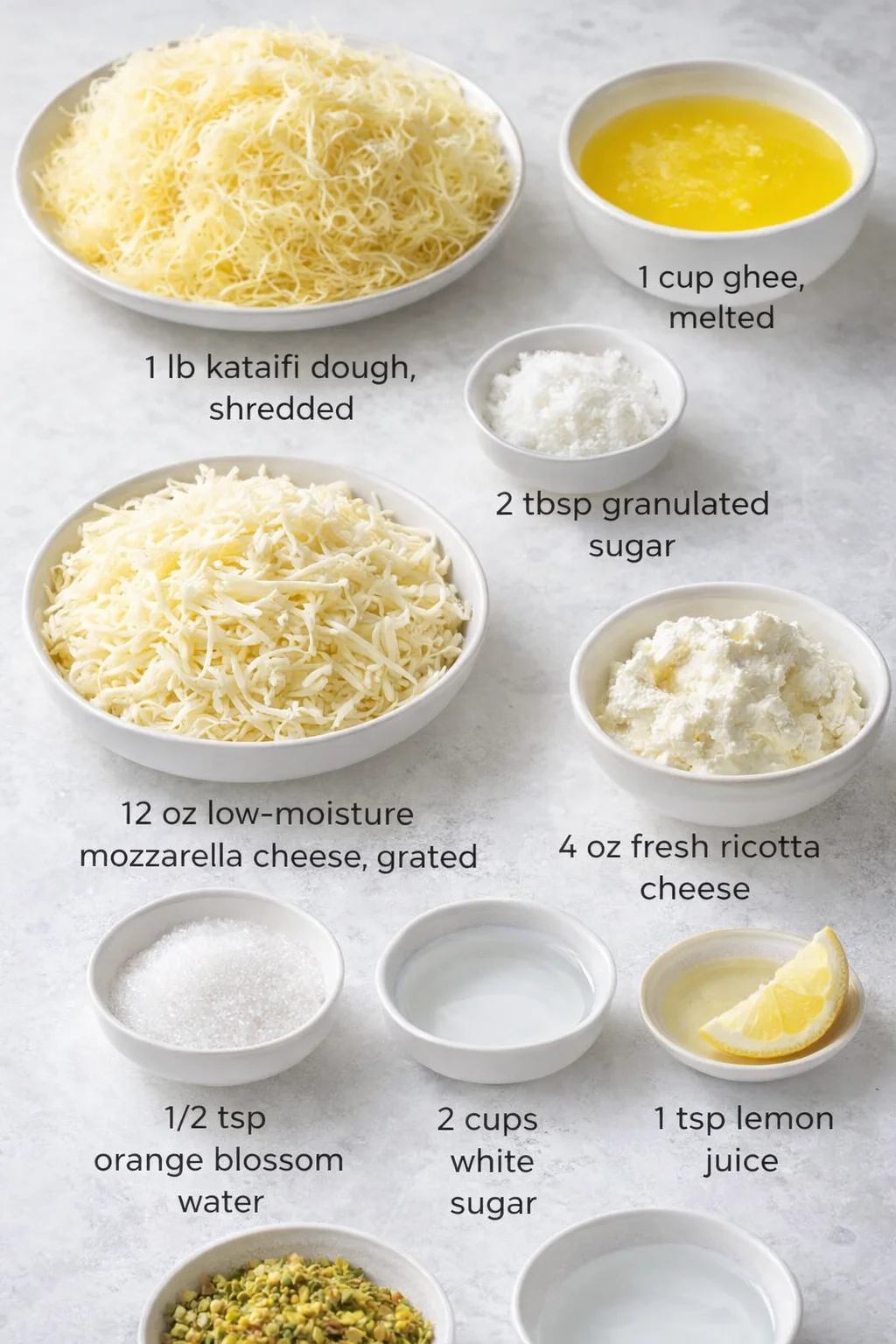
- 1 lb kataifi dough, shredded
- 1 cup ghee, melted
- 2 tbsp granulated sugar
- 12 oz low-moisture mozzarella cheese, grated
- 4 oz fresh ricotta cheese
- 1/2 tsp orange blossom water
- 2 cups white sugar
- 1 cup water
- 1 tsp lemon juice
- 1 tbsp rose water
- crushed pistachios
How to Assemble and Bake
- Make the syrup: combine 2 cups sugar, 1 cup water, and 1 tsp lemon juice in a saucepan; bring to a boil, then simmer 10 minutes until it coats the back of a spoon, stir in 1 tbsp rose water and cool to room temperature.
- Thaw kataifi fully if frozen, then shred finely by hand or pulse in a food processor until pieces are about 1/2 inch long; transfer to a large bowl.
- Melt 1 cup ghee.
-
Pour the melted ghee and 2 tbsp granulated sugar over the kataifi and massage with your hands until every strand is glossy and translucent.
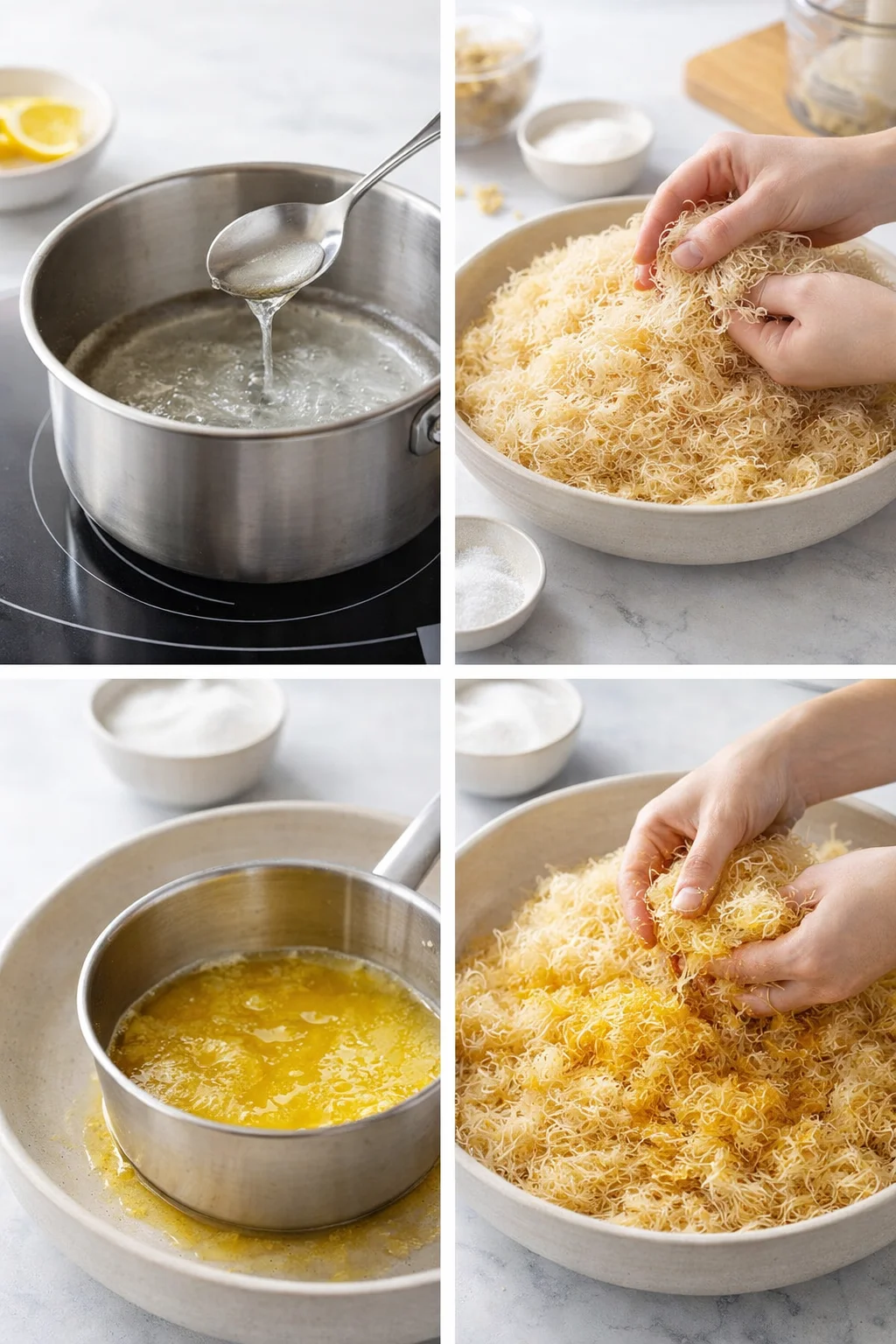
- Press two-thirds of the kataifi mixture firmly and evenly into the bottom (and up the sides if desired) of a 9-inch round baking pan using a flat-bottomed cup or similar tool to form a sturdy base.
- Soak low-moisture mozzarella in cold water for 15 minutes, then pat dry.
- Mix 12 oz grated low-moisture mozzarella, 4 oz ricotta, and 1/2 tsp orange blossom water until combined.
-
Spread the cheese mixture evenly over the kataifi base, leaving a 1/2-inch border around the edges.
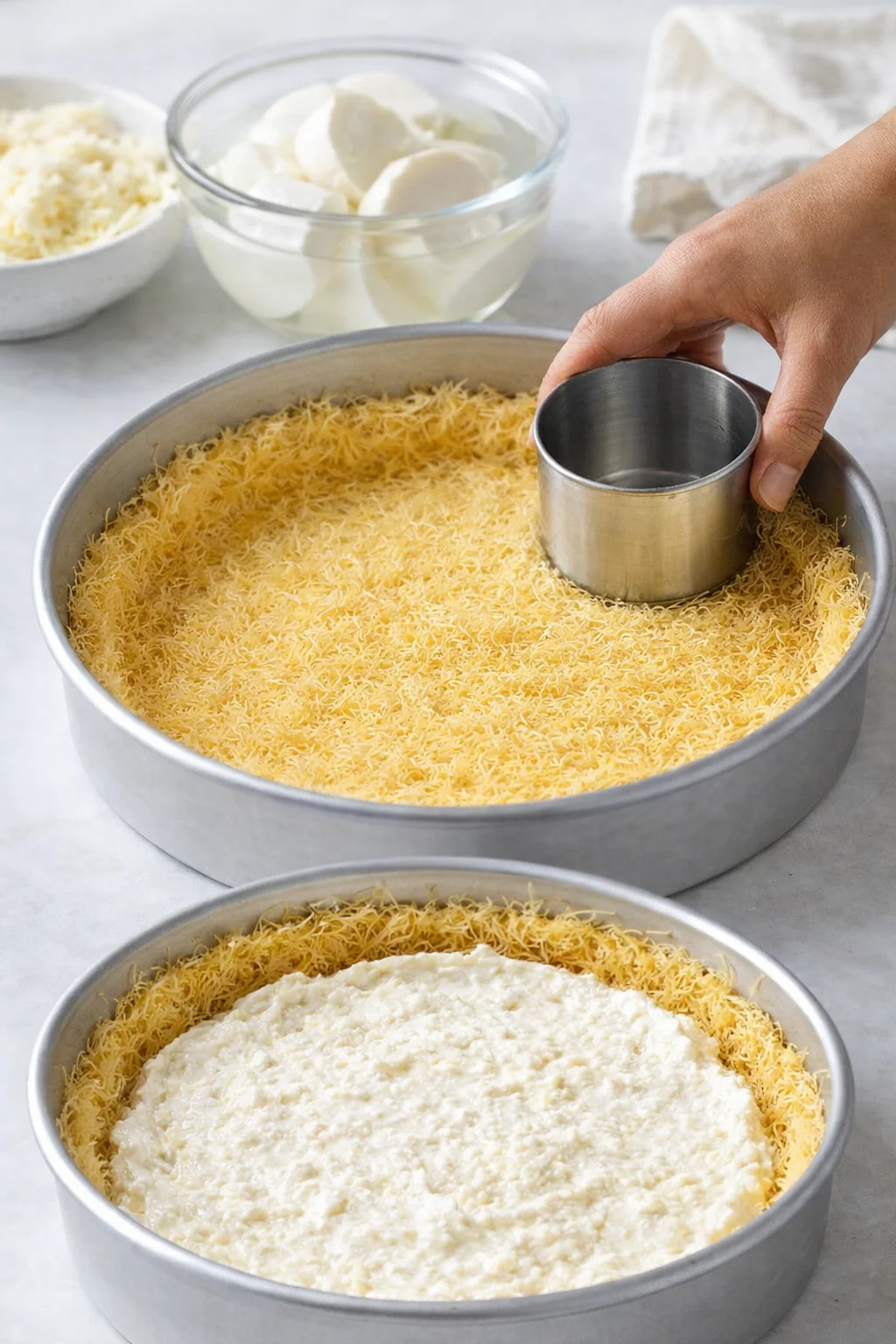
- Scatter the remaining kataifi over the cheese and press down gently to level.
- Bake in a preheated 350°F (180°C) oven for 30 minutes, or until the edges are deep golden and pulling away from the pan.
- Alternatively, for no-oven method: cook the assembled kunafa in a large non-stick skillet over medium-low heat for 10–12 minutes per side, sliding it onto a plate and flipping back into the pan to cook the second side.
-
Set a flat plate over the baked pan and flip the kunafa out of the pan onto the plate, tapping to release and confirm a crisp base.
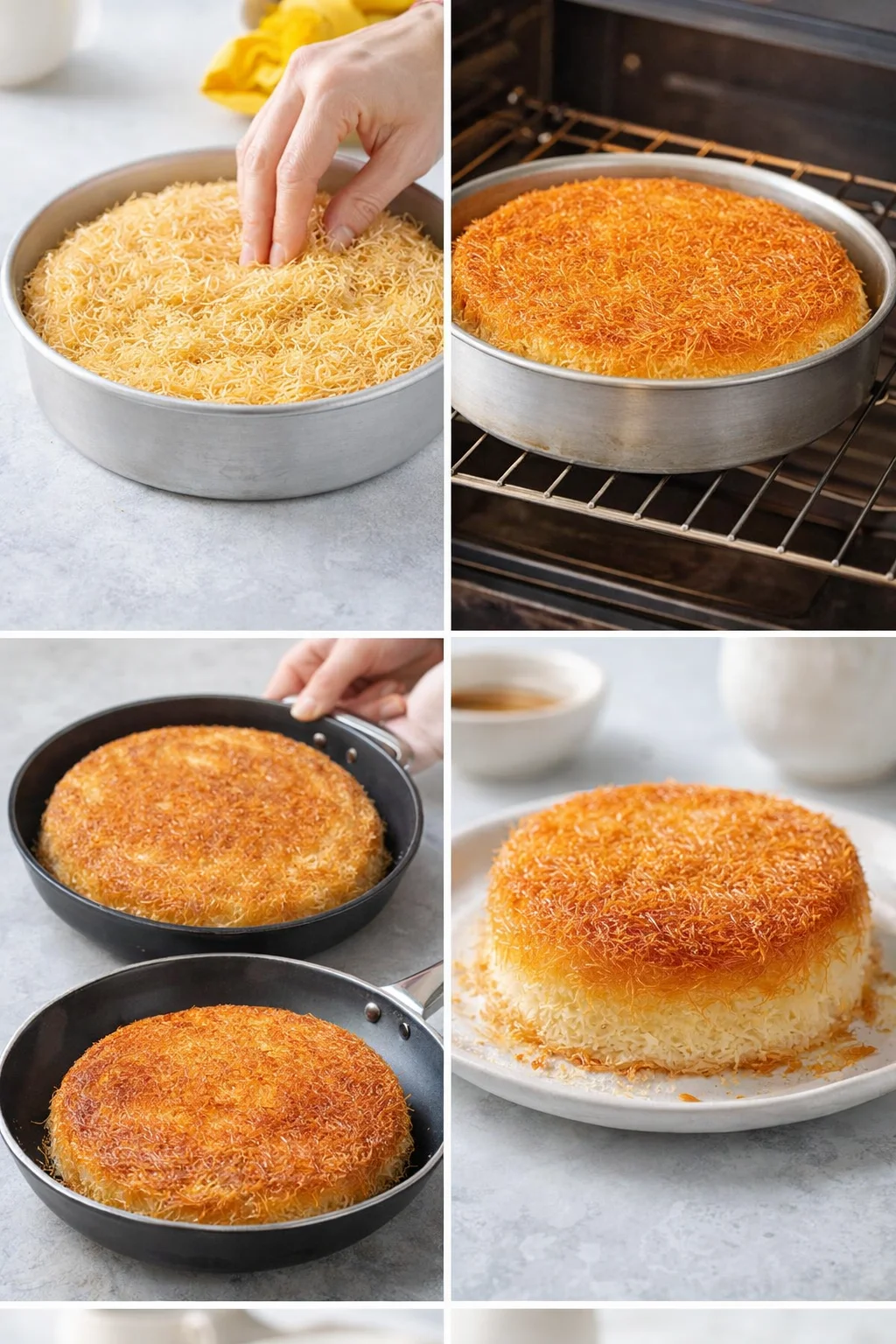
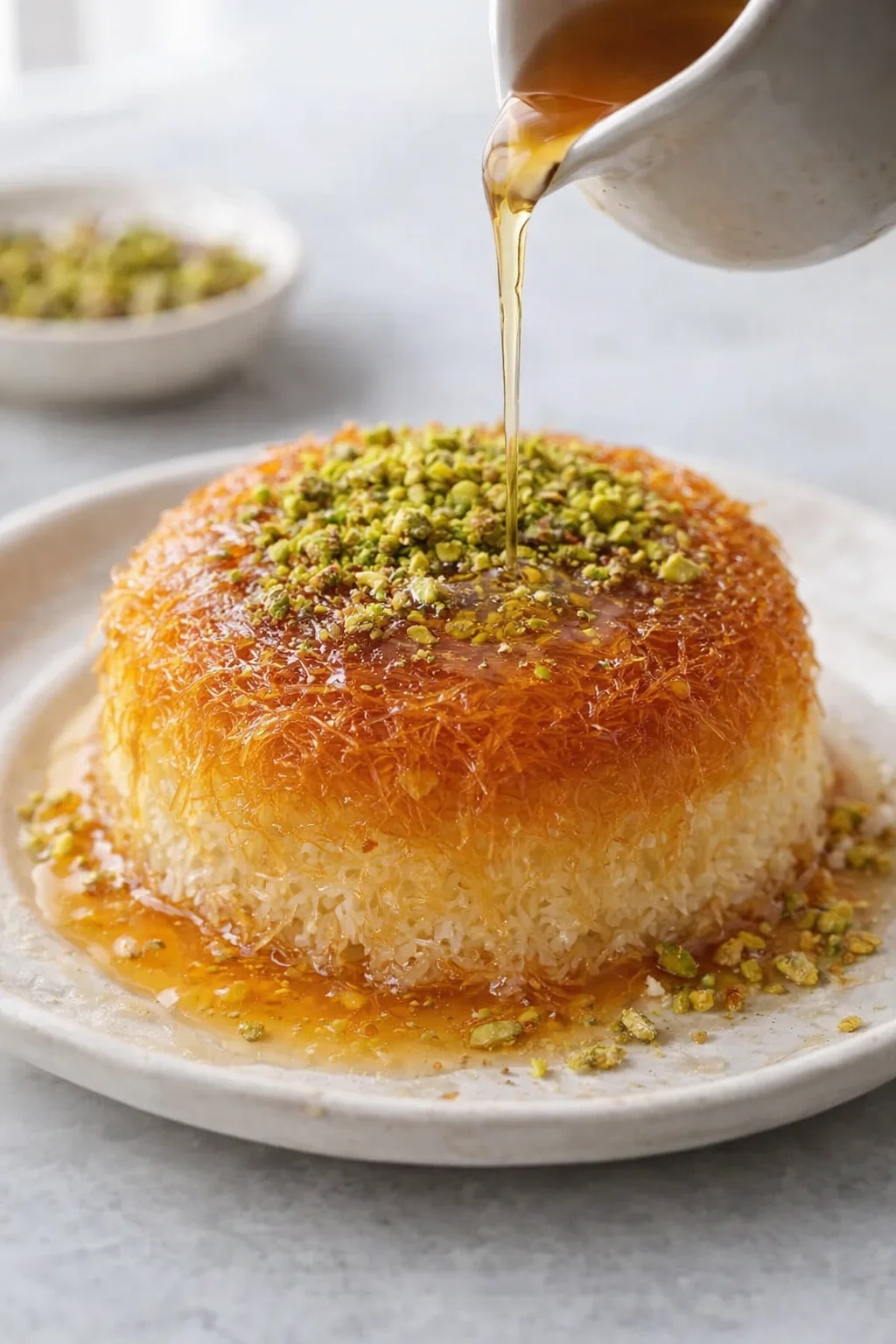
- Quickly drizzle the room-temperature syrup over the piping-hot kunafa to create a hissing sizzle and allow syrup to soak in.
-
Let the kunafa sit 5 minutes to absorb the syrup, then sprinkle with crushed pistachios.
Expert Tips for Perfect Texture
Knowing the “why” behind your ingredients makes the “how” much easier when you’re in the kitchen.
ComponentScience RolePro SecretGhee (Clarified Butter)Creates a moisture shield and adds richnessRub it in thoroughly until no white strands remain — this keeps the dough crisp, not steamed.Shredded KataifiActs as a delicate but strong latticeFreeze it for an hour before shredding to get finer, smaller strands that crisp better.Low Moisture MozzarellaGives that iconic cheese stretch—think gooey mozzarella in Venezuelan cachapas—Soak it in cold water for 15 minutes and pat dry to cut down on salt and moisture.
Some folks try plain butter, but that water-heavy fat steams the dough instead of frying it, making your kunafa less crisp. Ghee is pure fat—used in breads like garlic naan bread for a deeply browned finish—perfect for that golden, crunchy crust.
For the best bake, use a heavy-bottomed 10 or 12-inch round pan or a traditional kunafa tray if you have one. Heavy pans distribute heat evenly, so no burnt spots or undercooked middles. The syrup balances the rich cheese with a fragrant sweetness, so make it in a small saucepan and let it reduce to a light honey consistency.
I also like to have a large flat plate or second pan handy for the flip. Once the bottom is golden and crisp, confidently flip the whole thing over. Don’t worry if you’re nervous; I’ll guide you through the trick in the steps.
Why Your Kunafa Might Turn Out Soggy
If your crispy crust turns soft quickly, the culprit is often the syrup temperature. Pouring hot syrup on hot pastry makes starch granules swell and burst, turning crunchy threads into mush. Always make the syrup first so it has time to cool down fully before adding.
Avoiding Chewy or Rubbery Cheese
Using mozzarella alone sometimes gives a rubbery texture when cooled. Adding just 4 oz of ricotta smooths and stabilizes the filling, keeping it creamy and silky even after sitting for 15 minutes at the table.
ProblemRoot CauseSolutionPastry is pale and softNot enough ghee to coatMake sure each kataifi strand is coated — ghee fries, doesn’t steam.Cheese leaked outCheese spread too close to edgeLeave a 1/2 inch dough border around edges to keep cheese inside.Syrup didn’t soak inSyrup too thickSimmer syrup exactly 10 minutes; if it’s too thick, add a bit of water.
Common Mistakes Checklist
- ✓ Don’t use fresh mozzarella that’s stored in water — it makes the crust soggy.
- ✓ Never skip the lemon juice in the syrup — it keeps sugar crystals from forming.
- ✓ Press the bottom dough layer firmly; a soft base falls apart when slicing.
- ✓ Let kataifi thaw fully before shredding to avoid lumps.
- ✓ Use a low-sided pan to let steam escape while baking — this keeps the crust crisp.
When I serve this Kunafa, I love bringing the whole tray to the table and pouring the syrup right in front of everyone. That sizzling sound gets smiles every time.
A generous sprinkle of bright green crushed pistachios adds gorgeous color and crunch against the deep golden pastry.
Want to splurge? Serve each piece with a scoop of chilled ashta (clotted cream) or vanilla bean gelato. The cold cream melting into warm, syrup-soaked strands gives a magical third texture. It’s the same crisp-outside, soft-inside contrast you get in Banana Fritters Recipe: Crispy Outside, Soft and Sweet Inside. It’s all about sharing something made with love. Enjoy every crunchy, melty bite!
Creative Fillings and Substitutions
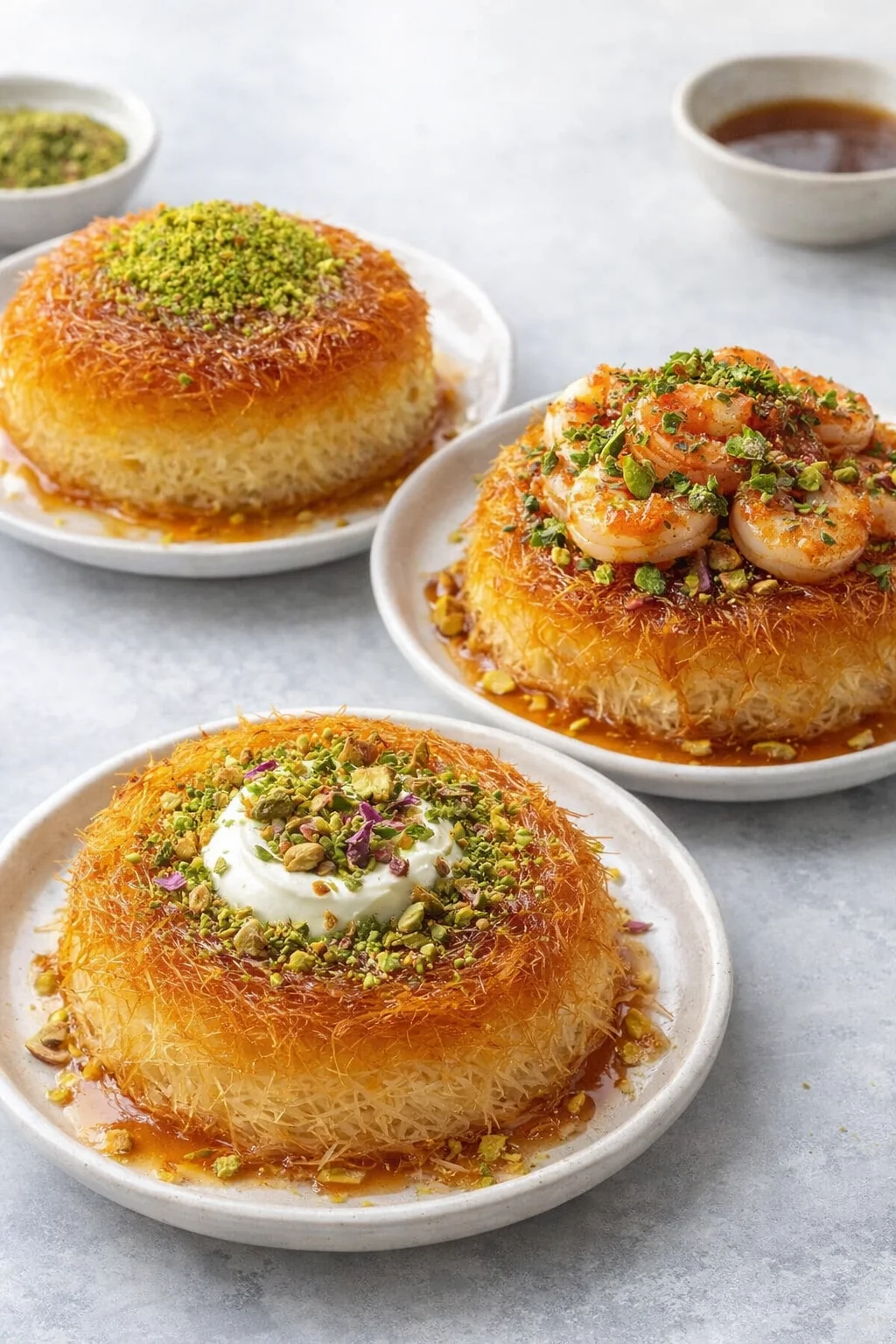
While the classic cheese filling is hard to beat, feel free to get creative! For a Chocolate Kunafa, replace the cheese with a rich hazelnut spread (a chocolate-hazelnut filling like the one in these Chocolate Hazelnut Shortbread Cookies works beautifully) or dark chocolate ganache layer.
Keep soaking the kataifi with ghee outside, but you can ease up a bit on the syrup sugar since the filling is already sweet.
If you want a vegan version, swap in a great vegan butter substitute and fill the center with blended soaked cashews mixed with coconut cream — the coconut-caramel notes are similar to these Samoa Cookie Bars (Paleo, Vegan), though you won’t get the classic cheese pull you see in these super-soft, cheese-filled rolls; it’s silky and tropical with a lovely rose water aroma.
For No Oven Method
You can make this skillet-style on the stovetop. Use a good non-stick pan, cook over medium-low heat for 10 to 12 minutes per side. Be very careful when flipping — slide the kunafa onto a plate first, then flip it back in the pan.
Storing and Reheating Leftovers
Storage Tips: Kunafa tastes best right after baking, but you can keep leftovers covered in an airtight container in the fridge for up to 3 days. Avoid wrapping while still warm because trapped steam will soften that precious crisp crust.
Reheating Tips: Skip the microwave — it’ll turn your kunafa chewy and rubbery. Instead, warm slices in a 350°F (180°C) oven for 5 to 8 minutes until the cheese softens and crust crisps back up.
Zero Waste Tips: Don’t toss leftover kataifi dough! Freeze it for months or toast shreds in a little butter and honey for a crunchy topping on yogurt or ice cream. Any leftover syrup? Keep it in a jar to sweeten iced tea or drizzle over cottage cheese protein pancakes or homemade cinnamon rolls for a subtle floral touch.
Common Kunafa Questions Answered
What are the ingredients of Kunafa?
The essentials are kataifi dough, ghee, low moisture mozzarella, and ricotta cheese. The kataifi strands become crispy with ghee, then layered with a creamy cheese mix and soaked in a fragrant sugar syrup flavored with rose water.
What is the crispy thing on Kunafa?
The crisp comes from shredded kataifi dough. These ultra-thin, noodle-like strands fry or bake up to a crackling golden shell that gives Kunafa its signature crunch.
What kind of dough is used for Kunafa?
Kataifi dough, which is shredded into fine hair-like strands, is the traditional choice. This large surface area allows it to crisp up perfectly and soak up the syrup without getting soggy.
What are the two types of Kunafa?
There are two main styles, often regional or by filling. Nabulsi Kunafa features cheese filling and sometimes semolina dough, while Misri variants are filled with nuts or cream. Cooking techniques vary too, from stovetop frying to baking.
Why is my Kunafa bottom soggy after adding the syrup?
This usually means you poured syrup while it was too hot. Make sure the syrup cools to room temperature before hitting the hot pastry, or the starch swells and mushes your crisp crust.
How do I achieve the best cheese pull?
Blend low moisture mozzarella with fresh ricotta. Mozzarella stretches beautifully, while ricotta keeps the filling creamy and prevents it from turning oily or rubbery when it cools.
Can I use butter instead of ghee for the crust?
I don’t recommend it — ghee is key. Butter contains water and milk solids that steam the dough and keep it soft instead of crisp and crunchy like it should be.
What are the ingredients of Kunafa?
It’s all about kataifi dough, ghee, low moisture mozzarella, and ricotta cheese. Cheese layers sit on ghee-coated dough and soak in a fragrant sugar syrup flavored with rose water.
What is the crispy thing on Kunafa?
The crispy part is shredded kataifi dough. These thin strands turn golden and crunch through frying or baking, giving Kunafa its signature texture.
What kind of dough is used for Kunafa?
Kataifi dough shredded into fine strands is the traditional dough. Its large surface area crisps well and soaks up syrup without getting soggy.
What are the two types of Kunafa?
They mostly differ by regional filling or prep style. Nabulsi features cheese, Misri often has nuts or cream. Cooking can be stovetop-fried or oven-baked, each with its own textures.
Why is my Kunafa bottom soggy after adding the syrup?
That happens if the syrup is too hot when poured. Always let syrup cool to room temp before pouring to protect that crisp crust.
How do I achieve the best cheese pull?
Mix low moisture mozzarella with fresh ricotta cheese. Mozzarella stretches, ricotta keeps filling creamy and stops it from getting rubbery as it cools.
Can I use butter instead of ghee for the crust?
Butter isn’t the best choice — ghee is the key to crispness. Butter’s water content steams the dough, ruining the texture you want.
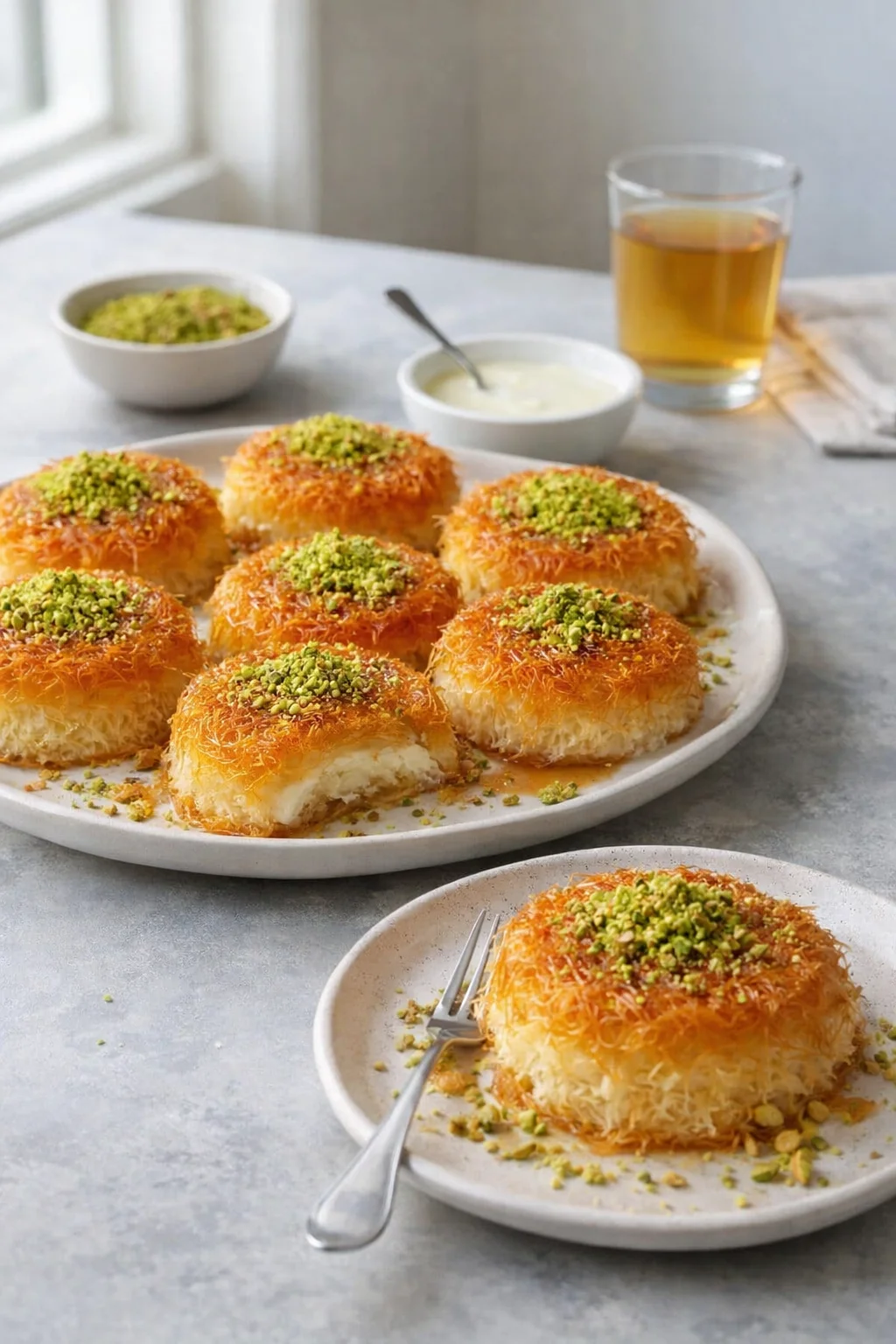
Authentic Middle Eastern Kunafa with a crispy kataifi crust and gooey cheese center, finished with fragrant syrup and crushed pistachios.
- Total Time: 45 minutes
- Yield: 8 servings 1x
Ingredients
- 1 lb kataifi dough, shredded
- 1 cup ghee, melted
- 2 tbsp granulated sugar
- 12 oz low-moisture mozzarella cheese, grated
- 4 oz fresh ricotta cheese
- 1/2 tsp orange blossom water
- 2 cups white sugar
- 1 cup water
- 1 tsp lemon juice
- 1 tbsp rose water
- crushed pistachios for garnish
Instructions
- Make the syrup: combine 2 cups sugar, 1 cup water, and 1 tsp lemon juice in a saucepan; bring to a boil, then simmer 10 minutes until syrup coats the back of a spoon. Stir in 1 tbsp rose water and cool to room temperature.
- If frozen, thaw kataifi fully, then shred finely by hand or pulse in a food processor until pieces are about 1/2 inch long; transfer to a large bowl.
- Melt 1 cup ghee.
- Pour the melted ghee and 2 tbsp granulated sugar over the kataifi and massage with your hands until every strand is glossy and translucent.
- Press two-thirds of the kataifi mixture firmly and evenly into the bottom (and optionally up the sides) of a 9-inch round baking pan using a flat-bottomed tool to form a sturdy base.
- Soak low-moisture mozzarella in cold water for 15 minutes, then pat dry.
- Mix 12 oz grated low-moisture mozzarella, 4 oz ricotta, and 1/2 tsp orange blossom water until combined.
- Spread the cheese mixture evenly over the kataifi base, leaving a 1/2-inch border around the edges.
- Scatter the remaining kataifi over the cheese and press down gently to level.
- Bake in a preheated oven at 350°F (180°C) for 30 minutes, or until edges are deep golden and starting to pull away from pan.
- Alternatively, for no-oven method: cook assembled kunafa in a large non-stick skillet over medium-low heat for 10–12 minutes per side, flipping using the plate method.
- Set a flat plate over the baked pan and flip the kunafa out of the pan onto the plate, tapping to release and confirm a crisp base.
- Quickly drizzle the room-temperature syrup over the piping-hot kunafa to create a hissing sizzle and allow syrup to soak in.
- Let kunafa sit for 5 minutes to absorb the syrup, then sprinkle with crushed pistachios before serving.
Notes
Use ghee instead of butter to ensure a crisp crust, as butter contains water that steams the dough., Ensure syrup is cooled to room temperature before drizzling onto hot pastry to prevent sogginess., Soak and dry mozzarella to reduce salt and moisture, improving texture and cheese pull., Leave a 1/2-inch border of kataifi dough around edges to prevent cheese leakage., A heavy-bottomed 9 to 12-inch round pan helps distribute heat evenly for an even bake., For vegan version: substitute ghee with vegan butter and use a cashew-coconut cream filling instead of cheese., Leftovers keep up to 3 days refrigerated; reheat in oven at 350°F for 5 to 8 minutes to restore crispness.
- Prep Time: 15 minutes
- Cook Time: 30 minutes
- Category: Dessert
- Cuisine: Middle Eastern
Nutrition
- Serving Size: 1 serving
- Calories: Approximately 350 kcal per serving
- Fat: 18 g per serving
- Carbohydrates: 40 g per serving
- Protein: 15 g per serving