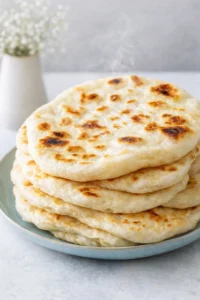
Pita Bread

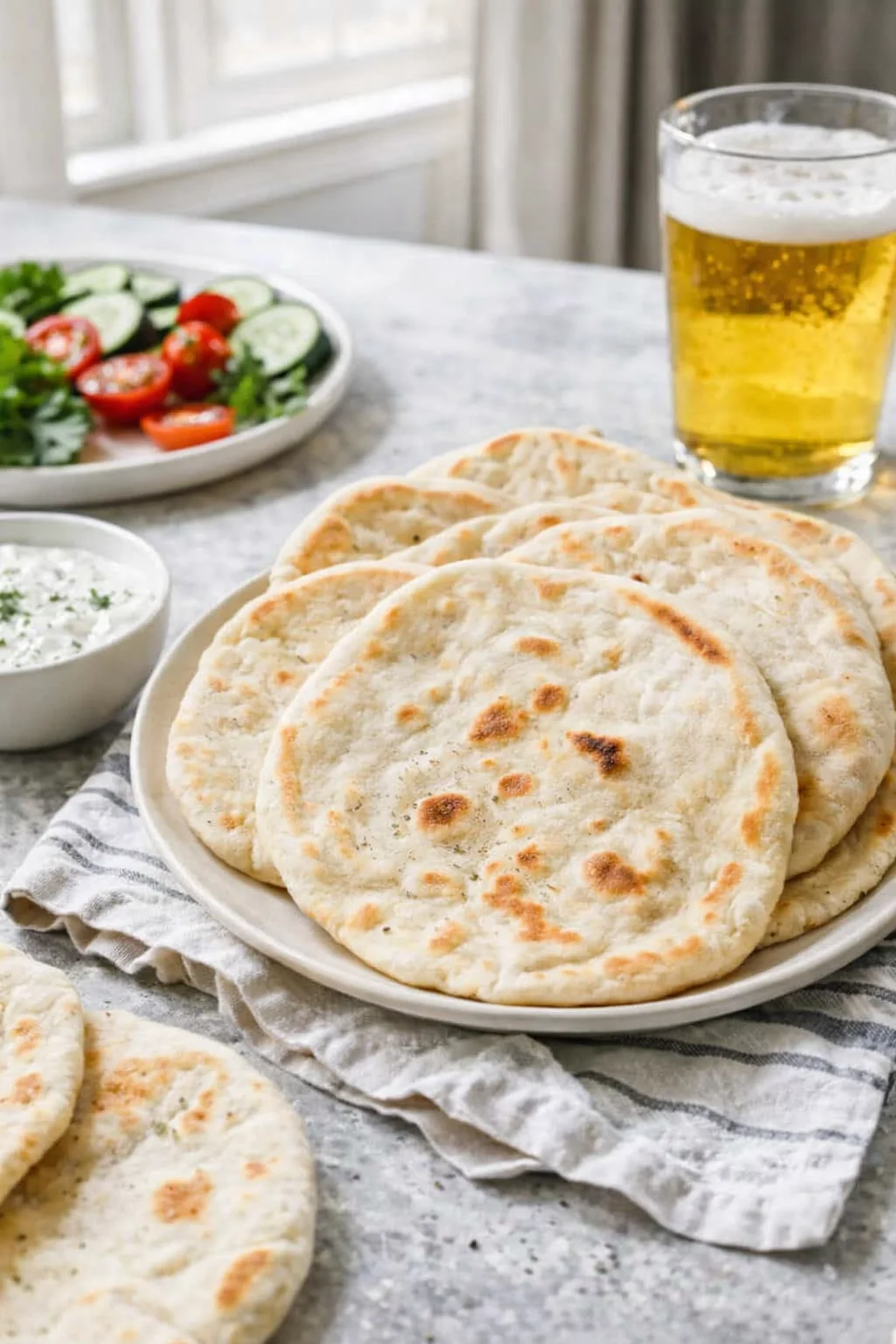
Nothing beats warm, freshly made pita bread — and this recipe makes it super simple. With just a handful of pantry staples and minimal tools, you can have soft, pocket-style pitas ready in about an hour (with 10 minutes of hands-on time, 40 minutes to rest, and 20 minutes to cook). This recipe yields 8 pitas and works great whether you cook them quickly on a hot skillet or bake them briefly on a preheated stone or baking sheet.
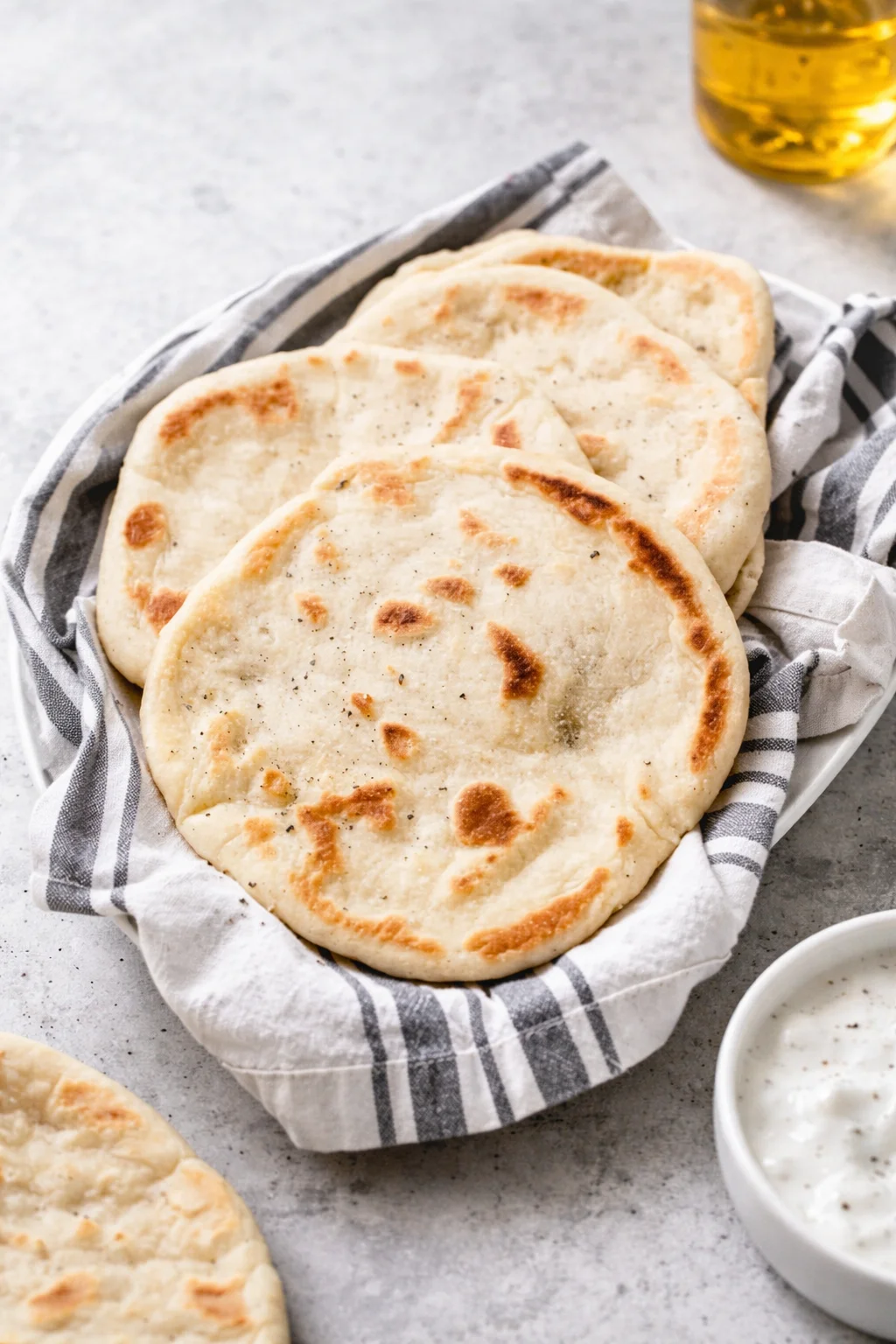
You don’t need any fancy mixer or lengthy rising times. The dough mixes up quickly (no hard kneading needed), can be made ahead and stored in the fridge, and both raw and cooked pitas freeze really well. Just follow the step‑by‑step below, and be sure to check out my Pro Tips and Serving Ideas for thin, puffed pockets every time — perfect for gyros, dipping in hummus, shawarma bowls, or just warmed with olive oil and za’atar.
Fast, Flavorful, and Affordable
This pita bread recipe is a total game-changer because it only takes MINUTES to prepare! No pricey mixers, no kneading marathons, and no waiting around for the dough to rise for hours. Plus, you can make the dough several days ahead and pop it in the fridge, so fresh pita bread is ready whenever you want.
The ingredients are super affordable, and homemade pitas taste way better than store-bought, hands down. These pitas are a staple at my house, especially for dinners with gyros (for soft, wrap-style bread, see Fluffy Greek Pita), chicken shawarma bowls, chicken tikka masala (and if you’re making Indian curries, you might also like our Simple Homemade Naan (5 Ingredients)), or just to scoop up hummus—try Dill Pickle Hummus—or creamy spinach artichoke dip.
What You’ll Need
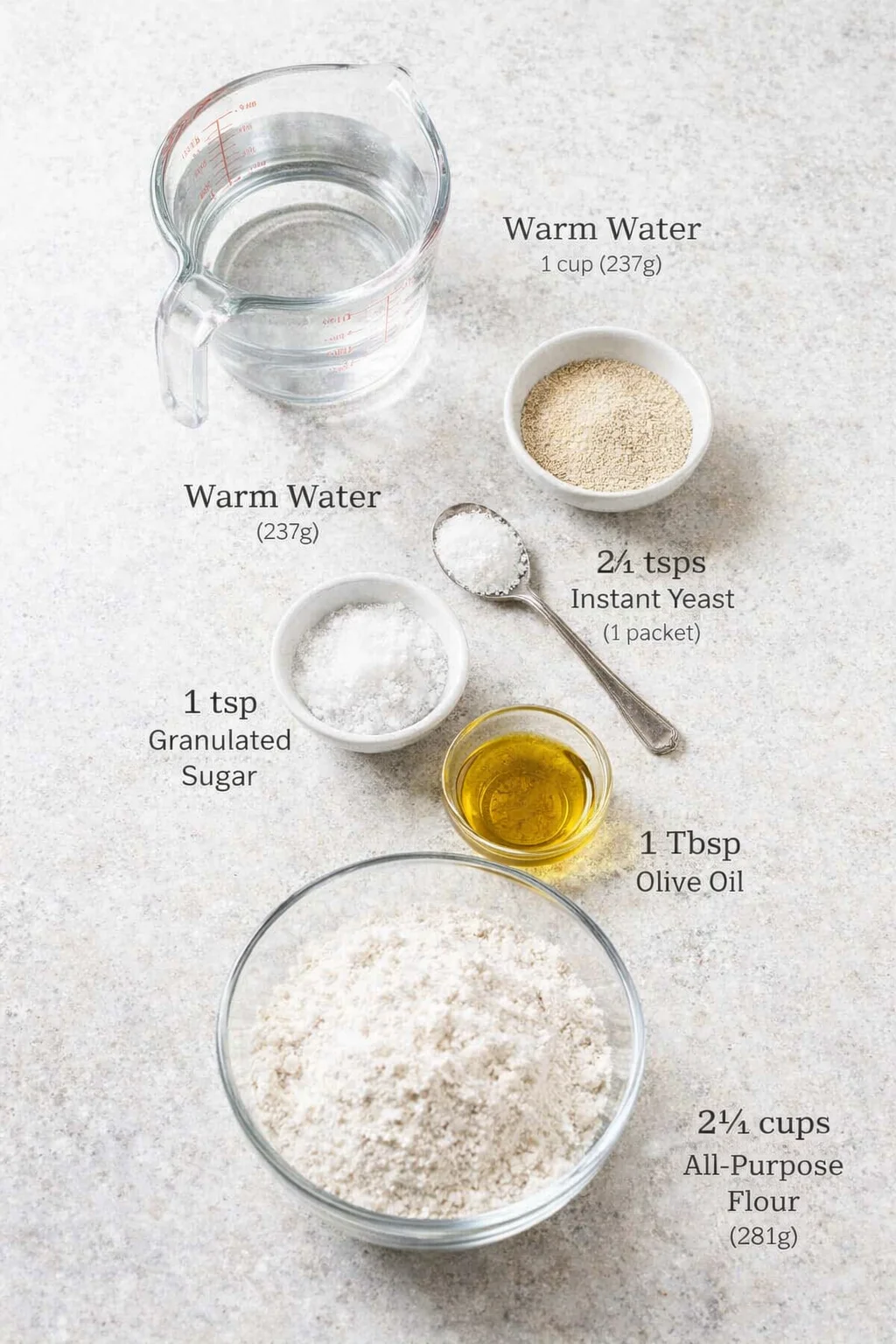
- 1 cup warm water (237g)
- 2 1/4 teaspoons instant yeast (1 packet)*
- 1 teaspoon granulated sugar
- 1 teaspoon fine sea salt
- 1 Tablespoon olive oil
- 2 ¼ cups all-purpose flour (281g)
Make the Dough and Bake
- If using active dry yeast, stir it into the warm water with the sugar and let sit 5–10 minutes until bubbly.
- Combine warm water, yeast (instant or proofed), sugar, salt, olive oil, and 1 cup of the flour.
- Gradually add the remaining flour until the dough comes together but remains slightly sticky.
-
Lightly flour your hands and knead the dough in the bowl about 1 minute until smooth and soft.
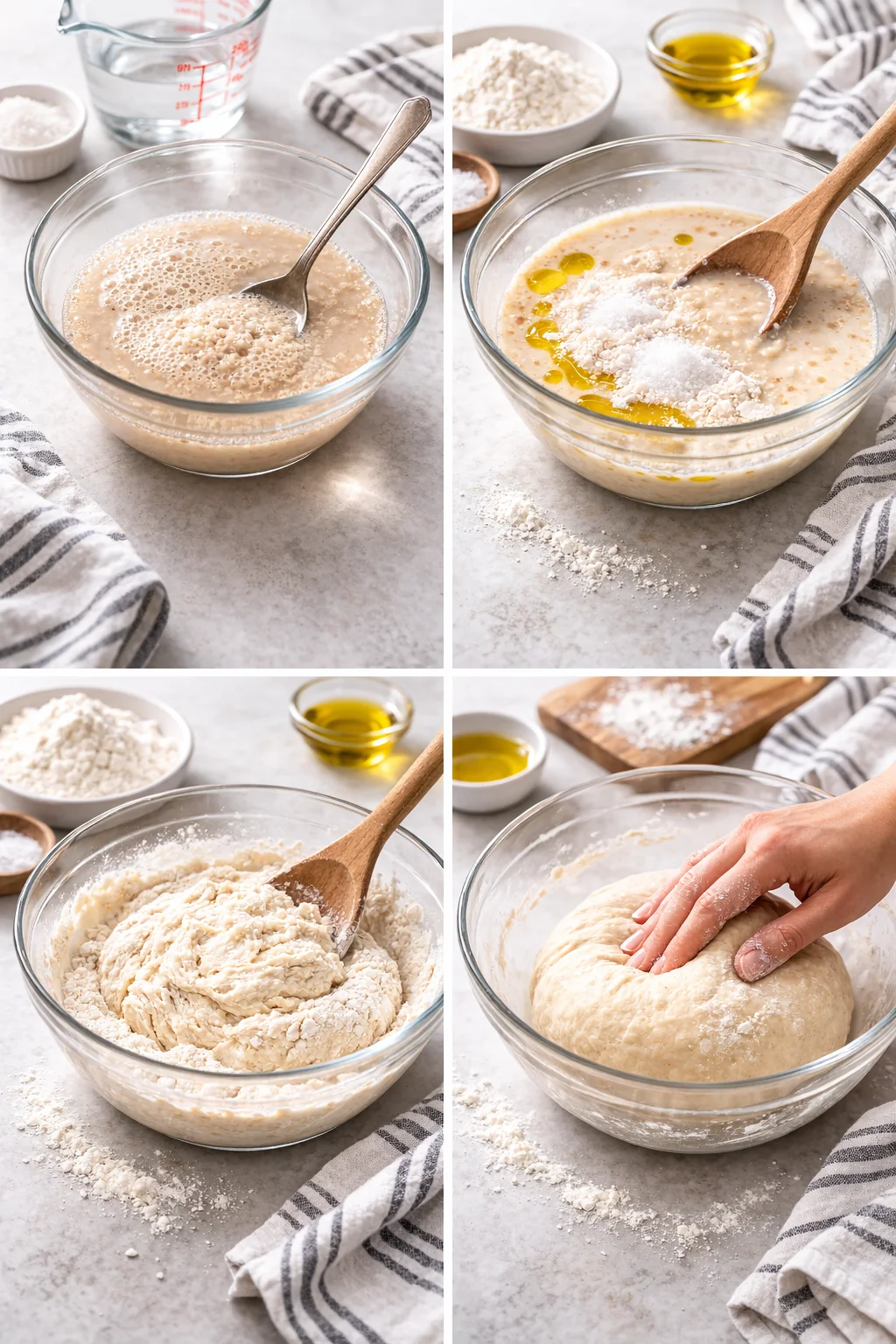
- Place the dough in a lightly greased bowl, cover, and let rest 40 minutes (or refrigerate until ready to use).
- Divide the rested dough into 8 equal pieces.
- Roll each piece into a very thin, even round (about 1/8-inch thick).
-
Heat a large skillet, griddle, or pizza stone over medium-high heat until very hot.
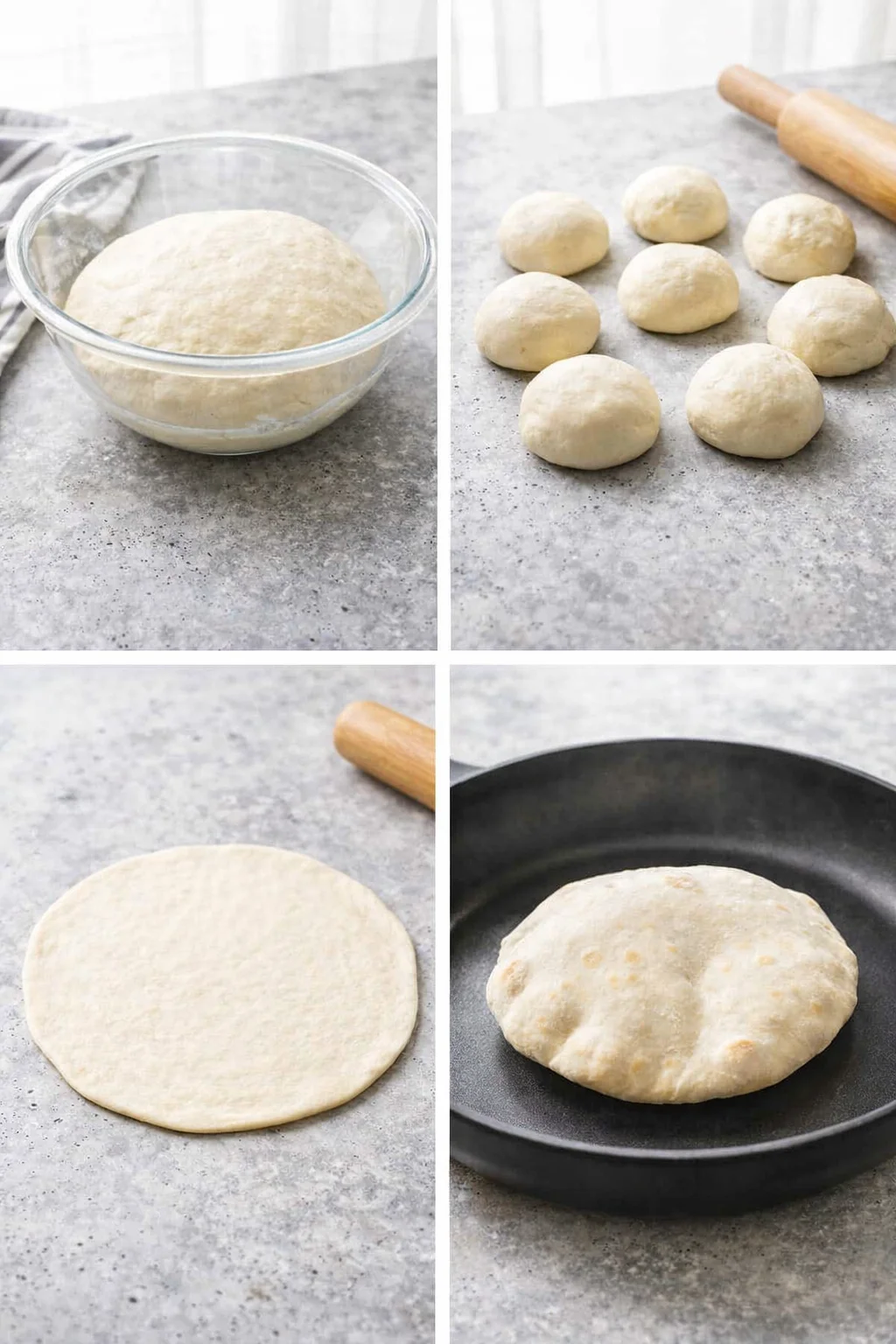
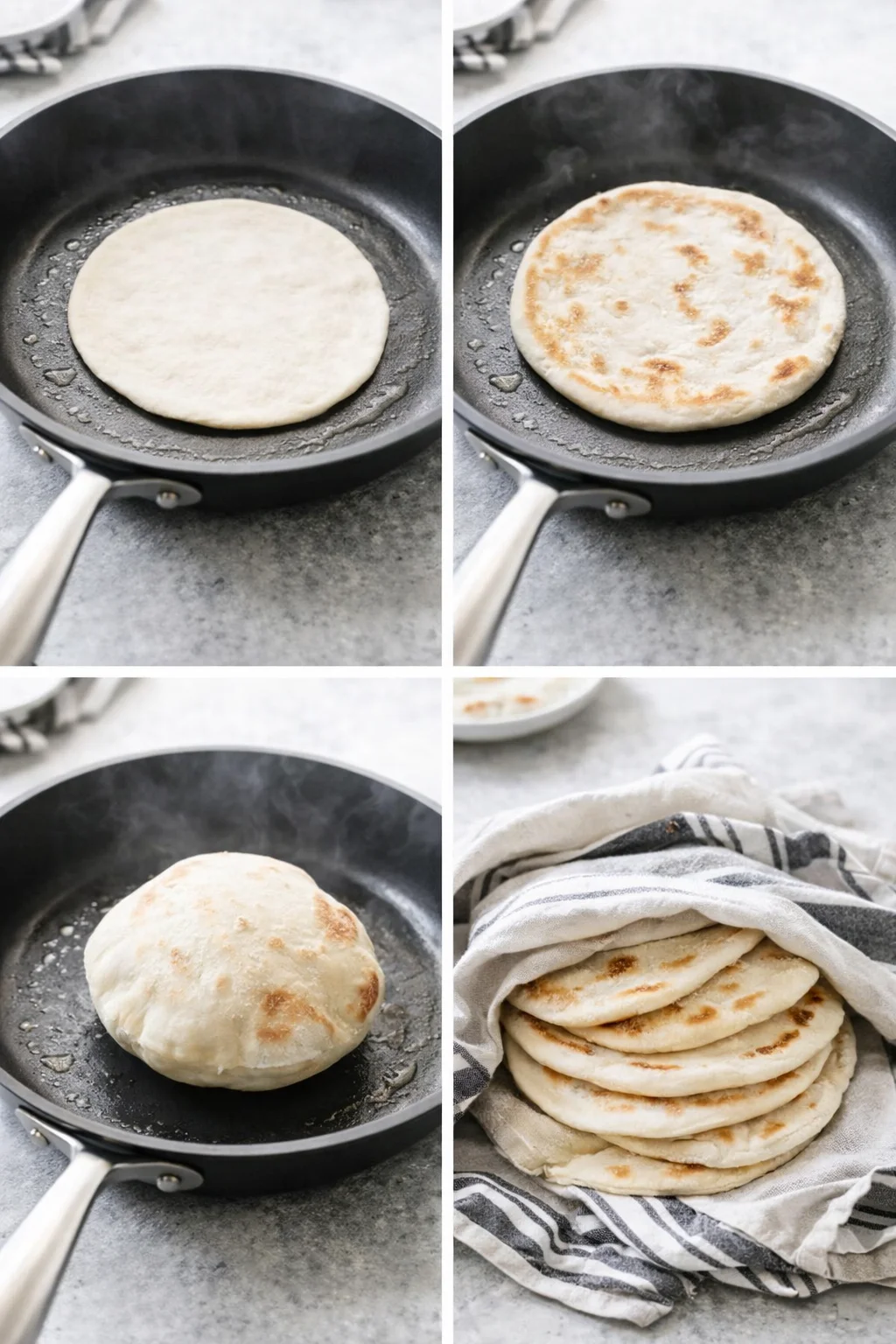
- Lightly oil the hot pan and lay a rolled pita flat in the center.
- Cook until the bottom is light golden, about 2 minutes.
- Flip the pita and cook another minute or until done and puffed.
-
Transfer cooked pitas to a clean, dry kitchen towel and keep covered while cooking the rest.
-
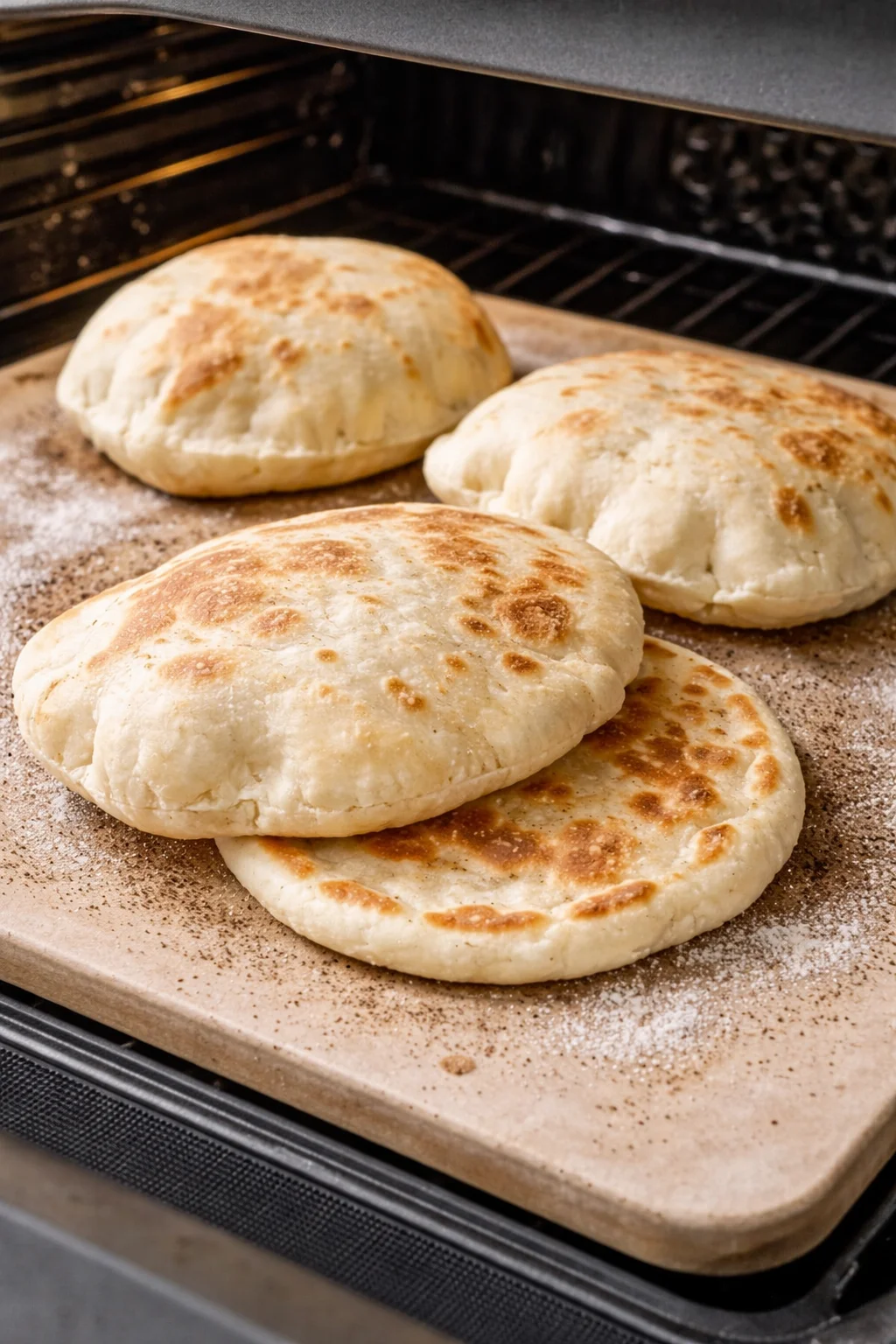
Alternate oven method: preheat a pizza stone or baking sheet to 475°F (245°C), place pitas on the hot surface, bake 2 minutes, flip, then bake 1–2 more minutes until puffed.
Pro Tips for Puffy Pitas
- Always use warm water around 100–110°F (38–43°C) — it should feel warm, not hot — to wake up the yeast. For a quick refresher on yeast and water temperature, see our Easy Homemade Bread guide.
- Don’t go overboard with the flour. The dough needs to be soft and slightly sticky. Too much flour will give you dense pitas that won’t puff up. If you’re new to working with tender doughs, see Super Soft White Bread Dough for handling tips.
- Roll each dough ball very thin and as even as possible. The thinner, the better — this is the secret to puffy pockets!
- Make sure your skillet, griddle, or pizza stone is super hot before you start cooking. Cast iron or heavy griddles work especially well to get that quick puff.
- Keep your rolled pitas covered with a clean towel while cooking the rest to prevent drying out and cracking.
- If some pitas don’t puff completely, no worries! They’ll still taste great. You can reheat them briefly in a hot pan to help them puff up a bit.
- For a little extra flavor, brush your finished pitas with olive oil and sprinkle with za’atar, sesame seeds, or garlic powder.
Ways to Serve and Customize
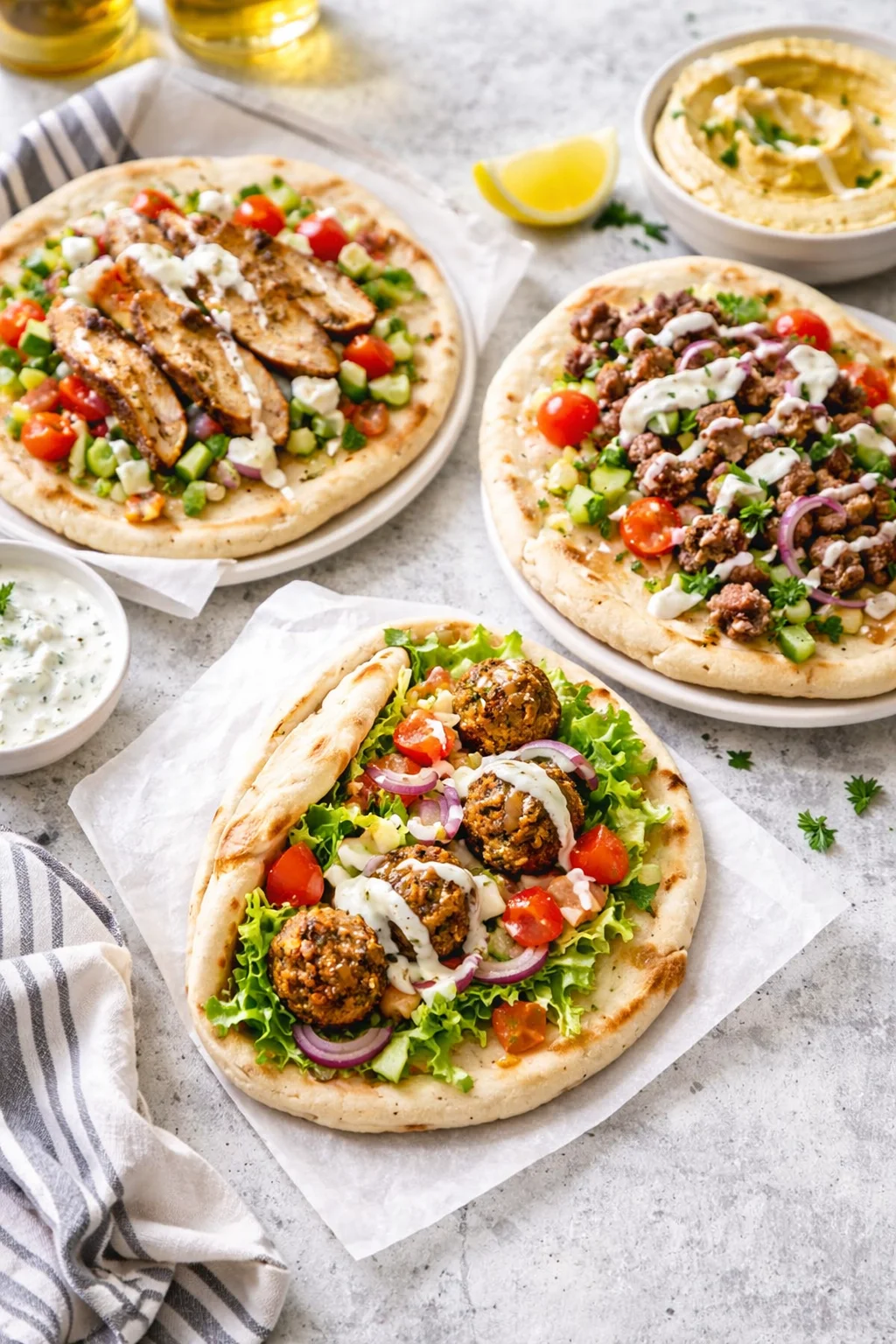
- Gyros made with lamb, chicken, or beef
- Creamy hummus dips
- Buddha bowls for a healthy meal
- Grilled chicken or steak kabobs
- Toasted pitas paired with burrata salad or a quick Mediterranean chickpea salad
- Flavorful chicken shawarma bowls
- A fun addition to a charcuterie or mezze board—add crispy zucchini fritters on the side
- Buffalo chicken dip for parties
- Easy kid-friendly lunch options
- Stuff pita pockets for tasty sandwiches
- Perfect with yellow, red, or chickpea curry
Storage and Reheating Tips
Cooked pitas:
- At room temperature, store them in an airtight container for 2–3 days.
- In the fridge, keep them sealed for up to 5 days.
- For longer storage, freeze by layering pitas with parchment paper in a freezer bag or airtight box for up to 3 months. To reheat, microwave for a few seconds or warm briefly in a hot skillet (about 20–30 seconds per side).
Raw Dough and Make-Ahead:
- Raw dough: keep it tightly covered in the fridge up to 5 days. Bring it to room temperature for at least 30 minutes before you divide and roll it out—this step-by-step guide to fresh homemade pita shows the exact thickness and technique.
- Frozen raw dough: freeze whole or divided dough for up to 3 months. Thaw overnight in the fridge and let rest at room temp for 30+ minutes before rolling and cooking.
Reheating Tips: Wrap your pitas in a damp paper towel and microwave 8–12 seconds to warm and soften; or heat wrapped in foil in a 350°F oven for 5–8 minutes; or toast quickly in a hot skillet if you want a little crisp edge.
Troubleshooting and FAQs
- Why didn’t my pita puff up?
This usually happens because the dough was rolled too thick, the pan wasn’t hot enough, the dough was too cold, or there was extra flour rolling it out. Aim for very thin rounds and make sure your pan is hot enough — medium-high or higher. - Can I swap active dry yeast for instant?
Absolutely! Just proof active dry yeast in water with sugar for 5–10 minutes until foamy (see the step-by-step White Bread guide), then proceed as usual. You’ll want to give the dough about an hour to rise before shaping it. - Can I use whole wheat flour?
You can swap up to half the white flour for whole wheat, but keep in mind that more whole wheat makes the pita denser and less likely to puff. - How thin should I roll the dough?
Roll it as thin as you can without tearing — about 1/8-inch (3mm) or a little thinner. Thin, even discs puff the best. - Can I bake pitas in the oven?
Yes! Preheat a pizza stone or baking sheet to 475°F (245°C). Bake pitas quickly for 1–2 minutes per side, watching closely so they don’t overbrown. - How long do leftover cooked pitas keep?
At room temp, 2–3 days; in the fridge, 5 days; in the freezer, up to 3 months (just layer with parchment to keep them separate).